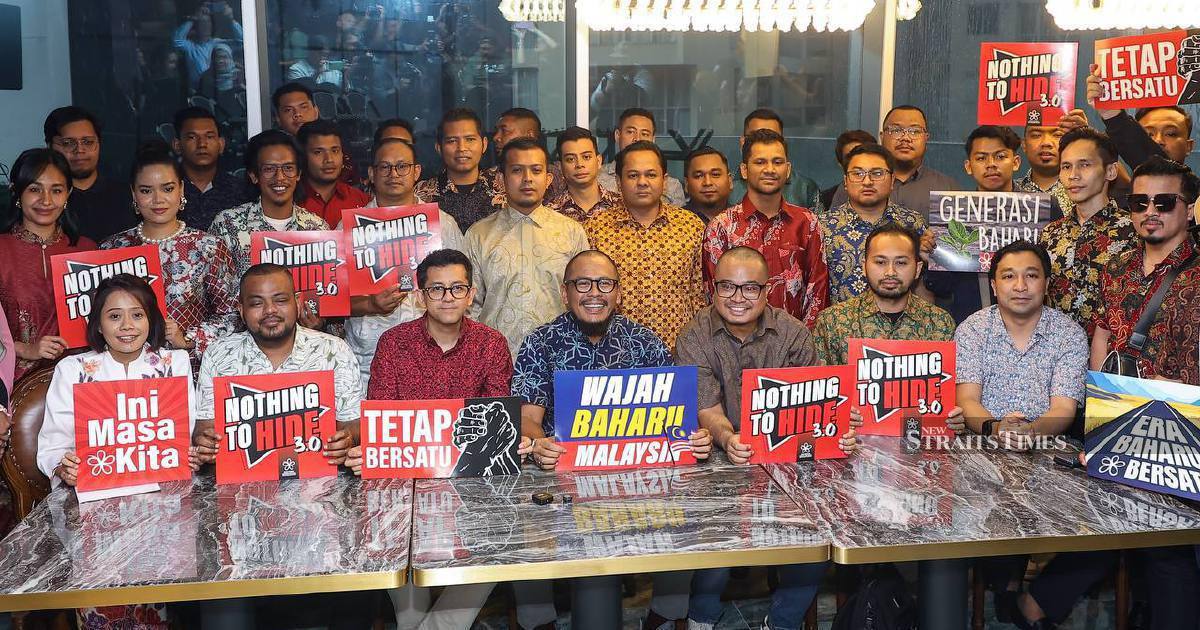
Kota Siputeh assemblyman Mohd Ashraf Mustaqim Abdul Munir has struck an optimistic tone regarding the strained relations between Pas and Bersatu, two key pillars of the Perikatan Nasional (PN) coalition. His remarks come as observers closely track the stability of a political alliance that has grown increasingly fragile over competing territorial and ideological interests. The tension between Malaysia's Islamist party and the newer Bersatu faction represents one of the most significant fractures within PN's leadership structure since the coalition attempted to reconstitute itself as a governing force.
The assemblyman's characterisation of the rift as comparable to marital discord—where partners continue cohabiting despite frequent disagreements—offers insight into how coalition leaders are framing the dispute internally. Rather than portraying the conflict as irreparable, this metaphor suggests cyclical tensions that emerge from proximity and shared interests, implying that temporary friction need not dissolve a longer-term partnership. Such framing is particularly significant given the electoral calculus at play; a fractured PN would struggle to present itself as a unified force capable of governing effectively.
Relations between Pas and Bersatu have deteriorated noticeably over recent months, reflecting deeper disputes about leadership succession, policy direction, and resource allocation within PN structures. Pas, which derives substantial support from predominantly rural, Malay-Muslim constituencies, has long emphasised religious governance frameworks. Bersatu, by contrast, represents a newer political entity with a more diverse coalition base and different strategic priorities. These competing visions have repeatedly collided in state-level politics and within federal coalition arrangements.
The specific grievances underlying current tensions remain multifaceted. Control over state administrations, ministerial positions, and influence within the PN decision-making hierarchy have emerged as flashpoints. Pas leadership has expressed frustration about what it perceives as insufficient recognition of its electoral contributions and historical significance within Malay-Muslim political circles. Bersatu, conversely, has sought to position itself as a modern, reformist alternative capable of attracting younger voters and urban constituencies that traditional Pas messaging may not reach.
For Malaysian political observers, the health of PN's internal relationships carries substantial implications for national governance prospects. A coalition unable to manage internal disputes smoothly risks appearing incompetent to voters and investors alike. The ability to resolve disagreements relatively quietly—as the assemblyman's optimism suggests is occurring—becomes essential for maintaining credibility with the electorate. Previous incarnations of Malaysian political coalitions have collapsed spectacularly when internal management mechanisms failed, creating governance uncertainty.
The timing of such reassurances also warrants scrutiny. Coalition partners typically offer public statements minimising conflict during sensitive periods, whether preceding state elections, budget negotiations, or broader political realignments. Such messaging serves multiple audiences simultaneously: reassuring existing coalition members about stability, signalling strength to rival political formations, and managing external investor sentiment regarding Malaysia's political predictability.
Historically, Malaysian political coalitions have survived internal tensions through careful balancing of interests and regular renegotiation of power-sharing arrangements. Barisan Nasional maintained coherence across competing ethnic and regional interests for decades through institutionalised mechanisms for resource distribution and conflict resolution. The question facing PN is whether it possesses comparable institutional maturity to manage its constituent tensions without public rupture.
Bersatu's position within PN remains somewhat precarious compared to Pas's deep organisational roots. As the newer entity, Bersatu must demonstrate that it adds sufficient value to justify its presence within the coalition, particularly given that Umno also competes for similar voter demographics and political space. This asymmetry shapes coalition dynamics; Bersatu likely requires coalition membership to maximise its political influence, whereas Pas retains more options for alternative arrangements.
The regional Southeast Asian context also influences these dynamics. Islamist parties across the region face contemporary challenges negotiating between traditional constituencies and evolving voter expectations regarding governance competence, economic policy, and administrative effectiveness. Pas's tension with Bersatu partly reflects broader struggles within Muslim-majority democracies regarding the balance between religious governance frameworks and pluralistic institutional requirements.
Looking forward, sustained coalition stability will depend on whether Bersatu and Pas can establish clear mechanisms for mediating disputes before they escalate into public confrontations. The assemblyman's optimistic framing suggests such processes may be progressing behind closed doors. However, Malaysian political history indicates that metaphorical marriages between ideologically distinct parties often prove fragile when tested by electoral pressure or leadership succession moments.
The broader significance extends to how PN presents itself to voters entering future electoral cycles. A coalition perceived as perpetually bickering risks losing swing voters who increasingly prioritise governance competence and political predictability over ideological consistency. Conversely, demonstrating capacity to resolve internal differences constructively could strengthen PN's narrative as a responsible alternative capable of managing Malaysia's complex political economy.
Ultimately, the Pas-Bersatu dynamic reflects microcosmic tensions within contemporary Malaysian politics: negotiating ethnic representation, religious governance, economic management, and federal stability within coalitional frameworks. How successfully PN's leadership manages these tensions will partly determine not only the coalition's viability, but also broader patterns of Malaysian political competition and governance capacity in coming years.

