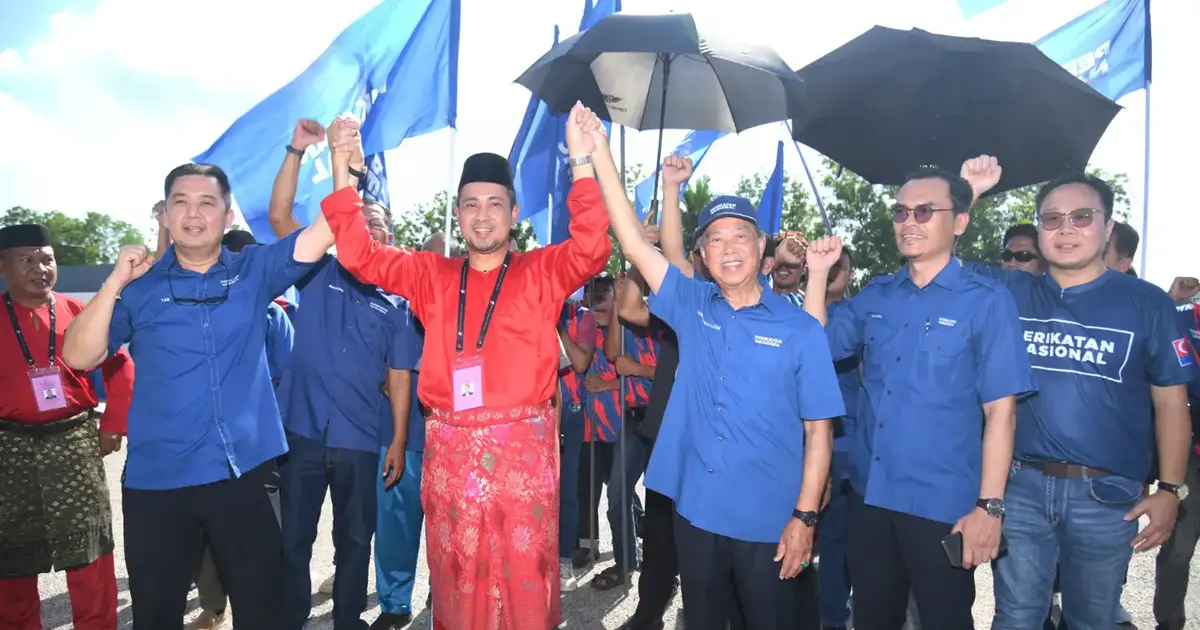
Bersatu's leadership has adopted a measured response to PAS's reluctance to deploy its party machinery in support of its Perikatan Nasional coalition partner, with party president Muhyiddin Yassin framing the episode as a natural expression of inter-party autonomy within the broader alliance structure. The incident, which surfaced amid ongoing coordination efforts between the two Islamic-leaning political entities, underscores the delicate balance required to maintain a multi-party coalition in Malaysia's fractious political landscape.
Muhyiddin's characterisation of the matter as a non-issue reflects a deliberate strategy to contain potential fallout from what could otherwise be interpreted as a sign of weakening cohesion within Perikatan Nasional. By emphasizing that cooperation and reciprocal support form the philosophical bedrock of the PN pact, the Bersatu leader sought to reframe PAS's decision not as a rejection but as an exercise of legitimate party prerogative. This rhetorical positioning allows Bersatu to maintain its alliance credentials while simultaneously avoiding the appearance of weakness or inability to command machinery support from coalition partners.
The machinery question carries particular significance in Malaysian politics, where ground-level organisational capacity directly translates to electoral performance. PAS, with its extensive network of party workers and established grassroots presence across the country, represents a formidable organisational asset within Perikatan Nasional. When such assets are withheld, it signals not merely a logistical inconvenience but raises broader questions about the depth of commitment to shared political objectives. Muhyiddin's insistence that the coalition will not compel assistance from member parties implicitly acknowledges that voluntary cooperation cannot be legislated or demanded within a coalition framework, regardless of formal alliance agreements.
The Perikatan Nasional structure itself, which comprises Bersatu, PAS, and other smaller partners, has always rested on a foundation of negotiated consensus rather than hierarchical command. Unlike governmental or corporate structures where authority flows vertically, political coalitions operate through lateral arrangements where each member retains substantial discretion. Bersatu's acquiescence to PAS's decision therefore reflects recognition of this reality, even if such recognition comes with public relations management to prevent perception of diminished clout.
Contextually, the machinery question emerges against the backdrop of ongoing negotiations and positioning within Perikatan Nasional ahead of potential electoral contests. The coalition faces competing pressures to maintain internal unity while simultaneously positioning itself effectively against other political groupings, particularly the Pakatan Harapan coalition led by Anwar Ibrahim's PKR. In this environment, any perceived fracture or withholding of support can be weaponised by political opponents to suggest instability or waning commitment within the PN structure.
For Bersatu specifically, the party's position within Perikatan Nasional has shown notable fluctuation since its formation and subsequent evolution. The party's political fortunes have been intertwined with leadership questions and shifting alliances, making organisational coherence and demonstrated political viability crucial to its long-term survival and relevance. Bersatu's measured response to the PAS machinery situation therefore serves partly to project stability and pragmatic management of inter-party relations, qualities that are essential for maintaining both internal party cohesion and external credibility.
PAS, meanwhile, has consolidated substantial influence within Perikatan Nasional through its strong showing in recent elections, particularly in strongholds such as Kelantan, Terengganu, and parts of the Klang Valley. The party's recent electoral performance has afforded it considerable leverage in coalition negotiations, effectively allowing it to prioritise its own strategic interests while remaining nominally committed to Perikatan Nasional's broader objectives. The machinery support question likely reflects PAS's calculation that its organisational resources are better deployed toward consolidating its own power bases rather than supporting coalition-wide initiatives that may not directly benefit the party's electoral standing.
Muhyiddin's insistence on the voluntary nature of coalition support also carries implications for how Perikatan Nasional might function in future configurations. If the coalition were to enter government, questions regarding resource allocation, policy priority-setting, and ministerial distribution would inevitably arise. The precedent established through how machinery support is negotiated during opposition phases may inform expectations regarding cooperation during governance phases. By accepting PAS's autonomy now, Bersatu may be establishing principles that could constrain its own demands for reciprocal support in future scenarios.
The broader Malaysian political context adds further layers to this dynamic. Coalition politics has become increasingly fragmented and transactional, with smaller parties leveraging their pivotal positions to extract maximum concessions. In this environment, Muhyiddin's rhetoric of principle and mutual respect, while politically expedient, masks underlying tensions about relative party strength and strategic value. The question of machinery support ultimately reflects disagreements about which coalition partner's priorities should guide resource deployment, a question that no amount of diplomatic language can entirely obscure.
Moving forward, the incident serves as a reminder that Perikatan Nasional, despite its formal structures and alliance agreements, remains a coalition of convenience where loyalty is conditional on perceived mutual benefit. Muhyiddin's gracious acceptance of PAS's decision, framed as respect for coalition principles, effectively acknowledges this reality while attempting to prevent the machinery issue from escalating into a broader crisis of confidence. Whether this diplomatic approach proves sustainable depends on whether other coalition tensions emerge and how pressures from electoral competition ultimately reshape intra-alliance calculations.

