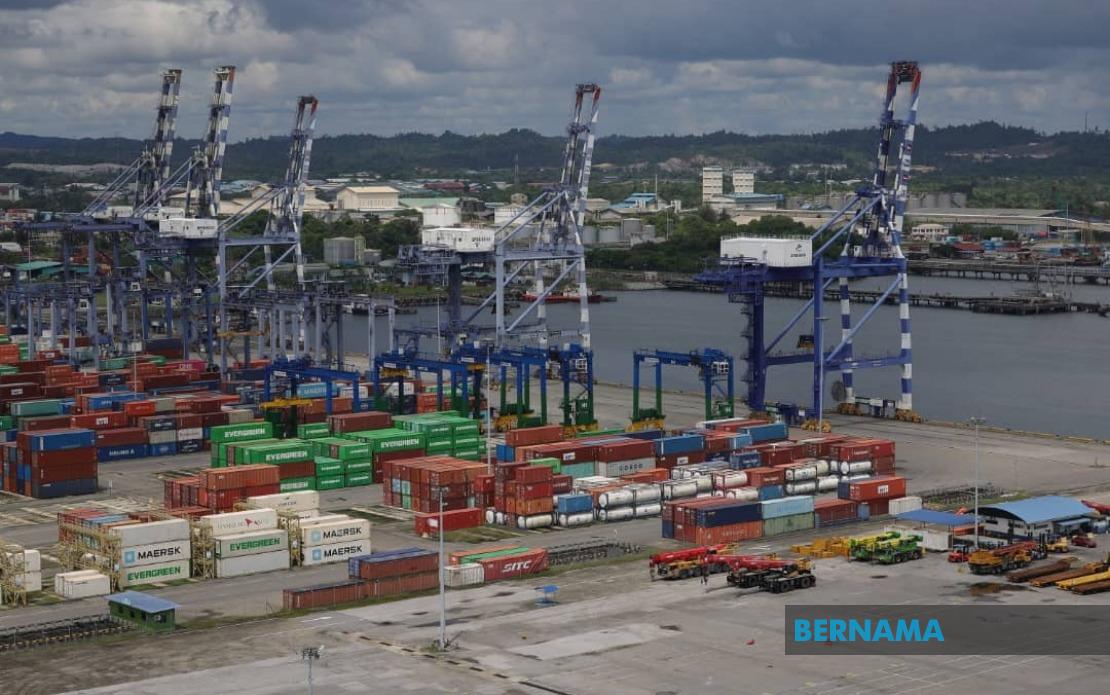
The handover of Bintulu Port's regulatory authority to Sarawak represents a watershed moment in implementing Malaysia Agreement 1963, according to Datuk Mustapha Sakmud, the minister overseeing federal relations with Sabah and Sarawak. The transition from federal to state control was formalized during a ceremony in Bintulu on June 21, attended by Prime Minister Datuk Seri Anwar Ibrahim and Sarawak Premier Tan Sri Abang Johari Tun Openg, cementing what officials describe as a foundational principle of the federation being restored after decades of centralized governance.
Mustapha's characterization of the port transfer as a cooperative achievement rather than a federal concession reflects a deliberate reframing of MA63 implementation in Malaysian political discourse. The agreement, signed in 1963 upon Malaysia's formation, granted Sabah and Sarawak specific constitutional protections and resource rights that have been contested or underutilized throughout the nation's history. By presenting Bintulu Port's devolution as mutually beneficial rather than adversarial, federal and state leaders are attempting to establish a template for resolving long-standing disputes over sovereignty and economic rights in a manner that preserves national unity.
Bintulu Port's strategic significance extends well beyond its current role as the country's primary liquefied natural gas export terminal. The facility anchors Sarawak's energy sector and serves as a critical infrastructure asset linking Malaysia's resource wealth to global markets. The minister emphasized that the port is transitioning from a single-commodity export gateway into a diversified industrial complex, encompassing logistics operations, manufacturing facilities, and emerging clean energy ventures. This transformation reflects broader regional economic trends toward value-added processing rather than raw resource export.
The renewable energy dimension of Bintulu Port's future development carries particular weight in Southeast Asia's energy transition. Sarawak possesses substantial hydroelectric capacity from its river systems, positioning the state to attract manufacturing and processing industries seeking low-carbon production environments. As multinational corporations increasingly commit to carbon-neutral supply chains and environmental governance standards, ports offering renewable-powered infrastructure gain competitive advantage. Mustapha's emphasis on Sarawak's hydroelectric resources as a draw for sustainability-conscious investors reflects recognition that green credentials have become economically valuable assets in contemporary global commerce.
The geopolitical context surrounding this port handover relates to broader tensions within Malaysia's federal framework. Sabah and Sarawak have historically contended that the Malaysian federation has concentrated economic benefits and political power disproportionately in Peninsular Malaysia despite constitutional language suggesting partnership among equals. The MA63 agreement incorporated special protections for the Borneo states, including safeguards over natural resources, immigration control, and religious affairs. However, implementation has been inconsistent, with federal agencies often asserting overriding jurisdiction. Recent years have witnessed intensified efforts by both states' governments to reclaim constitutional rights and revenues they argue were promised but never fully realized.
Mustapha's framing of MA63 implementation as strengthening rather than weakening federal authority represents an attempt to overcome political resistance to devolution in Kuala Lumpur. By arguing that recognizing Sabah and Sarawak's rights actually consolidates the Malaysian federation through voluntary cooperation, he addresses concerns that constitutional concessions could set precedents for further decentralization. This rhetorical approach suggests federal policymakers increasingly recognize that refusing legitimate autonomy claims may pose greater risks to national cohesion than accommodating them within a framework that preserves federal integrity.
The ceremony's prominence, attended by the Prime Minister himself, underscores political commitment to MA63 implementation at the highest level. Anwar Ibrahim's presence signaled that this is not merely a bureaucratic transfer but a deliberate assertion of federal policy. The Pakatan Harapan-led government has positioned itself as more sympathetic to constitutional federalism than its predecessors, and the Bintulu Port handover serves as tangible evidence of that positioning. For Sarawak Premier Abang Johari's government, the transfer validates years of advocacy for resource sovereignty and provides concrete achievement to present to constituents.
The implications for Malaysian federalism extend beyond Bintulu. This precedent may accelerate discussions over similar devolutions affecting other federal assets and revenue streams. Sabah and Sarawak have long sought greater control over petroleum and natural gas resources, arguing that MA63 grants them ownership of onshore reserves. The Federal Government's willingness to transfer port regulatory authority suggests potential movement on these more contentious resource questions, though petroleum politics involve vastly greater sums and competing interests from federal agencies and Petronas, the national oil corporation.
For the broader Asia-Pacific region, Sarawak's transformation into a green industrial hub carries significance for supply chain restructuring and climate-conscious investment flows. The port's evolution reflects global manufacturing sectors' migration toward jurisdictions offering renewable energy, skilled workforces, and efficient logistics. Malaysian policymakers recognize that positioning Sarawak competitively in this landscape requires both infrastructure investment and governance stability. The port handover addresses the latter by demonstrating that constitutional and commercial frameworks are sufficiently stable to attract long-term investment commitments.
The economic potential that Mustapha outlined depends critically on implementation. Sarawak must now demonstrate capacity to regulate the port effectively, maintain international standards for operations and environmental compliance, and coordinate with federal authorities on matters of national interest. The transition period will reveal whether state-level management delivers the promised benefits or whether bureaucratic challenges emerge. Success could vindicate MA63 implementation as a model for federal-state cooperation; failure might strengthen arguments for federal retention of critical infrastructure.
Looking forward, the Bintulu Port handover establishes a benchmark against which further MA63 achievements will be measured. Both Sabah and Sarawak are likely to press for additional devolutions, particularly regarding natural resource revenues and regulatory autonomy. The willingness of federal leadership to countenance these claims, balanced against legitimate federal interests, will shape Malaysia's constitutional evolution over the coming decade. The outcome will determine whether MA63 becomes a living agreement that continually adapts to modern federalism or remains largely symbolic.

