The Paris Vivatech festival has become a showcase for transformative technologies that promise to reshape entire industries, with three particularly striking innovations illustrating how startups are tackling entrenched problems in healthcare, transportation and digital security. Across the sprawling exhibition halls, companies from Berlin to Hong Kong are demonstrating solutions that move beyond incremental improvements, instead offering fundamentally different approaches to challenges ranging from surgical complications to voice-based fraud.
Bone grafting remains one of medicine's persistent frustrations. Surgeons performing orthopaedic procedures routinely rely on bone taken from patients themselves, yet this approach carries significant drawbacks. Berlin-based Blueprint Biomed is directly confronting this limitation through tissue engineering. The company's artificial bone structures eliminate the need for autologous grafts entirely, avoiding the complications that arise when a patient's own bone fails to integrate properly or when the harvest site itself develops problems requiring additional surgery. Chief executive Aaron Herrera explained that Blueprint's three-dimensional printed scaffolds combine polycaprolactone, a biodegradable polyester, with collagen structures that the body safely eliminates over time. The collagen dissolves within three months whilst the polyester backbone breaks down over two years, leaving behind genuine new bone tissue. This approach offers surgeons flexibility in shape and size, adapting to each patient's unique anatomy. The company is currently seeking US$2.5 million in funding as it advances toward human trials, with expectations to begin implanting products into patients by 2028.
The implications for Southeast Asian healthcare systems are significant. Orthopaedic surgeries have become increasingly common across the region as populations age and sports participation rises. A solution that reduces surgical complications and follow-up procedures could ease burdens on already stretched healthcare resources whilst improving patient outcomes. Malaysia's biomedical sector, anchored by facilities in Subang and Cyberjaya, positions the country as a potential hub for commercialising such technologies across ASEAN.
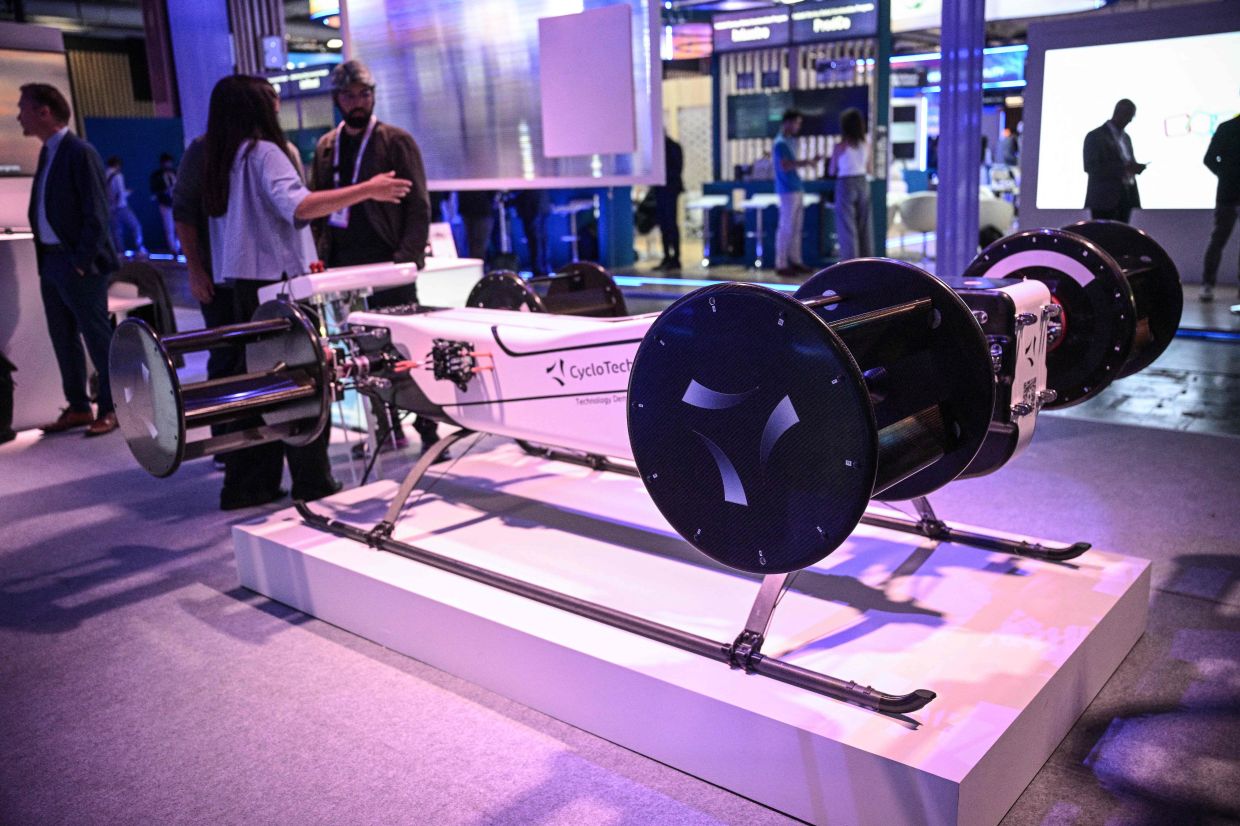
Drone technology has already proven its versatility, from entertainment displays to urgent battlefield applications in Ukraine. Yet Austrian startup CycloTech believes existing aerial vehicles remain constrained by conventional motor design. The company's distinctive cylindrical motors, constructed with blade-shaped elements around their perimeter, enable unprecedented manoeuvrability. According to marketing chief Andrea Marchsteiner, these motors permit drones to hover stationary, accelerate forward, brake instantly mid-air, and reverse direction without the compromises inherent in traditional designs. This flexibility opens possibilities ranging from parcel delivery in densely populated urban areas to advanced transportation systems and military operations. CycloTech, which employs 65 people and has already secured €40 million in funding, is actively seeking additional capital and corporate partners willing to integrate their motor technology into existing aircraft platforms.
For Malaysia and the region, advanced drone capabilities carry particular relevance given the terrain challenges across ASEAN. Tropical environments with congested cities, dense jungles and island geography create distinct delivery and logistics demands that conventional systems struggle to address efficiently. CycloTech's technology could enable solutions tailored to Southeast Asian conditions, potentially transforming how e-commerce, medical supplies and emergency services operate across the region.
Voice-based identity verification has become standard at banks and financial institutions worldwide, yet this security strength becomes a vulnerability as artificial intelligence advances. Deepfake audio technology now permits convincing imitation of someone's voice using minimal samples, often through freely available tools. French company Whispeak began as a voice recognition platform before pivoting toward the emerging threat of fraudulent audio. The company has spent three years developing detection systems using its own AI tools to identify when voice recordings are fabricated. Chief executive Florent Van Calster claims the system now represents the world's most accurate deepfake audio detector, having achieved top rankings in multiple international competitions. Current accuracy exceeds 99 per cent, though Van Calster acknowledges an ongoing competitive dynamic where criminals will continually refine their techniques. Whispeak is partnering with French telecom giant Bouygues to filter calls for deepfakes and alert users when suspicious voices are detected.
For Malaysia's banking sector and telecommunications providers, this technology addresses an urgent concern. As digital fraud becomes increasingly sophisticated, Malaysian consumers and financial institutions face mounting risks from voice-based fraud attempts. A reliable detection system could become essential infrastructure as scammers shift tactics. The collaboration with Bouygues demonstrates how such technology integrates into existing telecom networks, a model directly applicable to Malaysian carriers handling millions of daily calls.
Performance monitoring has long relied on blood tests and wearable devices tracking heart rate and other crude metrics. Hong Kong-based startup PointFit offers a radically different approach through adhesive patches containing microscopic sensors that analyse biomarkers in sweat, measuring compounds like glucose and cortisol without invasive blood draws. Chief executive Kenny Oktavius began developing the concept in 2019 whilst still a university student. The system builds an AI-generated personal sweat profile that adjusts expected values based on demographic factors and environmental conditions, recognising that identical readings mean different things for different people. Oktavius notes that elite athletes wearing expensive sophisticated sensors still experience sudden health crises, suggesting that heart rate data alone provides incomplete information. True understanding requires examining biomarkers, the approach hospitals prioritise when patients require emergency care. PointFit has already partnered with Red Bull's Athlete Performance Centre and Puma's Nitro Labs innovation unit, with expansion toward consumer retail markets through partnerships with retailers like Decathlon and eyewear manufacturer EssilorLuxottica planned for the future.
For Southeast Asia's growing sports industry and fitness sector, PointFit's technology offers advantages particularly suited to tropical climates where sweat production provides abundant data. Malaysia's developing esports and traditional athletics communities could benefit from performance monitoring systems optimised for hot, humid conditions where sweat biomarkers prove more informative than traditional metrics.
These Vivatech innovations collectively demonstrate how startups are moving beyond incremental gadgetry toward addressing fundamental limitations in established systems. Whether improving surgical outcomes, expanding aircraft capabilities, securing voice communications or measuring athletic performance, each company identified a persistent problem and engineered a materially different solution. For Southeast Asian investors, entrepreneurs and industries, these examples illustrate technology trajectories worth tracking closely, as each promises commercial viability within two to five years whilst addressing challenges particularly acute in tropical, high-growth markets where conventional solutions often prove insufficient.

