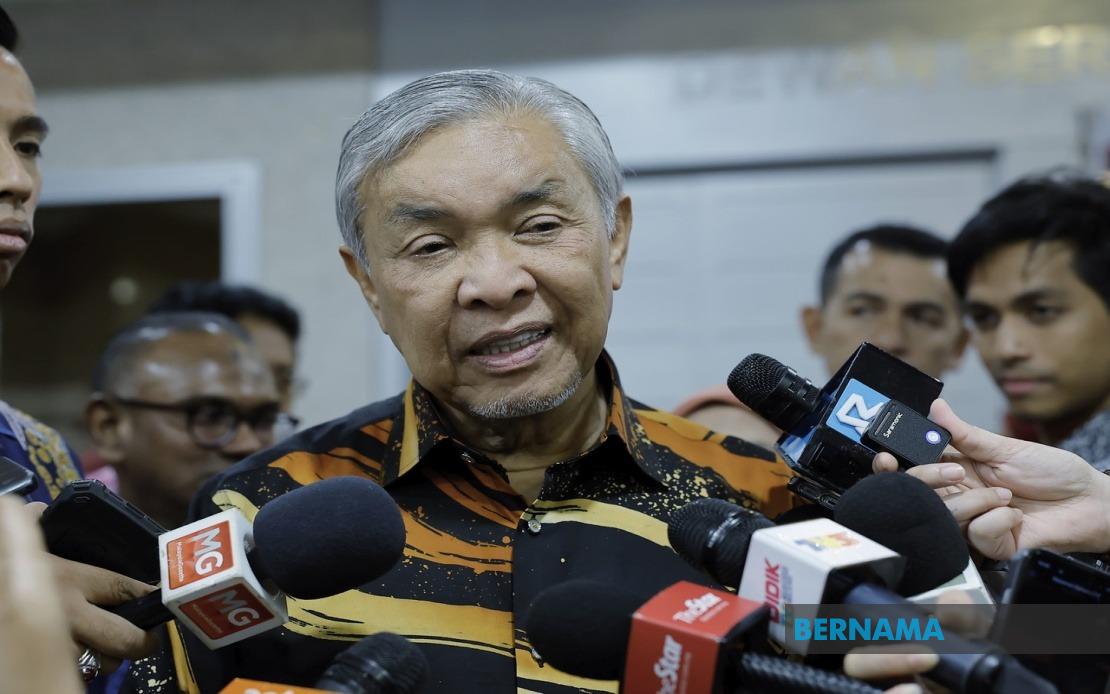
Barisan Nasional and UMNO leadership have adopted a hardline stance against misconduct at Tabung Haji, with BN chairman Datuk Seri Dr Ahmad Zahid Hamidi asserting that the coalition will not overlook wrongdoing or operational failures within the religious investment fund. Speaking at a gathering of the Rural and Regional Development Ministry in Putrajaya, Ahmad Zahid, who holds the position of Deputy Prime Minister, underscored that accountability must apply uniformly across all government institutions and statutory bodies without exception or compromise.
The firm declarations come as Parliament prepares for a special sitting on August 11 to examine and debate the findings of the Royal Commission of Inquiry report into Tabung Haji's operations. Released on July 29, the comprehensive RCI investigation uncovered troubling patterns within the fund's management structure, with investigators identifying suspicious financial transactions and deliberate concealment of critical information spanning the period from 2014 to 2020.
The RCI's extensive inquiry revealed significant deterioration in Tabung Haji's asset base, traced directly to problematic investment decisions made during the examination period. The commission has recommended that authorities conduct a forensic audit examining the rationale and execution of these investment choices, signalling the severity of concerns raised in the final report. This recommendation suggests that investigators require deeper financial and technical analysis to fully understand the mechanisms through which TH's asset value declined substantially.
Ahmad Zahid's public commitment to accountability reflects the political pressure surrounding Tabung Haji, a fund that holds profound cultural and religious significance for Malaysian Muslims. The organisation serves as a conduit for pilgrimage savings and investment management for millions of Malaysian citizens, making governance failures particularly damaging to public trust. The RCI's work has exposed institutional vulnerabilities that extend beyond routine administrative lapses, encompassing deliberate concealment practices that suggest systemic problems in oversight and governance frameworks.
For Malaysian observers, the Tabung Haji controversy represents a critical test of whether political leadership will genuinely pursue accountability or whether institutional investigations ultimately produce limited consequences. Previous governance failures within prominent government agencies have sometimes resulted in reorganisation rather than substantive enforcement action, creating scepticism about whether rhetorical commitments translate into tangible remedial measures. Ahmad Zahid's statements therefore carry particular weight given the broader context of public accountability and institutional reform in Malaysia.
The special parliamentary session scheduled for August 11 will provide the first opportunity for legislators to formally examine the RCI's conclusions and recommendations in a public forum. This debate carries significance beyond Tabung Haji itself, potentially establishing precedents for how Malaysian institutions address governance failures within statutorily-regulated bodies. The session may also reveal whether there exists sufficient political consensus for implementing forensic audits and other investigative recommendations proposed by the RCI.
From a Southeast Asian perspective, Malaysia's handling of the Tabung Haji matter contributes to broader regional discussions about governance standards and institutional accountability. Other countries in the region managing large state-owned investment vehicles and sovereign wealth funds observe how Malaysia addresses asset deterioration and management failures. The transparency and rigour applied in investigating and addressing these issues can either strengthen or undermine confidence in Malaysia's institutional frameworks.
The concealment of information identified by the RCI raises particular concerns about internal compliance mechanisms and whistleblower protections within Tabung Haji. Effective institutions typically possess mechanisms enabling employees to report concerns through protected channels. The RCI's findings suggest these safeguards may have been inadequate or ineffective, allowing problematic transactions to proceed without adequate scrutiny or disclosure. Strengthening these mechanisms will likely form part of recommended reforms.
Ahmad Zahid's insistence that wrongdoing within government agencies must face consequences reflects broader efforts to restore institutional credibility following governance scandals across Malaysian public agencies in recent years. However, the credibility of such statements ultimately depends upon whether subsequent investigations, prosecutions, or disciplinary actions actually materialise. The Muslim community specifically, given Tabung Haji's religious and cultural dimensions, will likely scrutinise whether accountability actually extends to senior management personnel or remains confined to lower-level officials.
The RCI's work represents a significant investment of investigative resources, with the seven-year examination period requiring extensive document review and witness testimony. The fact that investigators concluded sufficient wrongdoing existed to recommend forensic audits suggests the inquiry identified substantial irregularities warranting deeper financial analysis. This escalation from investigative commission to forensic audit represents a meaningful intensification of scrutiny rather than a merely administrative response.
Moving forward, the August 11 parliamentary session will provide essential clarity regarding the legislative response to RCI recommendations. Whether Parliament approves recommended forensic audits, establishes special investigative taskforces, or implements governance reforms will indicate the seriousness with which political leadership treats institutional accountability. The outcomes may also influence public confidence in Malaysian statutory bodies and government institutions more broadly.

