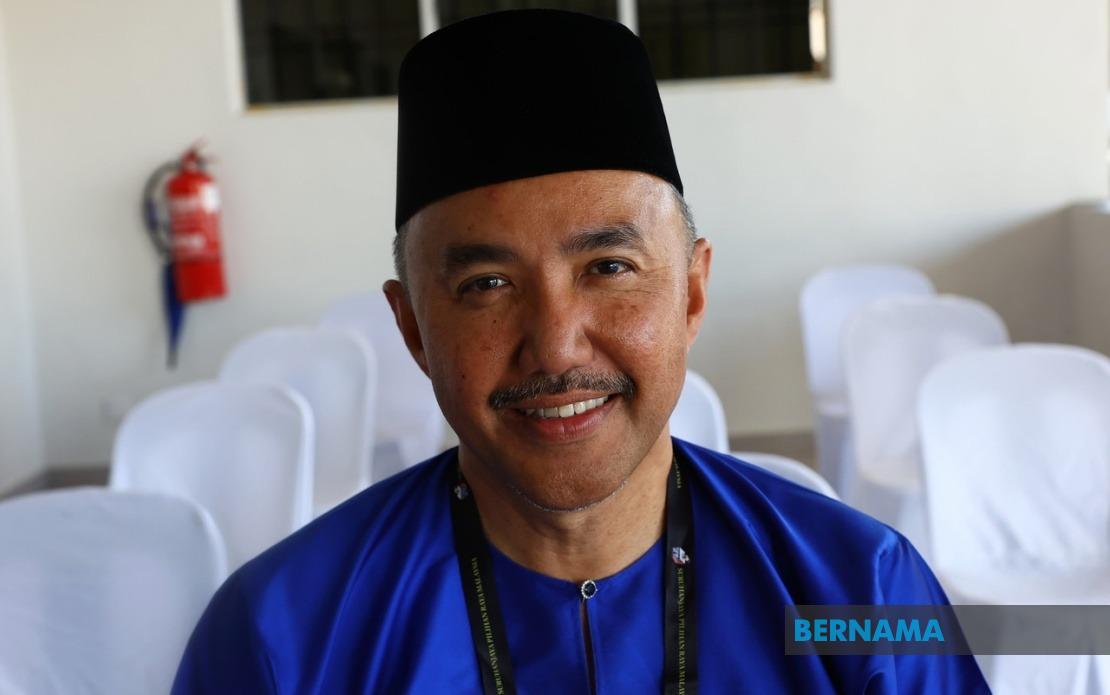
With the Johor state election entering its final stretch, Barisan Nasional is pinning significant hopes on mobilising support among Federal Land Development Authority communities spread across the Kulai parliamentary constituency. Party officials believe that aggressive welfare messaging and targeted development initiatives can reverse previous losses in FELDA settlements, where the coalition has historically faced electoral challenges in recent cycles.
Datuk Mohd Jafni Md Shukor, who chairs BN's Kulai division while defending the Bukit Permai state seat, highlighted the four FELDA settlements under the coalition's electoral focus. These communities—FELDA Taib Andak, FELDA Inas, and FELDA Bukit Permai, all located within the Bukit Permai state constituency, plus FELDA Bukit Batu in the Bukit Batu state seat—collectively represent nearly 7,000 voters whose bloc support could prove decisive in a tight three-cornered or four-cornered contests.
The coalition's strategic emphasis on FELDA communities reflects a broader pattern in Malaysian politics where rural smallholder settlements have become swing constituencies. FELDA voters, whose economic fortunes are closely tied to government policy and agricultural commodity markets, have historically demonstrated significant electoral volatility. BN's confidence in this segment suggests internal polling data indicating receptiveness to its messaging, though the party acknowledges that its FELDA performance suffered notably in 2018 before staging a partial recovery in 2022.
According to Jafni, the Johor state government under Menteri Besar Datuk Onn Hafiz Ghazi has prioritised FELDA welfare through multiple channels. Education assistance distributed via the Johor Education Foundation represents a direct benefit targeting settler families with children, addressing a chronic concern among FELDA communities seeking better opportunities for the next generation. Such targeted programmes serve dual purposes—delivering tangible assistance while creating narratives of government responsiveness that BN campaigns can amplify.
Perhaps more significantly, the state government has substantially cleared a longstanding administrative bottleneck affecting land security in FELDA settlements. The resolution of ownership applications to 99.9 per cent completion represents a symbolic and practical victory for settlers who have endured uncertainty over land titles for years. In communities where property rights directly affect access to credit and agricultural investment, such administrative clarity carries profound economic implications. BN's positioning of this achievement as evidence of governance competence attempts to translate bureaucratic efficiency into electoral gratitude.
The broader political context surrounding FELDA settlements reflects deeper anxieties within Malaysian agrarian communities about economic viability and state support. FELDA, once a flagship development initiative symbolising post-independence nation-building, has faced declining profitability and demographic challenges as younger settlers migrate to cities. Government support for FELDA communities thus carries symbolic weight beyond immediate economic value—it represents commitment to rural Malaysia and acknowledgement of settlers' contributions to national development.
Jafni's appeal for a second term for the Johor state government emphasises continuity and the argument that meaningful development requires sustained timeframes. This messaging strategy attempts to counter opposition arguments about governance failures by framing electoral choice as a question of implementation capacity and long-term vision. The implicit pitch suggests that switching governments would reset development timelines and disappoint beneficiaries of ongoing programmes.
The competitive landscape in Bukit Permai reflects the complex political fragmentation now characterising Malaysian elections. Jafni confronts challengers from Parti Bersama Malaysia, Pakatan Harapan, and Perikatan Nasional, each attempting to capture different segments of the electorate. In FELDA settlements where traditional voting patterns have eroded, such multi-cornered contests create unpredictable outcomes where narrow margins can determine results. BN's confidence must therefore be interpreted against a backdrop of genuine electoral uncertainty rather than assumed advantage.
For Malaysian readers following state-level electoral dynamics, the Kulai contest exemplifies how rural development policy and administrative performance increasingly determine political outcomes. FELDA communities' electoral behaviour in Johor will likely influence broader national perceptions about rural voter sentiment heading toward future federal elections. The coalition's emphasis on concrete welfare delivery and administrative improvements, rather than purely partisan rhetoric, reflects evolving voter expectations for performance-based accountability.
The July 11 polling date arrives as agricultural commodity cycles and economic pressures continue affecting FELDA household incomes. Settler economic anxieties may prove more influential than specific campaign messaging, creating potential volatility in final results. BN's confidence in FELDA support therefore represents both genuine organisational strength and a calculated bet that recent welfare initiatives and administrative achievements will translate into sustained electoral support despite broader economic headwinds affecting rural livelihoods.

