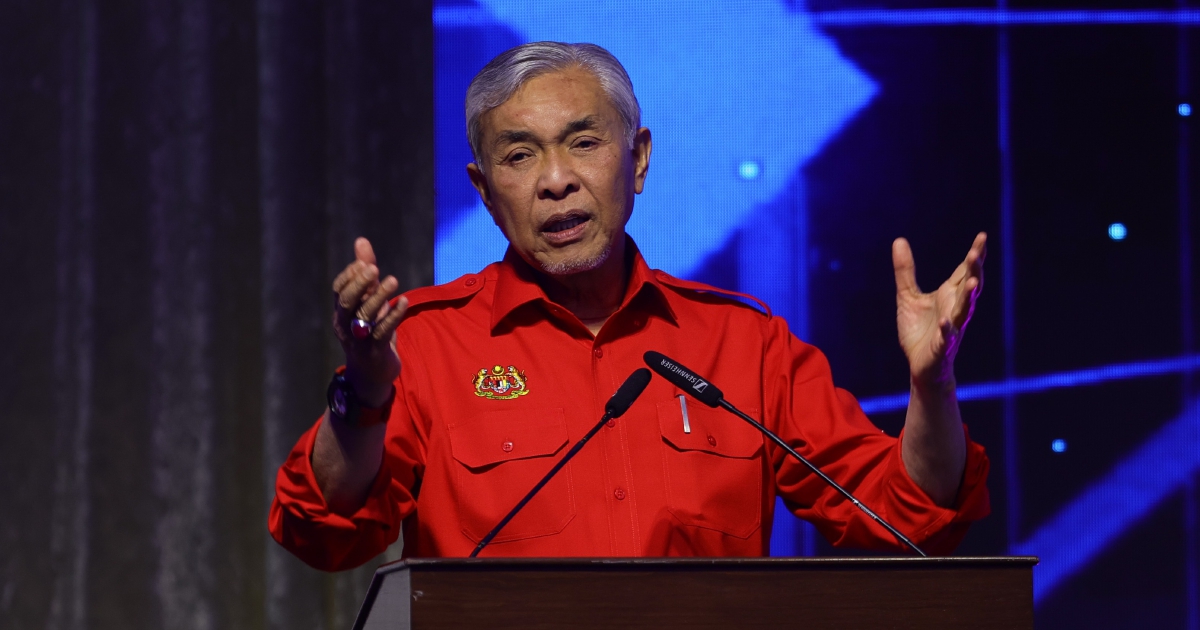
Barisan Nasional chairman Datuk Seri Dr Ahmad Zahid Hamidi has endorsed Prime Minister Datuk Seri Anwar Ibrahim's authority to dismiss ministers from the coalition should their performance prove unsatisfactory, a statement that underscores the delicate balance of power within Malaysia's ruling government and reflects the pragmatic accommodation the traditional powerhouse has adopted since the 2022 elections.
Zahid's remarks, delivered in Seremban, carry significance beyond mere procedural acknowledgment. They represent a calculated positioning by BN—which holds the largest parliamentary bloc within the coalition government—that demonstrates willingness to subordinate ministerial placement decisions to executive assessment of competence. This stance contrasts sharply with the coalition dynamics of previous administrations, when BN effectively wielded veto power over cabinet composition and personnel changes.
The BN chairman's public statement serves multiple tactical purposes. First, it reinforces the appearance of coalition cohesion at a time when political observers have noted tensions between constituent parties over ministerial portfolios and resource allocation. Second, it subtly acknowledges the primary ministerial base within government remains concentrated in BN's ranks, making such reassurances strategically valuable. Third, it positions the coalition as governance-focused rather than patronage-driven, potentially insulating BN from criticism should underperforming ministers face removal.
Understanding this development requires examining the broader context of Malaysia's coalition politics. The 2022 election produced no clear majority for any single bloc, necessitating the formation of Pakatan Harapan-led government with BN and other partners. This configuration represents a significant structural departure from the decades when BN dominated as the uncontested ruling force. Within this new arrangement, the distribution of ministerial positions became subject to negotiation between multiple stakeholders, rather than BN's unilateral determination.
Zahid's pronouncement implicitly acknowledges a reality that has constrained BN's leverage since 2022: the Prime Minister, as chief executive, retains constitutional authority over ministerial appointments and dismissals. While convention typically requires coalition consultation, the legal power rests with the head of government. By publicly accepting this reality, Zahid demonstrates that BN leadership has adapted its expectations to the new political landscape, even as it maintains influence through its parliamentary numbers.
The timing of such a statement often signals either preventive positioning ahead of anticipated cabinet changes or a response to specific performance concerns. Malaysian political observers frequently read ministerial reshuffles as corrective measures addressing particular policy failures or coordination breakdowns. Zahid's advance blessing of potential dismissals could indicate either scenario—or simply represent routine reaffirmation of coalition discipline.
For coalition stability, such public statements matter considerably. Opposition parties and critical observers scrutinise coalition interactions for signs of fracture that might presage governmental collapse. When BN's chairman explicitly endorses executive discretion over BN ministers, it signals that internal differences will not escalate into destabilising disputes. This reassurance proves especially valuable during periods when economic headwinds, policy controversies, or electoral calculations generate centrifugal pressures within ruling alliances.
The underlying principle Zahid articulates—that ministerial retention depends on demonstrable performance—also reflects broader governance discourse. Malaysian political leaders increasingly invoke performance metrics and developmental outcomes as legitimising criteria for ministerial tenure, rather than purely political or communal representation. This rhetorical shift, even when not uniformly applied in practice, reflects the electorate's demonstrated concern with competence and delivery.
From a regional perspective, Malaysia's coalition flexibility carries implications beyond domestic politics. Southeast Asian systems increasingly feature complex multi-party arrangements where single blocs cannot command majorities. How these coalitions manage internal tensions, particularly regarding executive prerogatives versus coalition partner interests, shapes governmental stability and policy continuity throughout the region. Malaysia's experience in balancing these tensions offers a practical case study.
For BN specifically, accepting prime ministerial authority over ministerial performance evaluations repositions the coalition as a mature governing partner rather than a faction pursuing narrower interests. This framing potentially appeals to swing voters and fence-sitters who prioritise governmental effectiveness. However, it simultaneously requires BN to demonstrate that its ministers genuinely perform at expected standards—a vulnerable position should multiple BN ministers face removal.
The coalition government's capacity to implement complex legislative agendas and execute long-term policy initiatives depends partly on ministerial continuity and institutional knowledge. Excessive turnover disrupts bureaucratic implementation and policy coherence. Zahid's comments therefore implicitly endorse the proposition that quality governance sometimes requires difficult personnel decisions, even when ministers represent major coalition partners.
Moving forward, Zahid's statement establishes clearer expectations around performance evaluation standards within the coalition. Should Prime Minister Anwar subsequently dismiss BN ministers, the chairman's prior endorsement provides political cover and minimises recrimination claims of unfair treatment. Conversely, it also raises stakes for BN ministerial performance, as underperformance now invites dismissal without the protective buffer that coalition solidarity traditionally provided.
Ultimately, the BN chairman's remarks reflect the maturation of Malaysian coalition politics in the post-2022 context. Rather than viewing coalition government as zero-sum competition for posts, BN leadership increasingly frames it as collective stewardship requiring performance accountability. Whether this enlightened perspective translates into consistently applied practices remains an open question, but the public positioning suggests pragmatism has supplanted rigid factional interests in guiding BN's coalition strategy.

