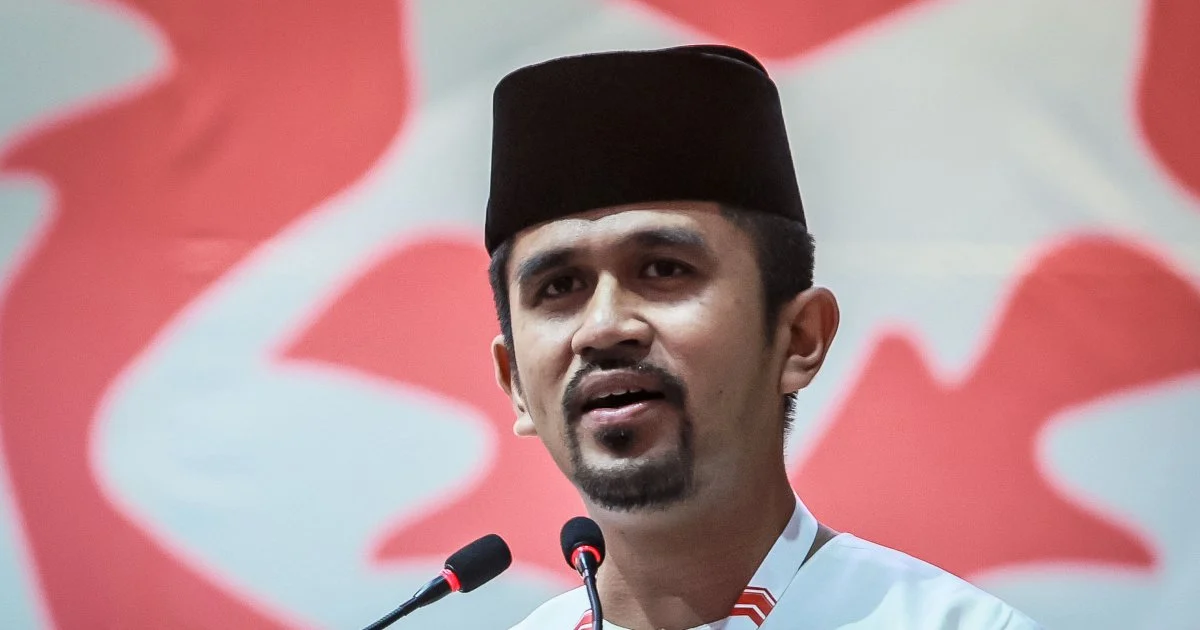
Umno Youth secretary-general Hafiz Ariffin has raised eyebrows over the notable absence of prominent Johor Pakatan Harapan leaders from the party's official candidate roster announced ahead of the July 11 state election, a move that underscores deepening fault lines within the opposition alliance at a critical moment in the electoral calendar.
The questioning of PH's candidate selection strategy marks another flashpoint in the intensifying competition between Barisan Nasional and Pakatan Harapan as both coalitions mobilise resources and restructure their political positioning in Johor, Malaysia's second-largest state and a perennial battleground that carries outsized influence on national politics. Hafiz's intervention, speaking from his position leading Umno's youth organisation, represents a calculated attempt to exploit what BN perceives as organisational weakness or factional discord within the opposition ranks.
The July 11 election looms as a significant test of political fortunes for both groupings. For Pakatan Harapan, the contest presents an opportunity to consolidate support in a state where it made electoral inroads during the 2018 federal election cycle but has struggled to maintain organisational cohesion since then. For Barisan Nasional, victory in Johor would vindicate the coalition's recovery narrative and reinforce its claim to remain the dominant force in Malaysian electoral politics, particularly in states outside Selangor and Penang where PH has established stronger footholds.
The composition of a candidate slate carries profound significance beyond mere personnel selection. It signals internal party priorities, reflects factional dynamics within coalitions, and communicates to voters the calibre of leadership they can expect if a party or alliance comes to power. When prominent figures are conspicuously absent from campaign rosters, observers naturally interpret such omissions through lenses of internal conflict, disfavour from party leadership, or strategic considerations about electoral viability in particular constituencies.
For Johor specifically, the state's political landscape has undergone substantial transformation in recent years. The 2018 federal election delivered shocks that reverberated through state-level politics, while subsequent developments including the Sheraton Move in 2020 fundamentally altered the configuration of state government and relationships between coalition partners. These upheavals have created openings for fresh political actors while displacing others, and candidate selection processes inevitably reflect the resulting reshuffling of influence and power.
BN's strategy of publicising questions about PH's candidate selections serves multiple tactical objectives. It maintains pressure on the opposition coalition during a period when campaign momentum matters enormously, it potentially signals to voters doubts about PH's internal unity and decision-making processes, and it positions BN as the stable alternative capable of delivering coherent governance. For Hafiz specifically, intervention in the electoral narrative allows the Umno Youth leader to burnish his profile as an active voice within party leadership structures.
The specifics of which Johor PH leaders find themselves absent from the candidate line-up would likely reveal important details about contemporary power distributions within the opposition coalition. Senior figures commanding significant grassroots followings, strong personal vote banks, or critical positions within state-level party structures would ordinarily be expected to feature prominently in campaign slates. Their exclusion—whether voluntary or imposed—raises substantive questions about either their electoral prospects or their standing within party hierarchies.
Pakatan Harapan's candidate selection process itself deserves scrutiny from observers seeking to understand opposition politics. The coalition comprises multiple parties including PKR, DAP, and Amanah, each with distinct internal cultures, factional structures, and leadership dynamics. Harmonising these multiple organisational logics while maintaining coalition unity represents a perpetual challenge, and electoral cycles tend to intensify existing tensions as ambitions for ministerial positions and control over constituent development funds become more acute.
For Malaysian voters and observers tracking state-level political developments, such questioning about candidate selection offers valuable insight into coalition health and internal dynamics that might not be immediately obvious from public statements. Electoral processes rarely unfold as purely competitive battles between abstract political programmes; instead, they reflect deeper currents of factional maneuvering, personality-driven politics, and struggles over resource allocation that determine how power actually functions in Malaysian political life.
The road to July 11 will likely generate additional claims and counter-claims from both BN and PH as campaigns intensify. Hafiz's intervention foreshadows a campaign period where coalition unity, candidate credibility, and internal party dynamics will figure prominently alongside more conventional policy discussions. How Pakatan Harapan responds to such scrutiny, whether through defending its selection criteria or pivoting to attack BN's record, may ultimately prove as consequential to electoral outcomes as the policies the competing coalitions place before voters seeking representation in the Johor state assembly.

