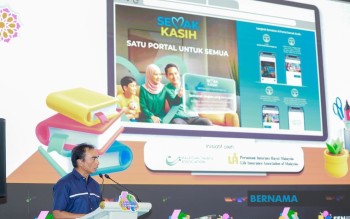
Bank Negara Malaysia unveiled the Semak Kasih portal on Wednesday in Kuala Terengganu, a digital initiative designed to reconnect Malaysian families with insurance and takaful benefits that remain unclaimed following the death of policyholders. The platform represents a significant step in streamlining the process by which beneficiaries can discover whether their relatives maintained coverage and subsequently initiate claims with the relevant financial providers.
Deputy Governor Adnan Zaylani Mohamad Zahid explained that the new system addresses a persistent gap in Malaysia's financial protection landscape. Many households remain unaware that deceased family members had secured insurance or takaful policies intended to provide financial relief during emergencies such as medical crises, property damage, or accident-related expenses. This knowledge deficit has resulted in substantial sums remaining in limbo, untouched by those who stand to benefit most from the protection originally intended for them.
The scale of the problem is substantial. Drawing on estimates compiled by the Life Insurance Association of Malaysia and the Malaysian Takaful Association, approximately 50,000 insurance policies and takaful certificates featuring death benefits have yet to be claimed. This figure underscores the challenge facing Malaysia's insurance sector: despite widespread product availability, communication barriers and informational gaps prevent beneficiaries from accessing the financial safety nets designed to support them during vulnerable periods.
Previous attempts to bridge this gap have involved traditional outreach methods. Insurance and takaful companies have deployed direct mail campaigns and commissioned sales agents to contact potential beneficiaries, yet these labour-intensive approaches have yielded limited results. The Semak Kasih portal represents a modernisation of this process, leveraging digital accessibility to make verification and claims initiation more straightforward for families lacking specialist knowledge of insurance terminology or procedures.
The portal's launch coincides with a broader emphasis from Bank Negara on financial resilience across Malaysian society. Adnan Zaylani stressed that insurance and takaful protection constitute foundational components of household financial planning, particularly as economic volatility and inflationary pressures intensify the financial burden on families. Insurance products function not merely as optional add-ons but as essential safeguards enabling dependents to maintain their standard of living following the loss of a primary income earner.
Beyond the immediate insurance initiative, Bank Negara has intensified efforts to support Malaysia's entrepreneurial sector. The central bank continues deploying targeted financing programmes for micro, small, and medium enterprises, including microfinance products offering up to RM100,000 without requiring guarantors or collateral—a significant structural barrier reduction for less-established businesses. The SME Stabilisation Relief Facility, backed by RM5 billion in central bank allocation, specifically targets companies facing headwinds from the West Asia conflict, extending working capital financing of up to RM750,000 to affected enterprises.
Financial literacy initiatives have emerged as equally crucial to the central bank's broader stability mandate. The iTekad programme has already benefited over 14,000 participants nationwide, including approximately 600 in Terengganu, demonstrating measurable improvements in household income and living standards. These initiatives recognise that financial protection and economic opportunity mean little without accompanying knowledge and decision-making capability among the population.
Digitalisation's expansion has introduced fresh vulnerabilities alongside new opportunities. Research cited by Adnan Zaylani revealed that 37 percent of Malaysians engage in impulsive online purchasing, while 26 percent carry unsustainable debt burdens. These patterns reflect a growing disconnect between the sophistication of financial platforms and consumers' preparedness to navigate them responsibly. The proliferation of digital channels has simultaneously expanded fraud vectors and consumption temptations, requiring corresponding improvements in financial education.
Addressing this educational gap demands systematic investment in knowledge development from childhood through adulthood. Bank Negara's Financial Education Forum initiative aims to create inclusive, accessible financial learning resources extending to marginalised communities including persons with disabilities. Programmes such as MyDuitStory and the FEN Proaktif 2.0 collaboration with Universiti Malaysia Terengganu position financial management as a core competency alongside traditional academic subjects, preparing young people to make informed decisions as they enter the workforce and establish independent households.
The psychological dimension of financial prudence deserves particular attention in the Malaysian context. Adnan Zaylani's emphasis on consistent saving from early adulthood reflects recognition that long-term wealth accumulation depends more on behavioural discipline than on market timing or exceptional returns. The central bank's repeated messaging about prudent spending and systematic protection reflects an understanding that Malaysians face economic pressures requiring sustained, deliberate financial choices rather than reactive responses to crises.
For Malaysian readers, the Semak Kasih portal carries immediate practical relevance. Families who have experienced the loss of relatives should verify whether unclaimed policies exist, potentially providing financial relief during grief and transition. The portal's existence also prompts broader household financial audits—examining what protections currently exist, assessing coverage adequacy, and communicating policy details to designated beneficiaries. This preventive approach reduces the likelihood that future generations will discover unclaimed benefits years after a relative's death.
The initiative also signals Bank Negara's recognition that financial inclusion extends beyond lending and investment access to encompassing awareness and claims processes. For Malaysia to develop as a mature financial economy, beneficiaries must not only possess protection but also know how to access it. The Semak Kasih portal addresses this final-mile challenge, transforming insurance and takaful from abstract concepts into tangible financial assets that families can identify and activate when circumstances demand.

