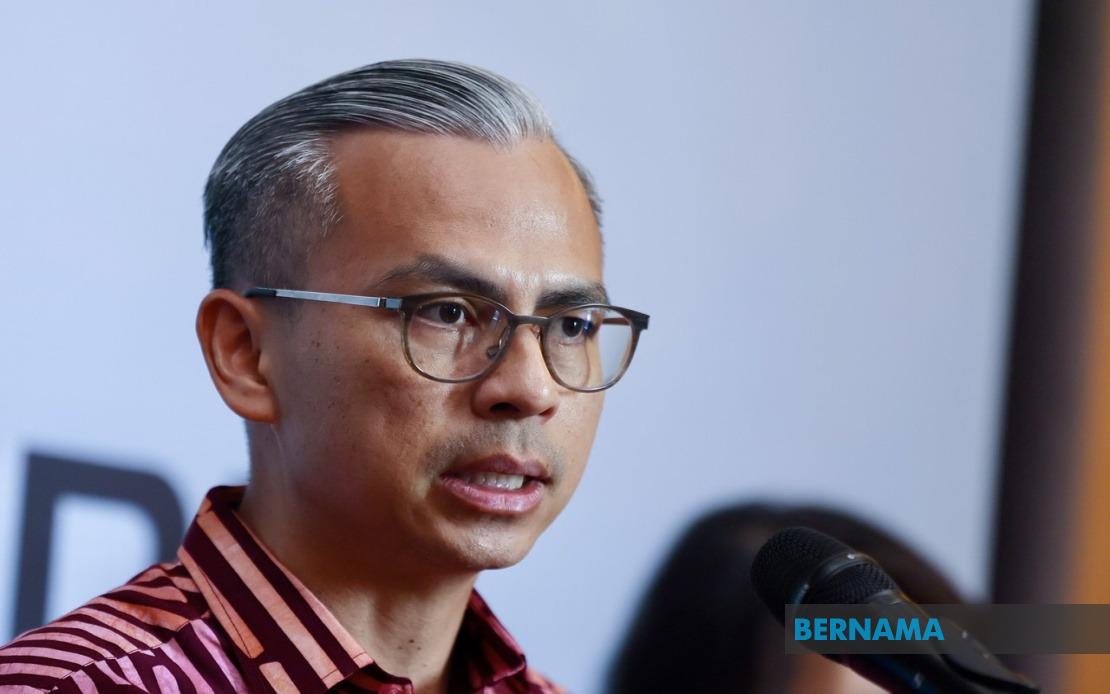
Bank Negara Malaysia is prepared to enforce compliance among financial institutions that have not yet implemented a waiver on interbank automated teller machine charges, according to Communications Minister Datuk Fahmi Fadzil. Speaking at a ministry press conference, Fahmi encouraged customers who discover they are still being charged the RM1 fee for cash withdrawals at bank-operated ATMs to escalate the matter directly to BNM, which will investigate and take corrective action against non-compliant banks. The directive signals the central bank's determination to ensure the newly implemented fee exemption benefits the country's banking customers as intended.
The RM1 fee waiver, which commenced on July 1, represents a significant shift in Malaysia's interbank ATM ecosystem. Under the new arrangement, customers can now withdraw cash from any machine within the shared ATM network operated by participating banks without incurring the traditional per-transaction charge. This development emerged from broader industry coordination aimed at reducing banking costs for ordinary Malaysians and enhancing financial service accessibility across the country. Fahmi's emphasis on customer reporting indicates that BNM views compliance as critical to the policy's success and is actively monitoring implementation across the banking sector.
The scope of the fee waiver extends to approximately 16,000 automated teller machines nationwide, representing roughly 84 percent of all bank-owned ATM infrastructure in Malaysia. This substantial coverage underscores the coordinated effort among major financial institutions to comply with the new fee structure. The remaining 16 percent of machines, operated by independent private companies outside the banking network, will continue charging the standard RM1 withdrawal fee. These private operators function under separate commercial arrangements not covered by the central bank's directive, creating a two-tier ATM system that requires customer awareness to navigate effectively.
Distinguishing between compliant and non-compliant machines presents a practical challenge for banking customers accustomed to paying uniform fees across ATM networks. Fahmi addressed this confusion by advising users to identify bank-owned machines by examining the branded logos displayed on each terminal. This simple visual identifier helps customers avoid third-party ATMs where charges remain in effect. The distinction becomes particularly important for frequent cash users and those withdrawing from machines outside their home bank, where the accumulated savings from the waiver can become meaningful over time.
The clarification was necessary because considerable public confusion emerged on social media platforms following the waiver's implementation. Many customers struggled to understand which machines fell under the new fee exemption and which maintained the original pricing structure. This information gap highlighted the importance of coordinated communication from both the government and banking industry to ensure widespread understanding of financial policy changes. Fahmi's public statement and the promised joint clarification from the Association of Banks in Malaysia and the Malaysian Islamic Banking and Financial Institutions Association aim to bridge this understanding gap and reduce customer frustration.
The Association of Banks in Malaysia and the Malaysian Islamic Banking and Financial Institutions Association are expected to release a comprehensive joint statement detailing the fee waiver's implementation mechanics. This collaborative communication from industry bodies will complement government messaging and provide authoritative guidance on ATM usage and fee structures. Such alignment between regulators, government spokespersons, and industry associations strengthens the policy's credibility and demonstrates institutional commitment to transparent banking practices. The statement will likely address frequently asked questions and provide updated ATM location information for customers seeking fee-exempt withdrawal points.
Beyond the immediate ATM fee policy, Fahmi highlighted Malaysia's broader appeal to foreign investors seeking locations for major financial technology and innovation ventures. He noted that an international fintech company has established a Global Development Centre at Tun Razak Exchange, representing a significant vote of confidence in the country's investment climate. This development was presented as evidence that Malaysia's political stability and consistent economic policies under the MADANI Government administration have successfully attracted world-class technology enterprises seeking bases for regional and global operations.
The fintech company's decision to locate its first global development center of this magnitude in Malaysia carries implications for the country's positioning within Southeast Asia's digital economy. The investment signals that Malaysia possesses the regulatory framework, talent infrastructure, and strategic location necessary to support advanced financial technology operations, particularly in emerging areas such as Agentic AI. This specialization in next-generation artificial intelligence applications distinguishes Malaysia from competing regional destinations and suggests a deliberate strategy to develop high-value knowledge sectors beyond traditional manufacturing and commodity export.
Fahmi characterized the investment decision as validation of the MADANI Government's policy consistency and the political stability Malaysia offers relative to other regional alternatives. Foreign investors typically conduct extensive risk assessments before committing significant capital to major development centers, making the fintech company's choice a meaningful indicator of investor sentiment toward Malaysia's governance environment. The Communications Minister's emphasis on this connection between political reliability and economic growth reflects the government's understanding that investor confidence depends on both policy substance and institutional predictability.
The convergence of these two developments—the ATM fee waiver and the fintech investment—illustrates different dimensions of Malaysia's financial sector evolution. The fee waiver represents consumer-focused regulatory intervention designed to reduce banking costs for ordinary citizens, while the fintech investment demonstrates Malaysia's capacity to attract sophisticated global operations requiring advanced technological infrastructure. Together, these initiatives suggest a comprehensive approach to financial sector modernization that balances consumer protection with attracting premium international investment.

