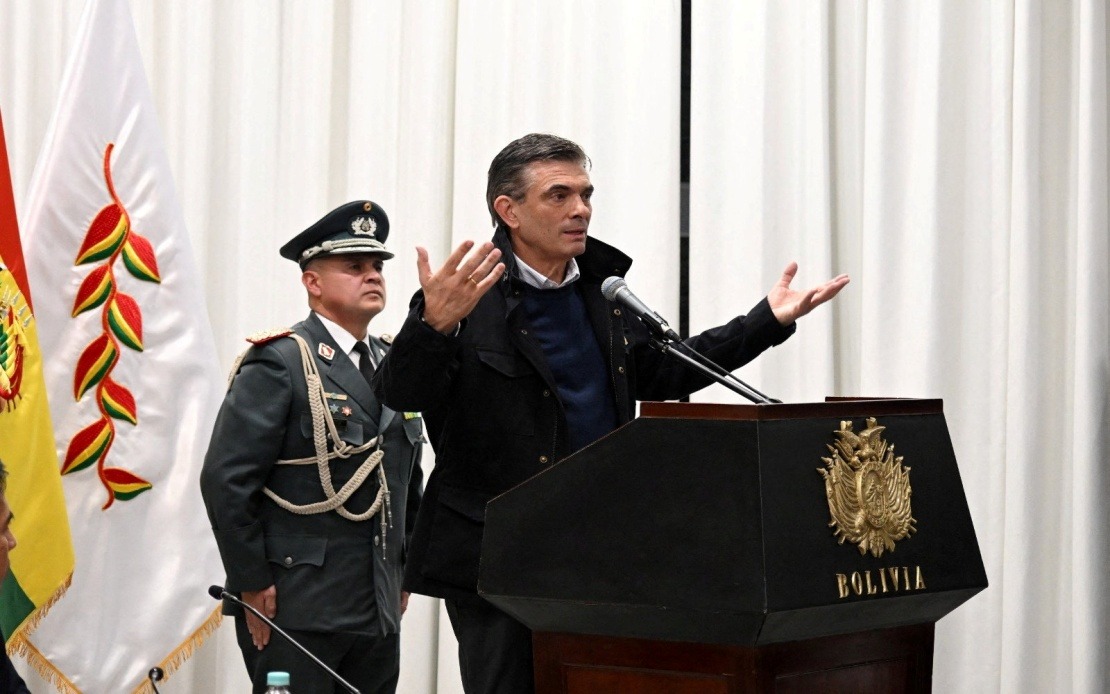
Bolivian President Rodrigo Paz has invoked emergency powers to confront an escalating political and economic crisis triggered by sustained road blockades that have paralysed much of the nation for the past seven weeks. The declaration, announced through televised remarks, represents a dramatic escalation in tensions between the government and organised labour and agricultural sectors who are demanding the president's removal from office.
The blockades, orchestrated primarily by workers' unions and farming associations, have metastasised from initial labour disputes into a comprehensive challenge to Paz's authority and economic management. Organisers argue that runaway inflation and the rising cost of living have eroded workers' purchasing power beyond sustainable levels, leaving families unable to meet basic expenses. The blockades themselves have become instruments of collective pressure, with protesters strategically choking off supply routes that normally sustain the country's interconnected economy.
The human toll of the disruption has been severe and measurable. Across Bolivia, communities have experienced acute shortages of essential commodities including food staples, petroleum products, and pharmaceutical supplies. Hospitals have reported difficulties obtaining medicines and equipment, schools have shuttered as transportation became impossible, and businesses dependent on regular supply chains have faced mounting losses. The cumulative economic damage from seven weeks of near-total transport disruption has compounded the underlying inflation crisis that sparked the unrest in the first place, creating a vicious cycle where government intervention becomes simultaneously more necessary and more politically fraught.
In his address to the nation, Paz framed the emergency declaration as a necessity for restoring basic functionality to Bolivian society. He emphasized that citizens had been effectively held hostage by the blockades, unable to work, attend school, access medical care, procure food, or maintain the rhythms of normal life. The rhetoric positioned the state of emergency not as authoritarian overreach but as a rescue operation on behalf of the general population suffering under the collective punishment of the blockades. This framing attempts to split the organised protest movements from broader public sympathy by highlighting the suffering of ordinary citizens caught in between.
The legal mechanism of the state of emergency carries profound implications for civil liberties and the exercise of state power in Bolivia. The declaration creates political and legal space for military deployment across the country to break blockades and restore circulation on roads and highways. Such deployments carry inherent risks of confrontation between armed forces and civilian protesters, with potential for escalation and harm. The international community's response to the emergency declaration will likely pivot on questions of whether military intervention is proportionate and whether human rights are being respected during enforcement operations.
For Malaysian and Southeast Asian observers, Bolivia's crisis offers instructive parallels and contrasts with labour activism and state responses in this region. While Malaysia and other Southeast Asian nations have experienced significant strikes and industrial action over wages and working conditions, the scale and duration of Bolivia's blockades represent an unusually sustained challenge to state authority. The willingness of Bolivian unions to employ transport blockades as a lever of political power demonstrates the potential for organised labour to impose enormous economic costs when grievances accumulate unchecked. Conversely, the rapid resort to emergency declarations and military deployment shows the vulnerability of elected governments to pressure from organised sectors when economic management falters.
The timing and intensity of Bolivia's crisis also reflect broader Latin American trends that have implications for developing economies globally. Resource-dependent nations, whether reliant on agricultural exports or mineral extraction, face particular vulnerability to commodity price fluctuations and external economic shocks. When domestic inflation outpaces wage growth, the resulting squeeze on workers creates pressure that organised unions can mobilise into collective action. Bolivia's experience suggests that governments in developing nations must address cost-of-living pressures proactively or face the risk of organised disruption that ultimately damages the economy further.
The political sustainability of Paz's emergency declaration remains uncertain and will depend heavily on how swiftly the military can restore transport functionality and whether violence accompanies those operations. If the blockades are broken without significant casualties and supply chains normalise quickly, public opinion may shift toward viewing the emergency measure as justified. Conversely, if military operations result in protester deaths or injuries, or if economic conditions continue to deteriorate despite restored transport, the declaration could deepen the political crisis rather than resolve it. The government faces a narrow window to demonstrate that restoring circulation translates into improved conditions for ordinary citizens.
Understanding the root causes of the blockade crisis requires grappling with the structural economic pressures that made such sustained protest possible in the first place. Bolivian workers and farmers did not spontaneously decide to paralyse their own economy for seven weeks on a whim; rather, they calculated that the costs of blockade were preferable to continued acceptance of eroding real wages and rising living expenses. This calculation reflects desperation born of sustained economic decline or stagnation. Paz's government will need to address these underlying conditions if it hopes to prevent recurrence of similar crises after the emergency declaration expires.
For regional policymakers in Southeast Asia, Bolivia's experience underscores the importance of managing inflation expectations and maintaining living wage standards to prevent organised labour from resorting to economically destructive collective action. While emergency declarations can temporarily restore order, they cannot substitute for addressing the economic grievances that motivated protest in the first place. The Bolivian case suggests that governments allowing inflation to outpace wage growth for extended periods face mounting risks of organised disruption that can cause damage far exceeding the cost of proactive wage or subsidy adjustments.

