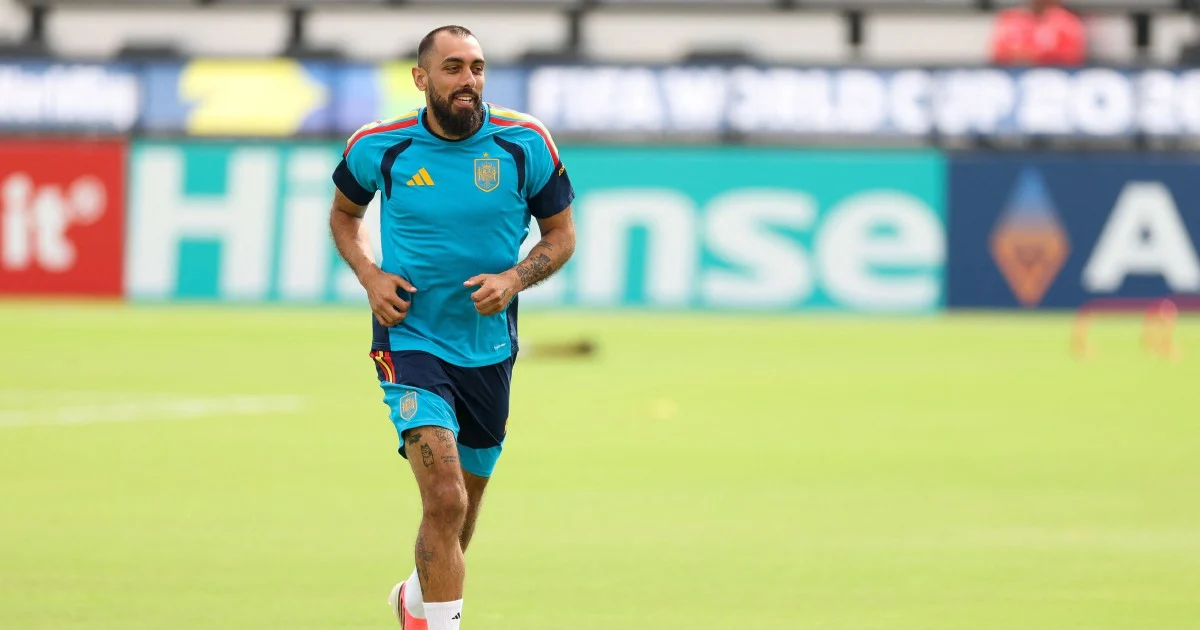
Borja Iglesias, the Spanish striker who represented his country at the World Cup, has carved out a distinctive identity in professional football by refusing to conform to the sport's traditional silence on contentious social and political matters. Whether discussing the conflict in Gaza or addressing discrimination based on sexual orientation, Iglesias has demonstrated a candour that sets him apart from his peers in an industry where athletes are frequently discouraged from wading into controversial territory.
The willingness to express his views on such matters has earned Iglesias the somewhat backhanded epithet of "the alien of football." The label reflects both the outsider status that comes from breaking unspoken norms within the sport and the surprise many observers express when encountering an athlete willing to risk his standing and relationships by taking principled positions. This characterisation, while acknowledging his difference from mainstream footballer culture, also hints at the discomfort some feel when confronted with an athlete who refuses to be apolitical.
In Southeast Asia, where football enjoys enormous cultural significance and where many societies grapple with questions of free expression, religious sentiment, and LGBTQ+ acceptance, Iglesias' approach carries particular resonance. Malaysian football fans and administrators are accustomed to a sport where players typically remain carefully neutral, staying within narrow boundaries set by clubs, national associations, and sponsors. The contrast with Iglesias' openness raises questions about whether athletes in the region might similarly find voice on matters affecting their communities.
Iglesias' personal presentation—including his decision to paint his nails—serves as a visual extension of his broader willingness to challenge conventions. This seemingly small act of self-expression functions as a statement of independence from traditional masculine norms within sport, signalling that his commitment to authenticity extends beyond mere words into how he presents himself to the world. For many football fans, such visibility matters profoundly, as it demonstrates that non-conformity in appearance does not diminish athletic capability or professional credibility.
The Gaza situation, which has generated passionate responses across the globe, represents one of the most divisive issues Iglesias has chosen to address. His willingness to comment on this deeply polarizing conflict demonstrates a courage that comes with genuine risk. Professional athletes who take positions on Middle Eastern politics risk alienating sponsors, supporters, and even teammates depending on their audience's political leanings. Few athletes of Iglesias' profile choose to accept those consequences.
Homophobia in football remains a persistent structural problem despite decades of advocacy efforts. The sport has historically been resistant to discussions of sexual orientation and gender identity, with many players remaining closeted and homophobic attitudes tolerated far more openly in football than in other major professional domains. Iglesias' decision to speak clearly on this matter represents an attempt to shift the conversation within a sport that still lags significantly behind society's progress on LGBTQ+ acceptance.
The reaction to Iglesias' activism illustrates the broader tension within modern professional football between commercial interests and the growing expectation that athletes should use their platforms responsibly. Many contemporary footballers cite political neutrality or claims that they prefer to let their playing do the talking, often while competing for lucrative endorsement deals that benefit from association with their public image. Iglesias' approach suggests that authenticity and principle need not be sacrificed entirely for professional success.
For Malaysian observers, Iglesias represents a potential model for how athletes might navigate complex terrain in societies where traditional hierarchies and social sensitivities remain significant. His example demonstrates that speaking authentically about injustice does not require abandoning one's career, though it may require accepting a certain degree of discomfort or criticism from those invested in maintaining established norms. The question for Malaysian sport is whether domestic athletes might find similar space to express their values.
The football world's response to Iglesias has been revealing about the sport's evolving relationship with activism. While some critics dismiss his outspokenness as performative or inappropriate for a footballer, others recognise in his approach a refreshing departure from the carefully managed public personas that dominate professional sport. This divergence of opinion mirrors broader societal debates about whether privilege should come with corresponding responsibility to advocate for justice.
Iglesias' career trajectory will likely be instructive in determining whether football is genuinely evolving toward accepting socially conscious athletes or whether his willingness to speak out ultimately constrains the opportunities available to him. In either case, his presence in the sport has already shifted conversations about what it means to be a professional athlete in an age when silence on injustice carries its own moral weight.
The Spanish striker's approach also challenges the notion that activism and athletic excellence exist in competition. Many of football's greatest figures have combined their sporting achievements with genuine contributions to social discourse. Iglesias' unapologetic visibility in pursuit of his convictions suggests that footballers might reclaim some agency in defining their own public identities rather than accepting the carefully constructed personas that commercial interests prefer.

