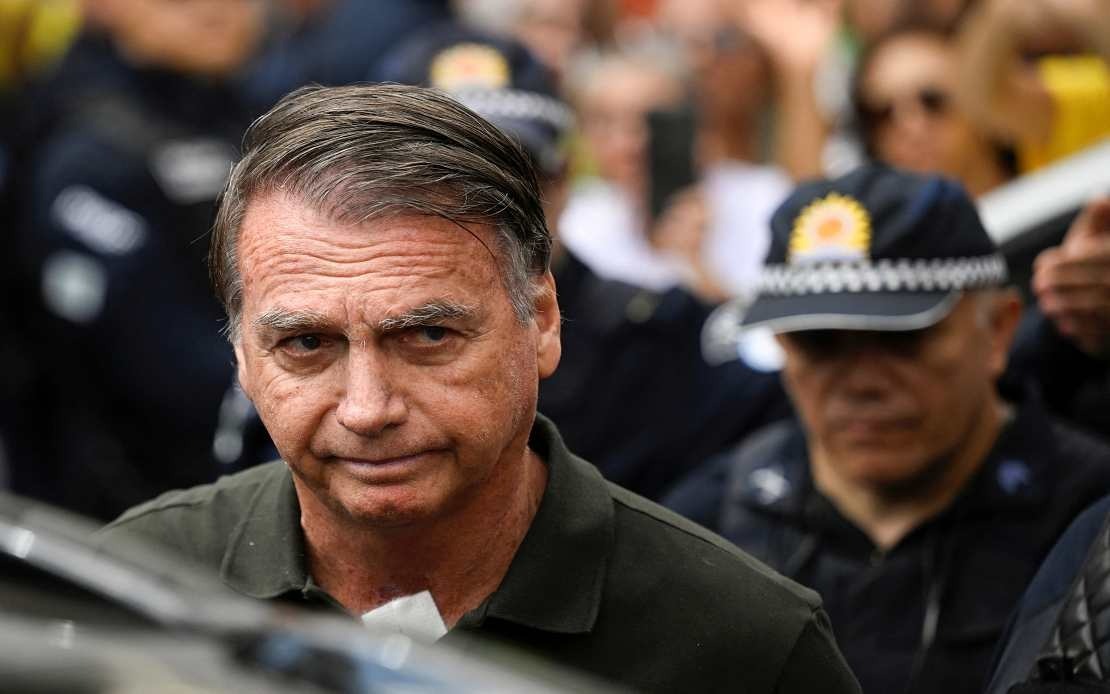
A Brazilian federal court has barred Argentine President Javier Milei from visiting former Brazilian leader Jair Bolsonaro at his Brasília residence, with Judge Alexandre de Moraes rejecting the request just one day after tightening the restrictions governing Bolsonaro's house arrest. The decision prevents what would have been a significant show of solidarity between two major right-wing figures in South American politics, with Milei having planned the trip for July 25 specifically to demonstrate support for Bolsonaro's son Flávio, who is pursuing the Brazilian presidency.
The ruling highlights the increasingly fraught dynamics within Brazil's political landscape as the country prepares for what is shaping up to be a highly contentious election cycle. Judge Moraes, who oversees Bolsonaro's case, characterised the defence's appeal as lacking merit, emphasising that the tightened conditions were necessary to prevent the former president from using his residence as a platform for political campaigning. This determination reflects broader concerns within Brazil's judiciary about the potential for Bolsonaro to circumvent electoral regulations from his enforced confinement.
The crackdown was triggered specifically by Bolsonaro's decision to express his backing for his son's candidacy through a handwritten letter that Flávio subsequently shared across social media platforms. This action constituted a direct violation of the house arrest conditions imposed in May, which explicitly prohibit any form of political activity or messaging. The court interpreted this as a calculated attempt to circumvent restrictions that already forbade Bolsonaro from disseminating political content either directly or through intermediaries.
Bonaes's house arrest stems from a conviction requiring him to serve more than 27 years for his role in an alleged coup plot, though he remains confined at home due to health considerations rather than being imprisoned in a conventional facility. This arrangement has nonetheless proven contentious, as it allows him to maintain some degree of public visibility and influence despite his legal predicament. The former president's continued ability to shape political discourse from his residence has become a focal point of concern for Brazil's electoral authorities.
Flávio Bolsonaro's presidential ambitions represent a significant challenge to the political establishment, particularly as incumbent President Luiz Inácio Lula da Silva prepares to seek reelection. The matchup between the younger Bolsonaro and Lula would represent a continuation of the fierce ideological and personal rivalries that have characterised Brazilian politics over the past decade. International support from figures like Milei underscores how deeply polarised South American politics have become, with right-wing leaders increasingly rallying around each other across borders.
Milei's planned visit would have sent a powerful symbolic message to Bolsonaro's supporters, demonstrating transnational coordination among conservative leaders who share similar economic and social policy preferences. The Argentine president has cultivated his image as a champion of free-market economics and libertarian principles, positions that resonate with Bolsonaro's base despite their different national contexts. The court's intervention therefore represents not merely a procedural matter but a deliberate effort to prevent the consolidation of a regional conservative alliance.
Judge Moraes' decision to preemptively tighten Bolsonaro's restrictions the day before the scheduled meeting suggests a level of anticipation regarding Milei's visit and its potential consequences. The judge appears to have calculated that allowing such a high-profile international show of support would undermine the purpose of the house arrest restriction, which aims to prevent Bolsonaro from functioning as an effective political actor during the election campaign. The timing and sequencing of the court's actions reveal how carefully Brazil's judicial system is monitoring Bolsonaro's movements and contacts.
For Malaysian observers, this situation illustrates how courts in emerging democracies grapple with the tension between enforcing individual restrictions and preventing circumvention of electoral rules. The Brazilian case demonstrates that house arrest, even when imposed on prominent political figures, remains a porous mechanism for controlling political influence in our contemporary media environment. Figures under restriction can still shape narratives and mobilise supporters through creative communication strategies, forcing judiciaries to constantly adapt their enforcement mechanisms.
The incident also reveals how regional political networks are operating across South America, with right-wing leaders providing mutual support despite operating in entirely different national political systems. This transnational dimension adds complexity to individual elections, as international solidarity campaigns can energise domestic constituencies and provide legitimacy to political movements that might otherwise lack sufficient traction. The court's decision to block Milei's visit thus represents an effort to insulate Brazilian elections from external political interference, however sympathetic its sources might be.
The restriction on Bolsonaro receiving political or electoral visitors remains in effect until October when the presidential election concludes, suggesting that Brazil's judiciary anticipates ongoing risks of political coordination throughout the campaign period. This extended timeline indicates confidence that multiple attempted circumventions might occur before the electoral process concludes, requiring sustained judicial vigilance. The court's stance reflects a determination to enforce electoral rules rigorously, regardless of the international diplomatic implications that may arise from denying a foreign head of state access to a detained former leader.
The broader implications for South American politics are substantial, as this decision establishes a precedent for how courts will handle international political visits to individuals under electoral restrictions. Future attempts to provide transnational support to politically restricted figures may face similar judicial obstacles, potentially affecting how right-wing movements coordinate their strategies across borders. The ruling suggests that Latin American judicial systems are willing to prioritise electoral integrity over diplomatic courtesy when they perceive threats to democratic processes.

