Fay Manners has etched her name into mountaineering history by accomplishing what no British woman has done before: establishing an entirely new climbing route on one of the world's most formidable and treacherous mountain faces. The 39-year-old alpinist spent 13 gruelling days on the Eiger North Face in the Swiss Alps alongside Swiss climbing partner Roger Schaeli, carving out a route they named "Solar Eclipse." Stretching 900 metres across 33 pitches, this achievement represents far more than a personal triumph—it stands as a powerful statement about representation and capability within a sport historically dominated by male pioneers.
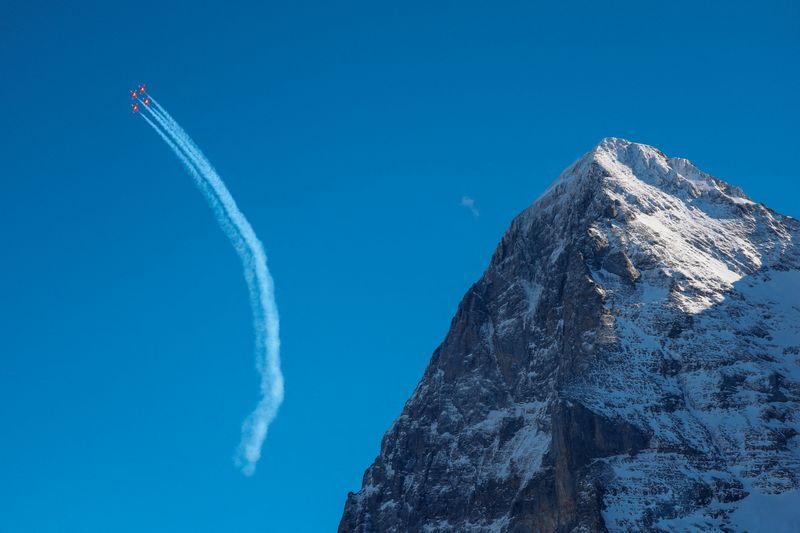
The Eiger North Face commands respect and fear in equal measure within the climbing community. Part of the Swiss Alps, this colossal wall rises 1,800 metres of rock and ice, brutally exposed to the Alpine elements and the constant threat of rockfall. Its reputation was forged through decades of deadly attempts before a German-Austrian team achieved the first successful ascent in 1938. The face remains one of mountaineering's ultimate challenges, a place where margin for error vanishes entirely and where most routes have been established for decades, their characteristics, hazards, and techniques thoroughly documented.
Manners herself had navigated this treacherous terrain previously, having summited the established Heckmair Route four years earlier. That experience proved transformative, spurring her to return with a different ambition altogether—not simply to follow an existing path up the mountain, but to discover and chart an entirely new one through unclimbed terrain. This distinction proves crucial to understanding her accomplishment's significance. Where climbers repeating established routes can consult guidebooks, access detailed difficulty assessments, and learn from accumulated knowledge about optimal techniques and potential hazards, those establishing fresh lines venture into genuine uncertainty.
The process of opening a new route demands a fundamentally different mindset than climbing an established one. Manners explained the profound uncertainty inherent in this creative endeavour, noting that route-finders cannot predict the rock's difficulty, cannot know in advance what protection systems they will require, and often cannot be certain they will successfully reach the summit at all. This uncertainty adds layers of psychological and physical challenge beyond the already extreme demands of high-altitude mountaineering. Every decision about which way to turn, which rock formations to trust, which protection points to establish must be made in real time, often based on incomplete information and pure instinct honed through years of experience.
Beyond the technical achievement, Manners points to something equally important about representation and inspiration within climbing culture. When women open guidebooks for classic Alpine climbs, they encounter page after page of routes established exclusively by men. This absence of female names creates a subtle but powerful psychological messaging—that route-opening, the creative and pioneering work of mountaineering, remains men's domain. Manners argues that this representation gap matters profoundly because it shapes what younger climbers, particularly young women, believe is possible for them. When representation in guidebooks reflects only male achievement, it can quietly convince aspiring climbers that women should content themselves with repeating established routes rather than pushing boundaries themselves.
Women have indeed been part of the Eiger's climbing history, though often as historical footnotes rather than celebrated pioneers. In 1964, Daisy Voog became the first woman to successfully climb the North Face—an achievement that contemporary reports noted came despite her previous rejection from a mountaineering club that admitted only men. Five years later, Japanese climber Michiko Imai served as the sole woman on a six-person team that established the "Japanese Summer Direttissima" route. Yet these contributions remain less widely celebrated than those of their male counterparts, reinforcing a pattern where women's accomplishments in mountaineering tend toward invisibility compared with men's.
Manners has reflected extensively on how subtle gender messaging shapes what women believe about their own capabilities. Growing up in England, she harboured ambitions of building a career in sport, yet people around her consistently warned that professional sports offered limited financial opportunity for women. She internalised these messages, pivoting toward data science as a supposedly more reliable path. Eventually relocating to Chamonix, France, she maintained this dual existence—working as a data consultant while climbing—until an approach from The North Face shifted her trajectory. Only when that sponsorship materialised did the possibility of a professional climbing career suddenly seem real to her, despite her evident talent and passion for the sport.
Manners identifies how these doubts and stereotypes become so normalised that people often fail to recognise their operation. She reflects on how seemingly casual comments about women's physical capacity—assumptions that women cannot carry as much weight, that they lack certain physical attributes—accumulate into internalised beliefs about limitations. If such messaging had not permeated her upbringing from childhood, she suggests, she might never have developed the doubts that nearly derailed her potential career. These are not explicit barriers so much as atmospheric assumptions that subtly reshape what people believe about themselves and others.
The path from a young girl dreaming of a sports career to a professional mountaineer establishing new Alpine routes represents both personal triumph and systemic tragedy. Manners's own journey illustrates how talent and determination alone cannot overcome the subtle architecture of gendered expectations. It required external validation through sponsorship—someone else recognising her capability—to overcome her own internalised doubts. She describes a moment of shock at realising professional sports careers for women were actually possible, despite having spent years developing elite-level skills. This revelation came only when circumstances forced her to confront what she had genuinely believed: that women could not sustain careers in sport, no matter their abilities.
Manners's vision for what follows her achievement extends beyond personal accomplishment toward creating pathways for others. She has expressed a particular dream of witnessing all-female teams attempt to repeat the "Solar Eclipse" route she has established. This aspiration reflects how she views her accomplishment within a larger context of changing climbing culture. By creating a route and seeing it appear in guidebooks bearing her name as its first ascensionist, she plants a seed—visual evidence that women pioneer routes as well as repeat them, that the creative work of mountaineering belongs to women too.
The ripples of Manners's achievement extend beyond the Alpine climbing community into broader conversations about representation, capability, and how subtle cultural messages shape human potential. For readers across Southeast Asia and beyond, her story illuminates how systemic barriers often operate not through explicit prohibition but through normalised assumptions about what is appropriate or possible. In regions where outdoor sports remain emerging sectors and where traditional gender expectations maintain particularly strong cultural force, Manners's insistence on challenging these boundaries carries particular resonance. Her accomplishment suggests that when women gain access to opportunity and visibility, they do not merely participate in existing structures—they fundamentally reshape them by creating new possibilities that did not previously exist.
Manners plans to return to the route she has established, possibly to refine techniques or explore variations discovered during those 13 demanding days on the face. Yet her true measure of success lies not in personal return visits but in what happens when others discover her name in guidebooks and realise that women do indeed open new routes on the world's great mountains. Each female climber who reads of her achievement and recognises new possibilities, each woman who approaches the mountains with expanded confidence about what she can accomplish—these represent the true legacy of Fay Manners's summer on the Eiger. In carving "Solar Eclipse" into one of mountaineering's most celebrated faces, she has carved something equally important into climbing culture itself: undeniable proof that the future of mountaineering belongs to everyone willing to undertake its challenges.

