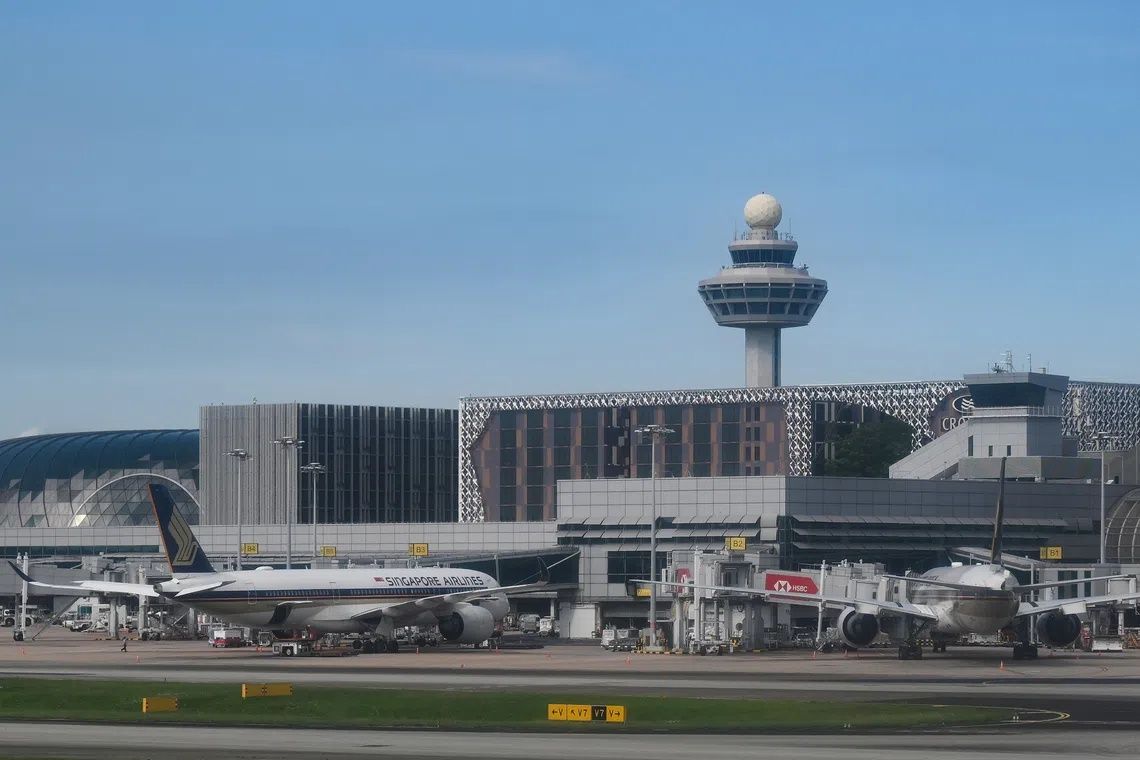
A British passenger aged 25 is set to be prosecuted in Singapore following a disruptive incident at Changi Airport's Terminal 1 that left one airline employee injured and caused significant operational delays. The incident, which occurred on July 20 when police received reports of a disturbance at a boarding gate around 4.05pm, has prompted authorities to pursue multiple charges that could result in substantial fines and jail time if he is convicted.
According to police investigations, the man displayed erratic behaviour at the boarding gate for a flight destined for Kuala Lumpur, speaking and shouting loudly in ways that disturbed fellow passengers. Witnesses reported that his conduct became increasingly problematic, with officers noting that intoxication appeared to be a contributing factor to his aggressive demeanour during the incident.
When two airline staff members approached the passenger to address his disruptive behaviour, his response escalated dramatically. Rather than cooperating with their attempts to manage the situation, he reacted with hostility, directing vulgarities and insulting language at one of the staff members. This hostile reaction prompted the airline to make the decision to remove him from the flight due to his intoxicated state, a standard protocol employed by carriers to maintain safety and order during operations.
The passenger's behaviour took a more serious turn following notification of his removal from the flight. Rather than accepting the airline's decision to offload him, he allegedly became physically aggressive, forcibly pushing past airline staff in an attempt to gain access to the aircraft. During this altercation, he breached a restricted zone within the airport without proper authorisation, a secured area designed to protect aviation operations and passenger safety. This unauthorised entry resulted in physical injury to at least one staff member, who sustained damage to her left arm and wrist after being knocked to the ground during the confrontation.
The disruption continued as the passenger maintained his aggressive conduct toward airport security personnel who intervened to prevent further escalation. His continued use of vulgarities and threatening language created an environment of tension and uncertainty at the boarding gate, effectively paralyzing the departure process. The resulting operational disruption caused the affected flight to be delayed by 45 minutes, an interval that cascades through airport schedules and affects numerous passengers, ground crew, and airline operations across multiple subsequent flights.
The incident underscores ongoing challenges facing major aviation hubs across Asia regarding passenger conduct and the enforcement of airport security protocols. Changi Airport, one of the region's busiest international gateways, handles hundreds of thousands of passengers monthly, and even isolated incidents can have widespread impacts on operations and staff safety. The fact that a passenger felt emboldened to forcibly breach restricted areas and assault airport employees raises questions about deterrence and the adequacy of existing measures to protect personnel working in high-pressure environments.
Singapore's judicial response to aviation-related offences tends to be firm, reflecting the city-state's prioritisation of order and security. The specific charges being pursued reflect the graduated severity of the passenger's actions, from the initial intoxicated disruption through to the physical breach of secured zones. The charge of causing annoyance while intoxicated in a public place carries potential penalties of up to S$1,000 in fines or six months imprisonment. Using threatening, abusive or insulting words or behaviour carries maximum fines of S$5,000, while the most serious charge—unauthorised entry to a protected place—carries potential sentences of up to two years imprisonment alongside fines reaching S$20,000.
For Malaysian and Southeast Asian travellers, this incident serves as a reminder of the serious consequences that can result from disruptive behaviour at airports, particularly when intoxication is involved. Airports maintain strict protocols around protected areas precisely because these zones are integral to aviation safety and security systems. The decision to charge the passenger with multiple offences reflects the cumulative nature of his conduct rather than any single action, establishing clear legal precedent that such behaviour will be prosecuted comprehensively.
The injury sustained by the airline staff member also highlights the physical risks that ground personnel face when managing unruly passengers. Across the region, airport and airline workers have increasingly raised concerns about passenger violence and harassment, issues that have prompted development of new training protocols and support systems. This incident demonstrates that even at well-managed facilities like Changi Airport, staff remain vulnerable to sudden escalations from intoxicated or emotionally volatile passengers.
The case is expected to proceed through Singapore's courts on August 12, where the passenger will face the formal charges. The outcome will likely influence how similar incidents are handled at other regional airports and may reinforce existing deterrence messaging from aviation authorities across Southeast Asia regarding the zero-tolerance approach to airport disruptions, particularly those involving violence or breach of security perimeters.

