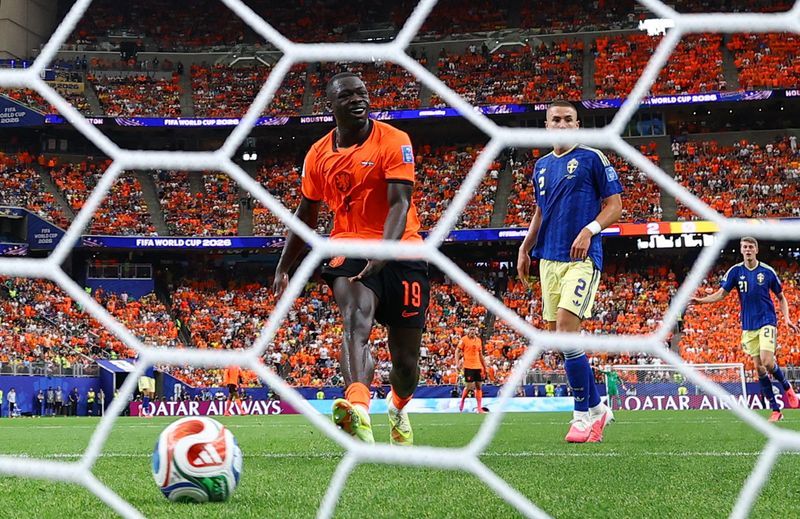
Ronald Koeman faced intense scrutiny following the Netherlands' unconvincing 2-2 draw with Japan in their opening Group F fixture, with observers questioning his tactical substitutions and overall match management. However, the Dutch coach silenced his critics emphatically on Saturday with a masterclass in tactical decision-making, orchestrating a dominant 5-1 demolition of Sweden that showcased his team's attacking prowess and repositioned the Netherlands atop their group. The contrast highlighted the unpredictable nature of football management, where fortune can swing dramatically within the span of a single fixture, and Koeman's selection of Brian Brobbey as the central attacking focal point proved to be the catalyst for this impressive turnaround.
Koeman himself had acknowledged the shortcomings of his team selection against the Japanese, recognising that his in-game adjustments had failed to generate meaningful improvements. The 24-year-old Brobbey, however, provided a decisive answer to lingering questions about the team's attacking structure. The Ajax product delivered a virtuoso performance in the opening moments of the Sweden encounter, netting twice within the first 17 minutes to effectively settle the contest and provide Koeman with vindication for his surprising tactical choice.
Brobbey's path to this moment had been far from straightforward. He had occupied a peripheral role in squad selection during qualifying fixtures and had effectively disappeared from international consideration for an extended period before his unexpected recall in March following a year-long absence from the fold. His omission had suggested that Koeman and his predecessors viewed his contributions as surplus to requirements, leaving the attacker facing an uphill struggle to prove his worth at the highest level.
The turning point arrived with Brobbey's decision to join English Premier League side Sunderland, a move that fundamentally reshaped his development as a footballer. His time in the demanding English top flight has broadened his technical repertoire considerably, transforming him from a one-dimensional physical presence into a more nuanced and intelligent player capable of operating within the Dutch attacking system. He explained to reporters at the national team's training facilities that his season in England had elevated his game substantially, moving beyond simple confrontational battles with opposition defenders.
Brobbey articulated the improvements in his play with considerable clarity, emphasising that his enhanced abilities now encompassed intelligent off-the-ball movement, superior spatial awareness, and the tactical intelligence to operate in deeper positions when necessary. These attributes align precisely with what Koeman's evolving system demands, providing better balance between holding possession and generating goalscoring opportunities. The striker's evolution represents a significant contrast to his earlier iteration, when he had relied excessively on physical attributes and direct play.
The Netherlands' attacking infrastructure has been carefully constructed to support whoever assumes the role of primary striker. Cody Gakpo operates effectively from the left flank, providing crossing opportunities and interior passes, while fullback Denzel Dumfries offers consistent overlapping movements down the right channel to stretch opposing defences. The recent inclusion of Crysencio Summerville, another player with Premier League experience, further enriches the attacking options available to the coaching staff. This collection of creative talent ensures that a striker capable of intelligent positioning and clinical finishing should find regular opportunities to exploit.
Brobbey's dual strike on Saturday demonstrated that he possesses the essential finishing qualities required at the highest level, displaying the sharpness and decisiveness that has increasingly eluded Memphis Depay. The veteran forward, who holds the distinction of being the Netherlands' all-time leading international goal scorer, has struggled to maintain his previous consistency following an extended period sidelined by injury. While Depay remains a crucial figure in the Dutch setup, his extended absence from competitive football has inevitably impacted his match sharpness and physical conditioning.
The broader challenge facing the Dutch football programme involves identifying and nurturing a legitimate successor to Depay, a task that has acquired increasing urgency as the legendary attacker enters the twilight years of his international career. Brobbey's recent performances suggest that he possesses the necessary technical components and mental fortitude to fill this void, though consistent performance across multiple fixtures will be required before such conclusions can be deemed definitive. His previous status as a peripheral figure adds an intriguing narrative dimension, transforming him from overlooked prospect into genuine contender.
The implications of Brobbey's emergence extend beyond individual player development, potentially reshaping how the Netherlands approaches attacking play throughout the remaining tournament fixtures. Should he maintain his current trajectory, the team gains additional tactical flexibility and a viable Plan B should established alternatives falter. For Malaysian and Southeast Asian football enthusiasts monitoring the competition, Brobbey's story exemplifies how strategic moves to challenging leagues can fundamentally alter a player's market value and international prospects, a lesson relevant for the region's emerging talent seeking to accelerate their development.

