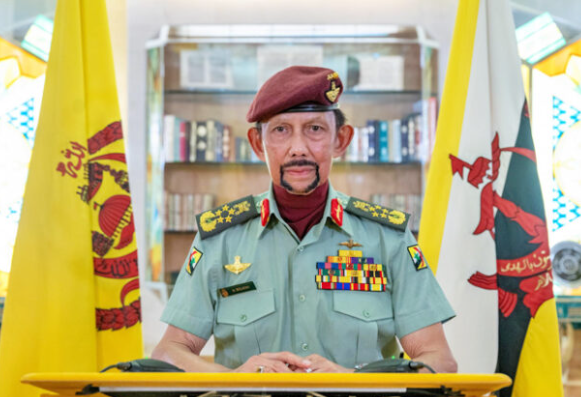
Sultan Hassanal Bolkiah has positioned the Islamic New Year 1448 Hijrah as an opportunity for the Bruneian society to reaffirm its dedication to advancement across both material and spiritual domains, marking a subtle but significant shift in how the monarchy frames national development in the face of evolving regional challenges.
In his address commemorating the occasion, the Sultan articulated a vision that extends beyond mere ceremonial observation, instead positioning the new year as a practical inflection point where genuine renewal of purpose becomes possible. He distinguished between using the calendar milestone as a moment for reflection versus treating it as a signal to begin new initiatives, suggesting that authentic progress demands continuous, sustained effort rather than episodic bursts of activity tied to arbitrary dates.
The monarch's characterization of the dual spheres requiring attention reveals much about Brunei's current policy priorities. The material dimension encompasses economic vitality and infrastructure development—critical areas where Southeast Asian nations compete for regional relevance and investment. The spiritual dimension, by contrast, encompasses education, knowledge dissemination, and dakwah (Islamic outreach), reflecting Brunei's identity as a Muslim-majority nation deeply committed to religious values as foundational to governance and social cohesion.
Despite significant global turbulence, Sultan Hassanal Bolkiah expressed gratitude that Brunei Darussalam has remained insulated from the widespread violence, conflicts, and natural calamities afflicting other parts of the world. This relative tranquility, he attributed not to geographical fortune alone but to the spiritual protections derived from prayer, collective remembrance of Allah, and the recitation of the Quran woven into the national fabric. For Malaysian readers accustomed to their own multicultural context, Brunei's explicit linking of religious observance to national stability offers a contrasting model of how Islamic principles are centralized within state identity.
Yet beneath this affirmation of stability lies an undercurrent of concern about internal threats to social cohesion. The Sultan identified crime as a pressing issue demanding immediate collective action, singling out drug-related offences and theft as particularly corrosive to the nation's image and contrary to Islamic principles. His framing is instructive: these crimes are not merely legal or security matters but religious transgressions that undermine the moral foundation of the state itself.
The Sultan's call for enhanced coordination between security agencies and religious authorities represents a strategic approach to crime prevention that blends law enforcement capability with spiritual persuasion. Rather than relying solely on punitive measures, the monarchy emphasizes strengthening religious education and intensifying dakwah efforts to build societal immunity against criminal behaviour from within. This reflects a philosophy of preventive governance rooted in values transformation, particularly regarding drug abuse, which remains a persistent challenge across Southeast Asia.
The invocation of collective vigilance carries particular weight given contemporary security concerns across the region. The Sultan's emphasis that complacency poses a danger while constant alertness—coupled with spiritual discipline—offers protection suggests recognition that external threats (whether terrorism or transnational crime) require sustained internal cohesion. For neighbouring Malaysia and other ASEAN members grappling with similar drug trafficking networks and criminal enterprises, Brunei's integrated approach combining religious mobilization with institutional action offers instructive lessons about community-level resilience.
The Sultan's reference to safeguarding the ummah and the nation as a shared responsibility transcends typical top-down governance rhetoric. By positioning protection as contingent on collective action and divine favour, he distributes responsibility across society while maintaining the monarchy's role as moral and spiritual authority. This framing proves particularly effective in contexts where religious identity binds citizens together across other potential divides.
The address culminates in a careful balance between optimism and realism. While expressing confidence that Brunei will navigate contemporary challenges successfully through combined spiritual and institutional effort, the Sultan acknowledges the genuine nature of the threats requiring attention. This measured tone avoids both complacency and unnecessary alarm, instead calibrating public expectations toward sustained, disciplined engagement with national priorities.
For Malaysia and the broader Southeast Asian region, Brunei's model of linking Islamic New Year observances to concrete policy priorities and institutional accountability offers a template for how monarchies can use religious occasions to reinforce governance messages and social cohesion. The Sultan's emphasis on balancing economic ambition with spiritual deepening reflects concerns shared across Muslim-majority nations seeking development without cultural dilution—a tension particularly acute as the region integrates further into global economic systems.
As Brunei enters 1448 Hijrah, the Sultan's message frames the year ahead not as a time for dramatic departures but as a continuation of disciplined striving across interconnected domains. The implicit challenge extends to every citizen: maintaining vigilance against internal threats while contributing to the nation's material progress, all grounded in spiritual commitment. Whether this integrated approach proves sufficient against emerging challenges will likely shape policy discussions not only in Brunei but across a region wrestling with similar pressures between security, prosperity, and social stability.