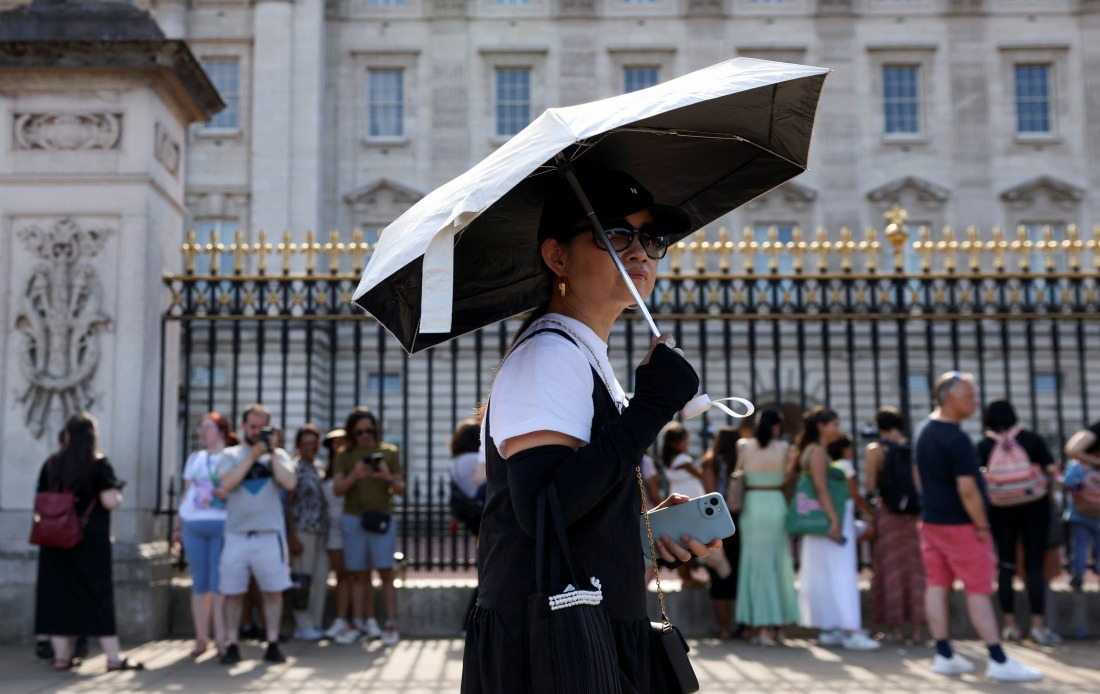
The United Kingdom's Household Division announced on Tuesday the cancellation of all ceremonial guard changes scheduled for this week at Buckingham Palace, Windsor and London, citing an unprecedented heatwave that threatens to shatter June temperature records. The decision underscores growing concerns about extreme weather events and their impact on public services and safety across the country, a challenge increasingly familiar to nations grappling with climate volatility.
The UK Met Office issued a rare red weather alert on Monday, the highest tier of heat warning, covering parts of England and Wales where temperatures are projected to reach 39 degrees Celsius on Wednesday and Thursday. Some regions may experience even higher readings, making this week potentially the hottest June period on record for the nation. Such extreme conditions present genuine risks to both participants and spectators, particularly those gathered in crowded outdoor settings without adequate shelter or cooling facilities.
The Household Division's statement prioritised the welfare of personnel and animals above ceremonial tradition, citing the wellbeing of soldiers, military working horses, and the thousands of members of the public who typically congregate to witness these renowned pageantries. This represents a pragmatic acknowledgment that no ceremonial obligation supersedes human and animal safety during dangerous weather conditions. The decision reflects modern institutional thinking about duty-of-care responsibilities, even for events steeped in centuries of royal protocol.
While full ceremonial guard changes have been suspended through Thursday, the Royal Horse Guards' changing ceremony will proceed on a modified schedule. The ritual will commence earlier in the morning when temperatures remain lower, and organisers have stripped away the elaborate ceremonial flourishes that normally characterise these displays. These tactical adjustments demonstrate an effort to preserve essential operations whilst minimising exposure to peak heat hours.
Beyond the spectacular elements, the military has implemented practical protective measures for personnel tasked with standing duty. Soldiers will be positioned in shaded areas wherever possible and rotated at more frequent intervals than standard procedures dictate, reducing the duration any individual remains exposed to the intense heat. Such modifications acknowledge the physiological strain that extreme temperatures place on people wearing heavy uniforms and bearing ceremonial equipment.
The heatwave's disruption extends well beyond London's ceremonial heart. Educational institutions across southern England have shuttered their doors en masse, with local authorities deeming in-person instruction unsafe during this period. Somerset's county council announced closure of approximately one hundred schools, whilst Buckinghamshire reported a similar figure. Gloucestershire saw more than eighty educational facilities suspend classes, with each of these counties situated within the red weather alert zone.
London itself, the capital and epicentre of British institutional life, has witnessed nearly ten major schools cancel in-person lessons as a precautionary measure. The closure of schools across such a wide geographic area indicates genuine official concern about the capacity of building infrastructure to maintain safe conditions for young people during extended exposure to extreme heat. Many schools lack modern air conditioning systems designed for such temperatures, particularly those in regions unaccustomed to such extremes.
For Malaysian and Southeast Asian readers accustomed to tropical climates and year-round heat, the widespread institutional disruption across the UK may seem puzzling. However, the distinction lies in the nature of the heat and population adaptation. Britain's infrastructure, urban planning, and public services were engineered for substantially cooler conditions. Buildings lack the cooling systems common in Malaysian cities, whilst population preparedness and behavioural adaptation differ markedly from tropical-adapted societies. A temperature that feels manageable in Kuala Lumpur can constitute a genuine public health crisis in London, where humidity and building design compound the danger.
This incident illuminates the vulnerability of even wealthy, developed nations to climate extremes beyond their historical experience. The UK's response—modest operational adjustments and school closures—represents proportionate crisis management for a society encountering conditions that exceed its normal parameters. It also demonstrates how global climate patterns are stretching institutional capacities worldwide, affecting everything from ceremonial pageantry to educational continuity.
The cancellation of such famous ceremonies carries symbolic weight within British culture. The Buckingham Palace guard change represents one of London's most recognisable attractions, drawing tourists and locals alike. Suspending it, even temporarily, signals serious institutional acknowledgment that extraordinary circumstances demand departure from established norms. This precedent may influence how British institutions approach future extreme weather events, suggesting an evolution toward climate-adaptive protocols.
For regional observers, the incident serves as a reminder that climate vulnerability transcends development status or geographic tradition. Whether in temperate Britain or tropical Southeast Asia, societies face mounting pressure to redesign infrastructure, protocols and expectations around increasingly unpredictable weather patterns. The week's disruptions in the UK presage broader questions about how nations will adapt essential services—from ceremonial functions to education—to a climate regime substantially different from the one in which current systems were designed.

