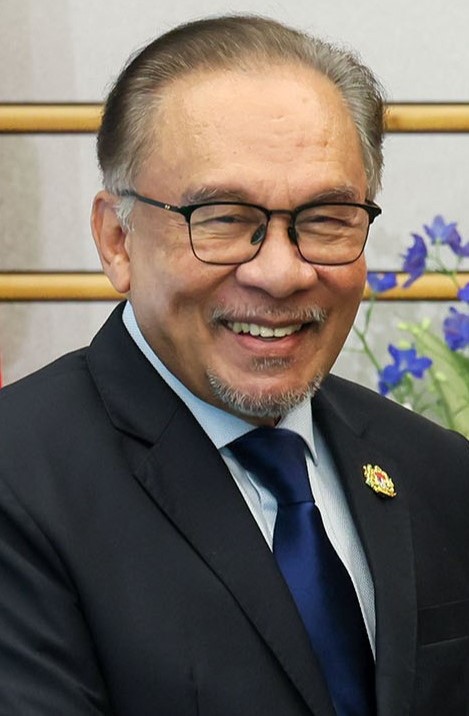
The groundbreaking of the Bukit Kiara Longhouse permanent housing development marks a significant turning point in a protracted struggle that has defined the lives of urban poor families in Kuala Lumpur for more than forty years. Prime Minister Datuk Seri Anwar Ibrahim officiated the ceremony, signalling the federal government's intention to move swiftly on housing solutions that have languished in bureaucratic limbo. The project represents not merely a construction initiative but a statement of intent that accumulated grievances of marginalised communities will no longer be deferred to successive administrations.
Human Resources Minister Datuk Seri R. Ramanan, who represents Sungai Buloh, framed the resolution as emblematic of broader governmental philosophy. In his commentary on the announcement, Ramanan emphasised that the resolution demonstrates an institutional commitment to preventing social problems from accumulating across generations—a particularly salient concern in Malaysia where informal settlements have historically persisted through decades of policy cycles. The minister's framing suggests that housing insecurity is now positioned as a governance failure rather than an intractable social condition, raising expectations about the pace and scale of similar interventions elsewhere.
The housing project itself will deliver tangible material benefits to eligible families within the longhouse community. Each qualifying household will receive two new residential units at no cost, a significant material advantage for a population that has occupied temporary or substandard accommodation throughout their residence in the area. This approach differs markedly from relocation schemes that often involve financial burden-shifting to residents or inadequate compensation structures. By providing housing units rather than cash settlements, the government ensures beneficiaries receive assets that appreciate over time and provide stable shelter.
Beyond the housing units themselves, the government has allocated an additional RM1 million to Kuala Lumpur City Hall for maintenance and upkeep of the development area over a three-year period. This commitment to ongoing infrastructure management addresses a chronic problem in Malaysian low-cost housing developments: deteriorating conditions resulting from inadequate maintenance budgets and administrative neglect. The sustained funding indicates recognition that initial construction quality must be supported by reliable servicing systems to prevent the rapid decline that has plagued similar projects.
The resolution is particularly noteworthy given the competing pressures that surrounded the Bukit Kiara situation. The area contains Taman Rimba Kiara, a forest reserve with conservation value that earlier development proposals had threatened to compromise. The current outcome negotiates between legitimate housing needs and environmental preservation, suggesting that equitable resettlement need not necessitate ecological sacrifice. This balance reflects evolving understanding that urban poor solutions must account for broader sustainability considerations rather than treating housing and conservation as zero-sum propositions.
The extended timeline of the Bukit Kiara dispute itself warrants examination. Residents and their representatives pursued legal remedies systematically beginning in 2018, yet waited decades prior to formal litigation. This protracted timeline reflects structural barriers within Malaysia's housing policy framework, where informal communities occupy a quasi-legal status that complicates their claim-making processes. The fact that resolution required sustained legal pressure from residents' representatives indicates that spontaneous bureaucratic action is unlikely without external compulsion, a lesson relevant to policymakers addressing similar situations across the Klang Valley and other urban centres.
Minister Ramanan's characterisation of the project's scale as "modest" while its human impact is "immense" captures a recurrent tension in Malaysian housing discourse. Individual projects affecting hundreds of families receive celebration as major policy triumphs, yet the aggregate numbers of Malaysians living in inadequate housing remain substantial. The Bukit Kiara resolution should be understood not as solving Malaysia's affordable housing crisis—which involves hundreds of thousands of households—but as a demonstration of implementation capacity that could be replicated across multiple sites with appropriate political will and budgetary commitment.
For Southeast Asian observers, the Malaysian government's approach to the Bukit Kiara situation offers insights into one model for addressing informal urban settlement through formal permanent housing provision rather than slum upgrading or incremental improvement schemes. The approach prioritises complete relocation and new construction over in-situ improvement, a more capital-intensive but potentially more decisive intervention. Whether this model proves scalable across Malaysia's diverse urban contexts depends on sustained funding availability and protection from the political cycles that have historically interrupted housing initiatives.
The resolution also reflects broader shifts in Malaysian political discourse around urban poverty and social justice. The government's willingness to commit resources to resolving a four-decade-old grievance suggests changing political calculations regarding informal communities' mobilising capacity and electoral significance. As urbanisation accelerates and informal settlement populations grow across Southeast Asia, governments increasingly recognise that leaving such communities in permanent limbo generates political costs and social instability.
Looking forward, the Bukit Kiara project establishes a benchmark against which similar longhouse communities and informal settlements will measure government responsiveness. Residents elsewhere facing housing insecurity will likely invoke the Bukit Kiara precedent in pressing their own claims. The sustainability of this political momentum depends on whether the Prime Minister's announcement represents a foundational commitment to systematic resolution of similar cases or a singular gesture toward one sympathetic constituency. The answer will emerge through implementation patterns over coming years as other communities test government commitment to replicating this approach.