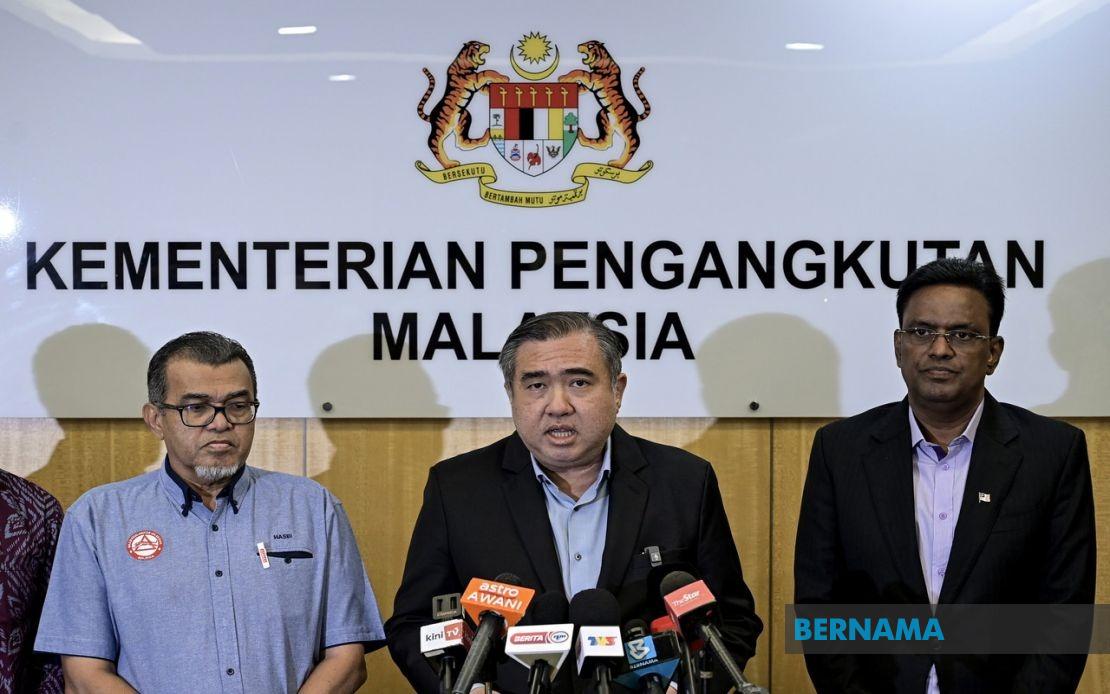
Malaysia's Cabinet has endorsed plans to strengthen its response to road traffic offences by introducing court-ordered compensation for victims and their families, marking a significant shift towards holding offenders financially accountable for the damage they cause. Transport Minister Anthony Loke announced the decision on Wednesday, confirming that the government will pursue amendments to the Road Transport Act 1987 to establish this mechanism alongside existing punitive measures.
The proposed legislative changes represent a departure from current practice, where victims of road accidents rely primarily on insurance claims or civil litigation to recover losses. Under the new framework, the courts themselves would determine compensation amounts based on the specific circumstances of each case, rather than allowing automatic or administrative calculations. This approach aims to ensure that consequences reflect both the severity of the offence and the financial capacity of the person responsible to pay.
Transport Minister Loke emphasised that compensation would function as an additional layer of accountability rather than replacing existing penalties. Offenders convicted of serious traffic violations would continue to face imprisonment, monetary fines, and driving bans as prescribed by law. The compensation requirement simply adds a new dimension to the judicial response, compelling those who cause harm through reckless or dangerous driving to make amends to those affected by their actions.
The scope of offences covered under these amendments extends broadly across the spectrum of serious driving violations. Incidents involving driving under the influence of alcohol or drugs would fall within the new regime, as would cases of reckless driving that result in injury or death. The courts would have discretion to assess factors including the gravity of the offence, the extent of injuries sustained, whether a death occurred, and the financial losses incurred by victims before determining an appropriate compensation figure.
The government has deliberately structured the mechanism to respect the existing rights of accident victims and their families. Individuals would remain free to pursue their own civil claims through the courts or to lodge insurance claims without restriction. The compensation order would exist as a parallel instrument, ensuring that state-level justice processes also hold offenders responsible financially rather than treating traffic violations purely as matters between the offender and the state.
Significant groundwork remains before the amendments reach Parliament. The Transport Ministry intends to engage extensively with other government agencies, the insurance industry, and various stakeholders to refine operational details. Key issues under examination include determining which specific offences warrant compensation, establishing clear definitions of serious injury, and developing protocols for situations where an offender lacks the means to satisfy the full compensation order. These discussions are essential to ensuring the system functions fairly and workably across diverse scenarios.
Transport Minister Loke confirmed that the ministry also plans to strengthen the Road Offence Demerit Points System, known locally as KEJARA, as part of this broader traffic safety initiative. The demerit system, which accumulates penalties for various violations and can result in driving licence suspension, would receive enhancements to better serve road safety objectives. This dual approach of compensation orders and system strengthening reflects a comprehensive strategy to deter dangerous driving behaviour through both financial consequences and administrative measures.
The legislative timeline envisages tabling the bill during Parliament's final sitting of the year, contingent upon completion of drafting and stakeholder engagement. Transport Minister Loke signalled his intention to establish a special parliamentary committee to examine the proposals in detail, seeking to build cross-party consensus before the measures are implemented. This approach recognises the importance of bipartisan support for significant changes to traffic law affecting public safety and victim rights across the political spectrum.
A crucial procedural safeguard ensures that the amendments would apply only prospectively to offences committed after the legislation passes Parliament. This reflects the principle that laws cannot operate retroactively, meaning existing cases and convictions would continue under the current legal framework. Offenders facing charges after the new law takes effect, however, would face the possibility of compensation orders alongside traditional penalties.
For Malaysian victims of road accidents and their families, these amendments could meaningfully improve access to financial redress during what are often traumatic and costly episodes. Whereas previously victims bore the burden of initiating civil action or navigating insurance claims entirely outside the criminal justice process, the new system would embed victim compensation into the judicial response to serious traffic offences. This integration potentially reduces the practical barriers many accident victims face when seeking recovery for medical expenses, lost income, and other damages.
The proposals also signal the government's recognition that Malaysian road safety challenges require multi-faceted responses. With road fatalities and serious injuries remaining a public health concern, mechanisms that increase consequences for dangerous driving—both punitive and financial—may help deter high-risk behaviour. The compensation element specifically targets driver accountability in ways that traditional fines cannot, since compensation is calibrated to actual harm rather than serving as a fixed punishment amount.
Stakeholder consultation will prove critical to the proposals' ultimate success. Insurance companies and industry representatives will likely scrutinise how compensation orders interact with existing third-party liability insurance arrangements. Concerns may emerge regarding overlap, disputes over primary liability, or challenges in enforcement. The engagement process should address these complexities to ensure the compensation mechanism complements rather than complicates the existing ecosystem of accident victim protection.
As the Transport Ministry moves forward with drafting and consultation, these amendments represent a meaningful evolution in how Malaysia holds road offenders accountable. By linking financial consequences directly to harm inflicted and court assessment of individual circumstances, the legislation acknowledges that road safety ultimately depends not only on deterrence and punishment but also on ensuring that those who cause injuries or death through traffic violations contribute tangibly to the recovery and wellbeing of their victims.

