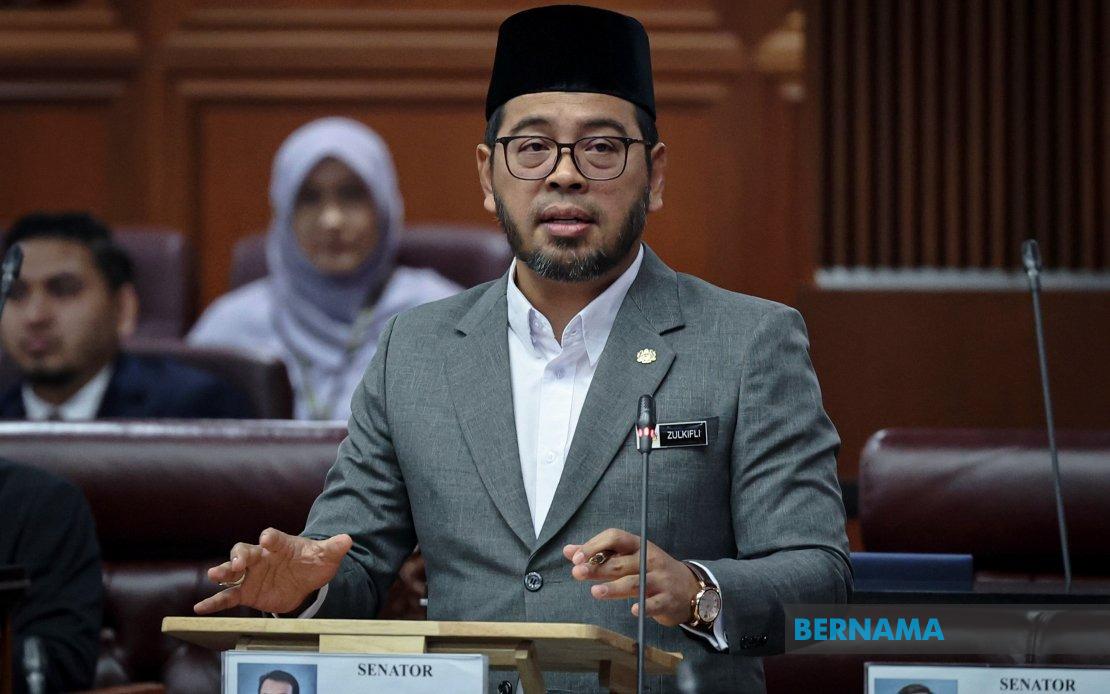
The Malaysian Cabinet will consider a proposal to make the final Royal Commission of Inquiry report on Tabung Haji available to the public before reaching a decision on the matter, according to Dr Zulkifli Hasan, Minister in the Prime Minister's Department (Religious Affairs). His statement addresses growing public interest in the findings of the inquiry, which examined the massive financial difficulties that engulfed the pilgrimage fund in recent years and the government's intervention to prevent institutional collapse.
The push to release the RCI report publicly comes against a backdrop of persistent allegations and confusion surrounding Tabung Haji's handling of its assets. Critics have suggested that the former Treasury secretary-general engaged in the sale of strategically important assets belonging to the institution, a narrative that has circulated among both policymakers and the public. Such claims touch on questions of financial governance and accountability that resonate across Malaysia's Muslim-majority population, for whom Tabung Haji represents a crucial savings and pilgrimage-financing mechanism.
Dr Zulkifli categorically rejected the allegations of improper asset disposals, describing them as fundamentally untrue and misleading. Instead, he reframed the 2018 government actions as a comprehensive rescue operation designed to stabilise a financial institution that had become destabilised by severe internal mismanagement. The minister's framing emphasises protective stewardship rather than asset-stripping, suggesting that the government's intervention aimed to preserve the institution and protect the depositors—predominantly Muslim Malaysians—whose savings were held within it.
The financial dimensions of Tabung Haji's crisis were extraordinarily severe. When auditors and Bank Negara Malaysia conducted their assessments in 2018, they uncovered an asset-liability deficit exceeding RM10.9 billion, a figure that shocked policymakers and signalled immediate institutional danger. Compounding this distress, approximately RM6 billion was withdrawn by anxious depositors within a compressed timeframe, reflecting a dramatic loss of confidence in the institution's viability and safety. Simultaneously, attempts to secure a standby loan from external sources failed, eliminating a potential avenue for emergency liquidity.
The government faced an acute fiscal risk that influenced its decision-making. Had Tabung Haji collapsed without intervention, the state would have been forced to honour deposit guarantees totalling approximately RM74.5 billion—a colossal liability that would have strained the federal budget and diverted resources from other critical programmes. This calculation underpinned the Cabinet's 2018 decision to transfer underperforming and problematic assets to Urusharta Jamaah Sdn Bhd (UJSB), a government-owned special purpose vehicle created specifically to manage this restructuring. Dr Zulkifli stressed that this decision represented a collective Cabinet determination rather than any unilateral action.
The outcomes of the rescue operation appear encouraging based on available metrics. Tabung Haji's deposit base expanded substantially, growing from approximately RM69.4 billion in 2019 to more than RM95.1 billion by mid-2025, suggesting restored confidence among depositors and renewed faith in the institution's stability. This recovery trajectory implies that the intervention succeeded in its primary objective of preventing systemic collapse and protecting savings held by millions of Malaysians.
The institution's profitability indicators also improved markedly. The profit distribution rate climbed from a meagre 1.25 per cent in 2018 to 3.5 per cent projected for 2025, representing the highest return offered to depositors in eight years. This improvement has direct implications for Malaysian pilgrims and savers, translating into enhanced returns on their accumulated savings. Simultaneously, Tabung Haji maintained pilgrimage fees at constant levels from 2024 through 2026 despite persistent inflationary pressures, protecting access to the hajj pilgrimage for ordinary Malaysian Muslims across varying income levels.
The proposed release of the RCI report could serve multiple functions within Malaysia's governance landscape. Transparency regarding the inquiry's findings might help clarify public understanding of what precisely occurred during the crisis period and why specific interventions were deemed necessary. For a significant portion of the Malaysian population holding savings within Tabung Haji, access to the commission's analysis could provide reassurance about institutional safeguards and decision-making rationale. Conversely, the Cabinet may harbour concerns about how detailed disclosures might affect public perception or provoke fresh scrutiny of individual officials' conduct.
The question of RCI report disclosure reflects broader tensions within Malaysian public administration regarding transparency and accountability. While public access to official inquiries generally strengthens democratic governance and public trust, governments must balance these considerations against potential complications arising from comprehensive disclosure. The Cabinet's forthcoming discussion will likely weigh these competing interests carefully, particularly given Tabung Haji's significance to Muslim Malaysians' financial welfare and spiritual obligations.
For the broader Southeast Asian context, Malaysia's Tabung Haji experience offers instructive lessons regarding Islamic financial institution management and government intervention frameworks. The case demonstrates both the vulnerabilities of specialised deposit-taking institutions and the capacity of decisive policy action to restore stability when crises emerge. As Islamic finance grows across the region, the Tabung Haji experience—including the governance questions it raises—carries relevance for policymakers elsewhere navigating similar terrain.

