A coalition of twelve states led by California has moved to block Paramount's $110 billion acquisition of Warner Bros Discovery, launching what may prove to be a defining moment for media consolidation in the streaming era. The lawsuit, filed in federal court in Oakland, directly challenges a transaction that has already received approval from the U.S. Department of Justice and represents Paramount CEO David Ellison's ambitious bid to position his company as a meaningful competitor to Netflix and Disney. The legal action threatens to derail the merger through state-level intervention, even after federal regulators signed off on the deal, demonstrating how antitrust enforcement has evolved into a multi-layered battleground extending beyond Washington.
The states argue that permitting this combination would fundamentally reshape the entertainment landscape to the detriment of consumers, smaller business operators, and workers across the creative industries. According to their filing, the merged entity would capture more than a quarter of every dollar generated through wide-release theatrical films and basic cable channels distributed throughout the United States. This concentration of market power, they contend, would eliminate crucial competitive pressures that currently constrain pricing and protect consumers from exploitation. The lawsuit frames the transaction not merely as a corporate combination but as a systemic threat to the competitive ecosystem that has historically kept entertainment costs manageable for ordinary Americans.
Paramount disputes these contentions, asserting that the states have misinterpreted established antitrust doctrine and mischaracterized the competitive dynamics within modern entertainment markets. The company argues that its position reflects flawed legal reasoning and factual assumptions that do not withstand scrutiny under settled law governing merger review. This divergence highlights a fundamental question about how courts should evaluate consolidation in an industry that has undergone radical transformation, with streaming services now competing alongside traditional cable networks and theatrical distribution in ways that did not exist a decade ago.
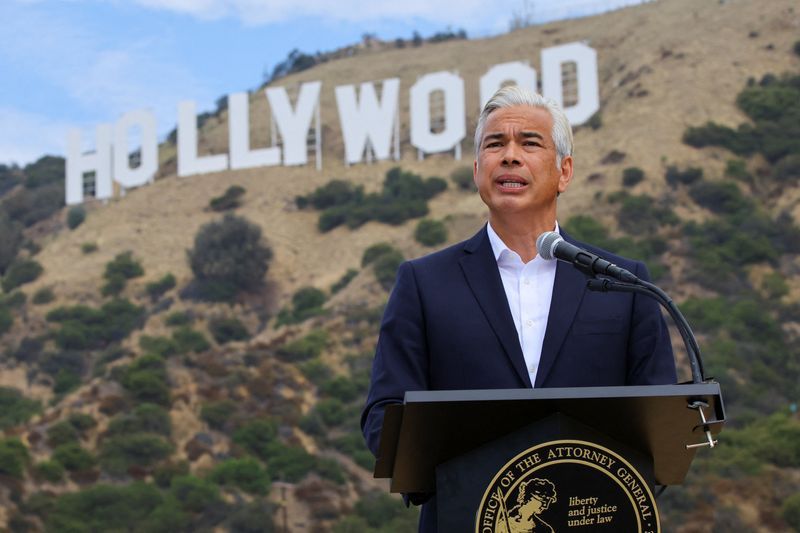
The lawsuit carries unmistakable political undertones. All twelve state attorneys general pursuing this action are Democrats, and their effort appears partly motivated by concerns that the Trump administration's Department of Justice was too permissive in approving the deal. Critics have noted that Paramount CEO David Ellison's father, billionaire Oracle co-founder Larry Ellison, maintains significant relationships with Republican President Donald Trump, and that political considerations may have influenced federal regulators to clear the transaction. California Attorney General Rob Bonta explicitly connected the states' action to what he characterised as the Trump administration's tolerance for corporate consolidation, positioning antitrust enforcement as a counter-balance to what Democrats view as regulatory capture.
This litigation exemplifies how antitrust has become increasingly weaponised as a political tool rather than remaining a purely technical legal matter grounded in economic analysis. Democratic attorneys general have embraced aggressive antitrust enforcement as a mechanism to express resistance to the Trump administration's policies and to harness broader public frustration over rising costs of living and widespread cynicism toward large corporations. The states note that Republican attorneys general have participated with California in other major antitrust challenges, such as cases against Live Nation and Nexstar's acquisition of Tegna, yet have declined to join this particular effort, further underscoring the polarised nature of merger review.
The substantive claims advanced by the states focus on specific market harms. If the merger proceeds, Paramount would control twenty-seven percent of the theatrical film distribution market, thirty percent of blockbuster film distribution, and twenty-seven percent of the basic cable channels market. These combined market shares would give the company extraordinary leverage over thousands of movie theatres nationwide and pay television distributors, the states argue, inevitably resulting in higher prices for consumers and exhibitors. Theater owners have independently opposed the deal, fearing reduced film output and diminished leverage in negotiations with content providers. Hollywood workers, including writers and actors, have similarly registered concern that consolidation would reduce employment opportunities and compress wages across the industry.
Paramount has countered that the merger will actually expand creative output rather than contract it. CEO Ellison has publicly committed that the combined film studios would release thirty movies annually, and management has identified six billion dollars in potential cost savings through eliminating redundant infrastructure, marketing operations, and corporate overhead. The company maintains that greater scale will enhance its ability to compete with Netflix and Disney by spreading production costs more efficiently across a larger portfolio of content. However, the states have dismissed these commitments as unenforceable promises insufficient to address the structural competitive problems they identify. Even if such production commitments were honoured, the states contend, the merged company would retain the power to raise prices and degrade content quality, imposing harms that would cascade through state economies and devastate entertainment sector workers.
The procedural trajectory of this case carries significant financial implications for Paramount. Litigation of comparable merger challenges has historically consumed eight months or more before judges render determinations, according to federal court records. During this extended period, Paramount faces quarterly payments of approximately six hundred fifty million dollars to Warner Bros Discovery shareholders as a break-up fee if the transaction fails to close by October. The company has acknowledged that protracted delays could necessitate renegotiating the deal's financing structures, inject uncertainty into its share price, and potentially render the entire transaction economically unfeasible. Even if Paramount ultimately prevails, the accumulated costs from delay could reach hundreds of millions of dollars, imposing a significant economic penalty on the transaction's completion.
Markets have responded with relative calm to this legal intervention. Paramount shares rose 2.9 percent following the lawsuit's filing, while Warner Bros Discovery shares gained 2.6 percent, suggesting investors may view the legal challenge as unlikely to permanently derail the deal. Nevertheless, analysts have characterised this state-level action as the most credible threat to the transaction since its announcement, representing a meaningful escalation from previous institutional resistance. The willingness of a dozen states to pursue parallel litigation even after federal approval creates genuine uncertainty, particularly if any state court judge issues an injunction blocking the transaction from closing pending resolution of the underlying claims.
For Malaysian and Southeast Asian observers, this dispute illustrates how consolidation in global entertainment creates cascading regulatory and competitive implications across multiple jurisdictions. As streaming services and content producers increasingly operate across borders, the ability of any single national or subnational regulator to influence these transactions diminishes. The California-led coalition's effort to assert state authority over a fundamentally national and increasingly international transaction suggests that regulatory fragmentation may become an enduring feature of media industry structure. Malaysian viewers and content creators ultimately depend on decisions reached in California courtrooms and New York boardrooms, underscoring the degree to which regional media markets remain deeply integrated into American corporate structures and subject to American regulatory frameworks.
The broader implication of this litigation extends to fundamental questions about whether antitrust law remains a credible tool for managing consolidation in twenty-first-century media markets. Traditional antitrust analysis assumes that market concentration harms consumers through higher prices and reduced output. In streaming-era entertainment, these assumptions become more complicated: digital distribution has lowered content production costs, enabled niche programming, and created pathways for independent producers that did not exist in earlier eras. The states have not fully addressed how their analysis accounts for these structural transformations. If courts ultimately side with the states, they will be reasserting that traditional concentration metrics remain valid predictors of consumer harm. If Paramount prevails, courts will be signalling that modern entertainment markets require novel analytical frameworks that traditional antitrust doctrine cannot adequately capture. Either outcome will reverberate through regulatory approaches to consolidation across the entire technology and media sectors.

