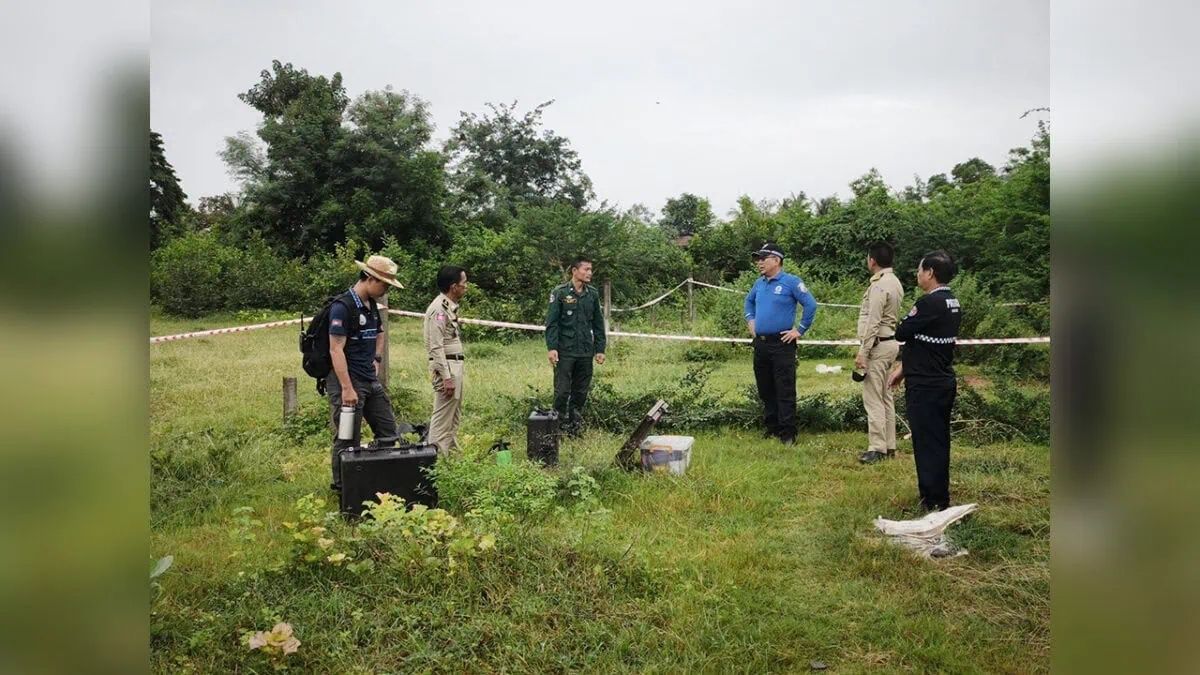
Cambodia's National Police have mobilised their resources alongside the Child Protection Unit to conduct separate investigations into the deaths of two children discovered in Banteay Meanchey province on July 28, marking a tragic incident that has prompted a coordinated law enforcement response across multiple agencies.
The two cases emerged within hours of each other across different districts in the northwestern province. In the morning of July 28, authorities recovered the body of a 15-month-old child from a pond located in Mongkol Borei district. Meanwhile, in a geographically distinct incident, the remains of a five-year-old child were discovered in Teuk Thla commune on the same day. The older child had been reported missing three days earlier on July 25, prompting a separate search effort that concluded with the tragic discovery.
Official statements issued on August 3 by the Child Protection Unit clarified that despite their simultaneous occurrence, the two investigations are being pursued independently. This distinction is significant for investigative purposes, as it suggests authorities have determined distinct circumstances and potential perpetrators in each case rather than a single incident involving multiple victims. Treating the cases separately allows investigators to focus specific resources and forensic techniques appropriate to each homicide's particular circumstances and evidence profiles.
The investigative apparatus brought to bear on these cases reflects Cambodia's commitment to utilising both domestic and international expertise. The Cambodian National Police have engaged their forensic capabilities through the Minister of Interior's Department of Technical and Scientific Police, which conducted comprehensive examinations of both crime scenes. This multi-layered institutional response indicates the seriousness with which authorities are approaching the investigations and their determination to gather robust evidence.
James McCabe, director of the Child Protection Unit, provided the official statement to media outlets, emphasising the determination of both Cambodian law enforcement and partner organisations to pursue thorough and professional investigations. He articulated a commitment to deploying investigative resources and capabilities to their maximum extent, signalling that no effort would be spared in building cases against those responsible. McCabe additionally stated that any individuals found culpable in either death would face prosecution through Cambodia's court system, addressing public concerns about accountability and justice.
The involvement of the Child Protection Unit alongside national police represents an institutional response that integrates child welfare expertise with criminal investigation capabilities. This approach acknowledges that child homicide investigations require specialised understanding of child vulnerability, family dynamics, and the particular vulnerabilities that leave young children exposed to harm. The CPU's participation suggests Cambodia recognises the need for child-focused investigative protocols distinct from standard homicide procedures.
For Southeast Asian observers, these cases underscore persistent challenges relating to child protection across the region. While Cambodia has established institutional frameworks through bodies like the CPU, the occurrence of multiple child deaths within a single day demonstrates the continuing need for vigilance and preventive measures. The cases raise questions about early warning systems, community oversight, and the mechanisms available to identify at-risk children before tragedy occurs.
The decision to maintain operational confidentiality represents a standard investigative practice intended to preserve evidence integrity and prevent compromising leads. Authorities explicitly declined to release further details regarding the circumstances of either death, the preliminary findings from forensic examinations, or the direction of initial investigative leads. This discretion, while sometimes frustrating to the public and media, serves legitimate investigative interests by preventing premature disclosure that could alert suspects or compromise evidentiary chains.
The broader implications of these cases extend beyond the immediate facts. Child protection systems across Southeast Asia face resource constraints, geographical challenges in rural provinces, and sometimes insufficient integration between child welfare and law enforcement agencies. Cambodia's mobilisation of multiple institutions in response to these deaths suggests an institutional awareness that effective child protection requires coordinated action rather than siloed departmental responses.
The prompt public statement from senior officials, including the CPU director's personal commitment to prosecution, signals institutional resolve to pursue justice visibly. This transparency about investigative intent, even as operational details remain confidential, serves to reassure affected communities and demonstrate that authorities take child homicides with appropriate gravity. Such public accountability messaging becomes particularly important in contexts where confidence in law enforcement institutions may be uneven.
For Malaysian policymakers and child protection advocates, the Cambodian cases illustrate how rapidly circumstances can deteriorate when protective mechanisms fail. Both children were in vulnerable circumstances—one very young and in a location with water hazards, the other reported missing but not recovered until after the critical window had passed. The cases suggest that effective child protection requires not merely institutional frameworks but robust early warning systems, community engagement, and rapid response capabilities.
As investigations proceed, the cases will likely inform regional discussions about child protection standards and best practices. The involvement of international expertise through the CPU, alongside domestic law enforcement, represents a model that other Southeast Asian nations may examine as they strengthen their own child protection and criminal investigation capabilities. The commitment to pursue cases to full prosecution similarly sets a standard for accountability that extends beyond Cambodia's borders.
The families of both children have received official expressions of condolence from national police leadership and the Child Protection Unit, acknowledging the devastating impact of these losses. As investigations continue, authorities have pledged that justice will guide their efforts, a commitment that carries weight across Cambodia and the broader Southeast Asian region where questions about child safety and institutional accountability remain pressing concerns.

