Cambodia is intensifying its campaign to secure South Korean capital in higher-value manufacturing sectors, signalling a strategic pivot away from the low-margin garment industry that has long dominated the kingdom's export economy. During a June 16 investment promotion mission to South Korea, Deputy Prime Minister Sun Chanthol, who serves as first vice-chairman of the Council for the Development of Cambodia, spearheaded a delegation through a series of company visits and an investment roadshow in Incheon, presenting fresh opportunities in automotive components, electric vehicle systems, healthcare technology and advanced logistics to Korean corporate leaders.
The timing of this push reflects broader economic anxieties across Southeast Asia about manufacturing competitiveness. Cambodia's textile and apparel sectors, which have sustained millions of jobs and generated substantial export revenues for decades, face mounting pressure from automation, rising labour costs in neighbouring countries, and shifting global supply chains. By courting investments in automotive electronics, EV components and specialised manufacturing, the Cambodian government is attempting to attract the kind of capital-intensive, technology-driven industries that typically create more stable, higher-wage employment and integrate local suppliers into sophisticated regional networks.
During the roadshow, Chanthol met with executives from Daejoo KC Group, a major South Korean conglomerate with sprawling operations across metallurgy, chemicals, logistics, construction, automotive components and energy. The group already maintains a foothold in Cambodia through two established subsidiaries: Camko Motor, which assembles Hyundai vehicles for the domestic market and manufactures automotive wire harnesses for export, and Camko Infracore, which distributes Hyundai vehicles and provides aftersales services. The combined operations employ nearly five hundred workers, illustrating both the depth of Korea's existing industrial presence and Cambodia's existing capacity to support complex assembly and supply operations.
Chanthol used these meetings to encourage deeper expansion, urging Daejoo KC to leverage its Cambodian presence as a platform for scaling operations in sectors where the conglomerate already maintains expertise in South Korea. This strategy reflects a calculated understanding that multinational firms with existing on-the-ground knowledge and relationships are more likely to commit new capital than entirely new entrants. Cambodia's pitch essentially centers on lowering the risk and cost barriers to expansion by emphasizing its readiness to provide regulatory facilitation, stable macroeconomic conditions and transparent investment protection frameworks under its newly updated investment law.
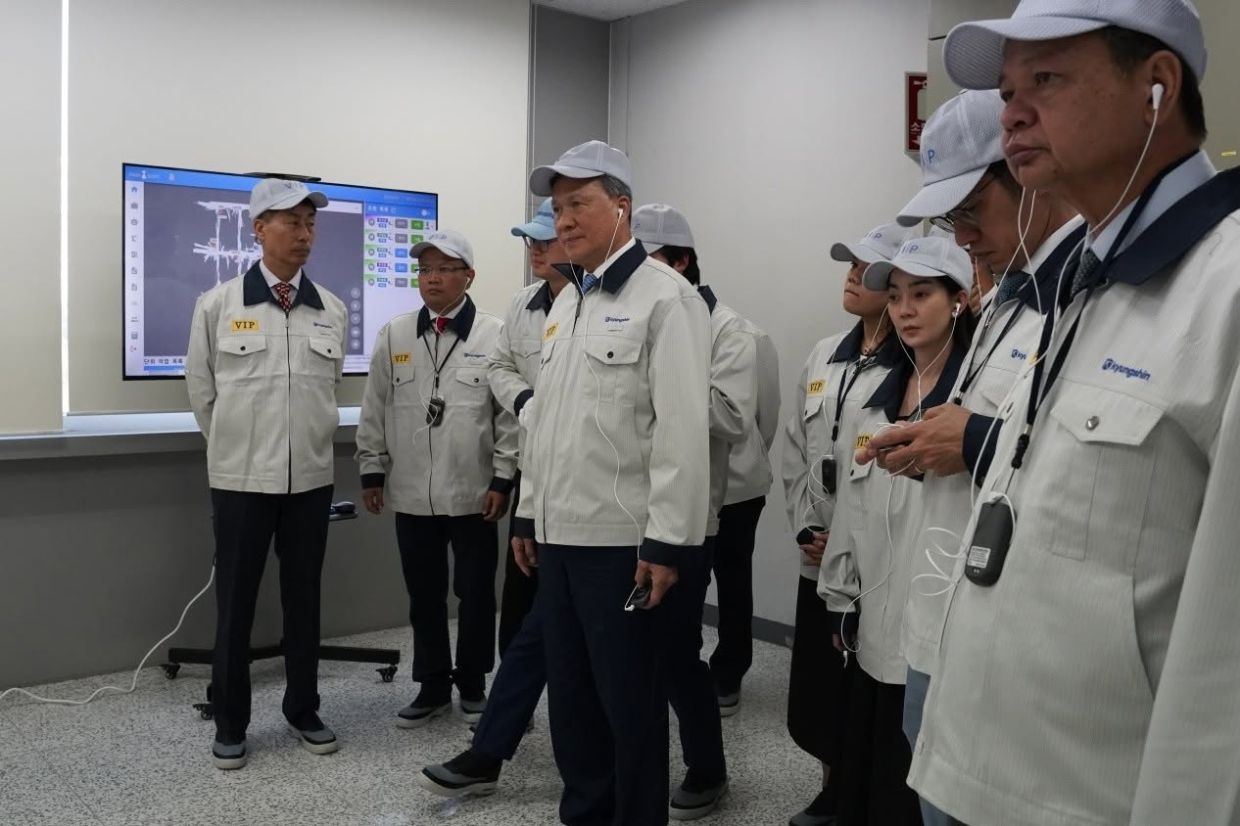
A second major encounter on the mission highlighted Cambodia's particular ambitions in automotive electronics. Kyungshin Co., Ltd., founded in 1974, specializes in the design and manufacture of wiring harnesses, connectors, junction blocks, cables and electrical systems, with growing emphasis on electric vehicle platforms and next-generation mobility technologies. The company has maintained operations in Cambodia since 2012 through a wire harness factory in Kandal province, employing 1,467 workers and representing approximately US$20 million in accumulated investment. By spotlighting Kyungshin's existing operations, Cambodia demonstrated that it can attract and retain sophisticated manufacturers whose products serve global export markets, particularly as the automotive industry globally undergoes its transition to electric and autonomous platforms.
The broader implications for Cambodia's economic trajectory are significant. The kingdom sits at a critical juncture in Southeast Asian manufacturing geography. Vietnam and Thailand have already captured substantial shares of EV component manufacturing and automotive supply chains, leveraging larger domestic markets, more developed infrastructure, and deeper historical ties with Korean conglomerates. Cambodia's strategy of directly engaging the management of established Korean operators suggests recognition that the country must compete not on cost alone—where Bangladesh, Myanmar and other neighbours offer cheaper alternatives—but on reliability, regulatory predictability and the demonstrated capability of existing investors to profitably scale operations.
Beyond manufacturing, the delegation's visit to Incheon Baek Hospital underscores Cambodia's intent to attract medical technology and healthcare services investment, which represents an entirely different economic opportunity. Chanthol explicitly designated healthcare and the establishment of international-standard medical facilities as government priorities, requesting that the hospital explore technical assistance agreements, knowledge transfer programmes and exchanges of medical expertise. This healthcare initiative reveals that Cambodia's investment strategy extends beyond production and into the provision of higher-value services that can serve both domestic populations and wealthy medical tourists throughout Southeast Asia, generating foreign exchange and employing skilled professionals.
The institutional architecture underpinning the mission—with participation from the Cambodian ambassador to South Korea, Ministry of Commerce officials, the CDC, the Korean Chamber of Commerce in Cambodia and the Cambodian Oknha Association (a business networking organization of wealthy merchants and industrialists)—indicates serious government commitment to aligning diplomatic relationships, regulatory support and private-sector facilitation. This orchestrated approach contrasts with more ad-hoc investment promotion efforts, suggesting that Cambodia views the relationship with South Korea as strategically important enough to coordinate across multiple governmental and quasi-governmental agencies.
For Malaysia and other Southeast Asian nations watching Cambodia's moves, the initiative carries instructive lessons about economic positioning in an era of regional manufacturing competition and global supply-chain restructuring. Cambodia is explicitly betting that by offering policy stability, regulatory predictability, and a labour force already experienced in manufacturing for export, it can attract investments from companies with established South Korean parent firms. The strategy assumes that such companies will choose incremental expansion in a familiar market over entry into entirely new countries, and that Cambodia's lower costs relative to South Korea, combined with the kingdom's existing manufacturing capacity and governance improvements, will prove sufficiently attractive.
The emphasis on automotive components and EV systems also reflects Cambodia's reading of global technological currents. As major automakers accelerate the shift toward electrification and autonomous driving, the demand for specialized wiring harnesses, connectors, battery management systems and electronic components will grow substantially over the next decade. By positioning itself as a credible location for such manufacturing, Cambodia hopes to capture a share of this expanding market before competition from other regional producers intensifies further.
However, the success of Cambodia's diversification push will ultimately depend on factors beyond investment promotion missions. The kingdom must sustain improvements in physical infrastructure—particularly roads, ports and power supply—that allow factories to operate efficiently and reliably. It must also ensure that educational and vocational training systems produce workers with the technical skills required for advanced manufacturing, electronics assembly, and healthcare services. Past investments have sometimes foundered when quality-control standards, shipping logistics or workforce availability fell short of international norms.
The garment sector, despite its low margins and vulnerability to automation, will likely remain central to Cambodia's economy for years. Yet Deputy PM Chanthol's roadshow mission signals recognition that manufacturing diversification is no longer optional but essential. By targeting specific Korean firms already embedded in the kingdom and explicitly courting investments in technology-intensive sectors, Cambodia is attempting to graduate from being merely a cheap labour destination to becoming an integrated node in sophisticated regional manufacturing networks. Whether this ambition succeeds will shape not only Cambodia's economic prospects but also the broader competitive dynamics among Southeast Asian nations vying for capital and technology transfer in an increasingly multipolar global economy.