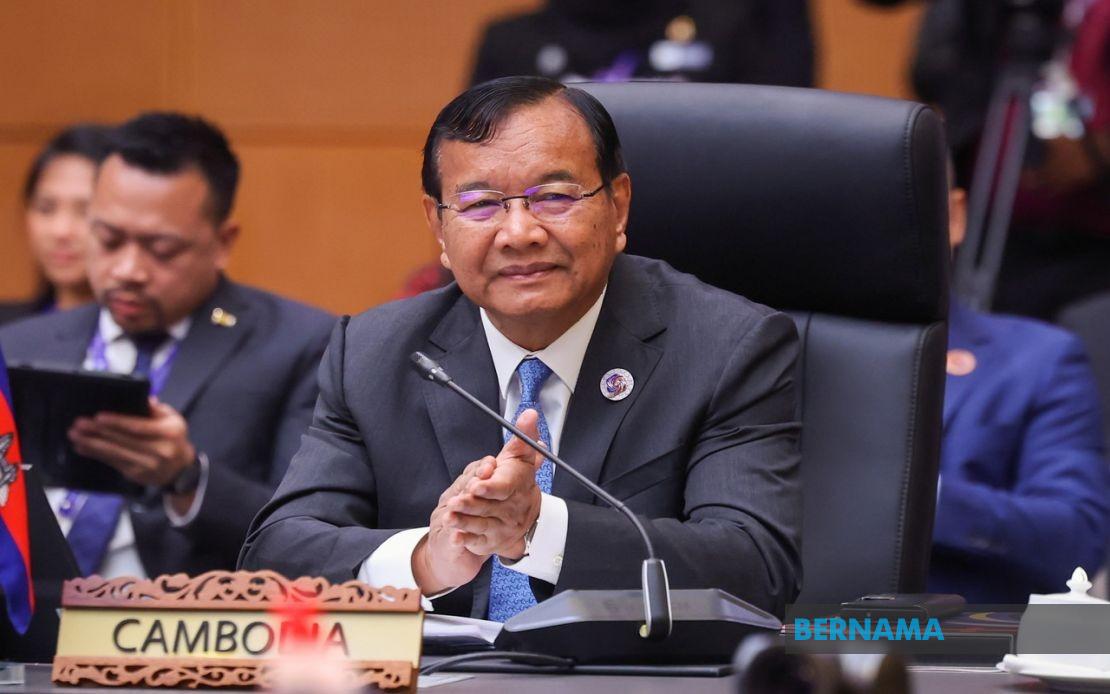
Cambodia's Deputy Prime Minister and Foreign Affairs Minister Prak Sokhonn touched down in Kuala Lumpur on August 3, marking the beginning of a two-day diplomatic mission aimed at reinvigorating the strategic partnership between the two Southeast Asian neighbours. His arrival at Kuala Lumpur International Airport's Terminal 1 in the early afternoon underscores the significance both nations place on their continuing engagement, particularly as regional cooperation frameworks face evolving geopolitical pressures.
The timing of Sokhonn's visit reflects a deliberate effort to maintain momentum in Malaysia-Cambodia relations at a senior political level. By scheduling a visit from one of Cambodia's most senior ministers—a figure responsible for both national security matters and international relations—both governments are signalling their commitment to deepening ties beyond routine diplomatic protocols. The presence of Cambodian Ambassador to Malaysia Ouk Chandara and Malaysian Government chief ceremony officer Datuk Rozainor Ramli at the airport demonstrated the official nature of the reception, with preparations having clearly been made in advance.
During his stay, Sokhonn will be received by Prime Minister Datuk Seri Anwar Ibrahim in a courtesy call, a traditional but meaningful gesture that sets the tone for high-level engagement. This direct interaction between the two leaders' representatives allows for candid discussion on matters of mutual concern and provides an opportunity to address any outstanding issues before the formal bilateral commission meeting. Such personal exchanges often yield dividends in terms of understanding and goodwill that formal meetings alone cannot achieve.
The centrepiece of Sokhonn's visit is the third convening of the Cambodia-Malaysia Joint Commission for Bilateral Cooperation, an institutional mechanism designed to provide structured oversight of the bilateral relationship. This meeting will serve as a comprehensive review platform, examining how effectively both nations have implemented commitments made during their previous joint commission gathering. By systematically assessing progress on agreed minutes and previously concluded bilateral agreements, the commission ensures that diplomatic intentions translate into concrete actions that benefit both populations.
Beyond his engagement with Prime Minister Anwar, Sokhonn will hold dedicated bilateral discussions with Malaysian Foreign Minister Datuk Seri Mohamad Hasan. These talks will likely encompass a range of issues including regional security, trade facilitation, people-to-people exchanges, and the broader context of Southeast Asian stability. Given Malaysia's role as ASEAN chair and its geographical significance in the region, such ministerial-level conversations carry weight that extends beyond the bilateral sphere.
The economic dimension of Malaysia-Cambodia relations provides compelling context for this diplomatic visit. During 2025, trade between the two countries experienced substantial expansion, growing 27.4 per cent year-on-year to reach RM5 billion, equivalent to USD1.17 billion. This growth trajectory indicates that businesses in both nations recognise opportunities in deepening commercial ties, and the bilateral commission meeting will likely include discussion of mechanisms to sustain and accelerate this economic momentum. Such commercial integration serves as a stabilising force in international relations, creating mutual interests in regional peace and prosperity.
Malaysia's investment position in Cambodia further underscores the depth of economic integration. As of 2024, Malaysian cumulative investments in Cambodia totalled USD3.20 billion across 162 registered projects, positioning Malaysia as Cambodia's third-largest foreign investor. This substantial capital commitment reflects confidence in Cambodia's economic prospects and represents significant stakes that Malaysian investors have in Cambodia's continued stability and growth. The presence of such considerable Malaysian business interests means that government-to-government discussions inevitably touch upon investor protection, regulatory frameworks, and sectoral development priorities.
For Malaysian readers and businesses, the strengthening of Cambodia ties carries direct relevance. As Malaysia positions itself as a regional economic hub and investment source, deepening relations with Cambodia—a country of over 16 million people with significant tourism and agricultural potential—offers expanded market opportunities. The bilateral commission framework provides assurance that both governments are actively managing their relationship and addressing obstacles to trade and investment.
From Cambodia's perspective, Malaysia represents a crucial partner for development and regional integration. The strong investment and trade relationship demonstrates Malaysia's confidence in Cambodia's economic trajectory and provides vital capital and expertise for infrastructure and industrial development. The reciprocal nature of this partnership—where both sides benefit from closer ties—creates a stable foundation for long-term cooperation.
The broader Southeast Asian context amplifies the significance of this visit. As the region navigates shifting geopolitical alignments and economic transformations, bilateral relationships grounded in regular high-level engagement and institutional mechanisms help preserve stability and provide forums for addressing concerns constructively. Malaysia and Cambodia, as established ASEAN members with complementary economic profiles, have both incentive and capacity to maintain robust cooperation.
The third joint commission meeting represents an evolution in the bilateral relationship, demonstrating that initial agreements have yielded sufficient results to warrant continued institutional attention. The progression from inaugural to third meetings indicates sustained political will and suggests that both governments view their partnership as dynamic rather than transactional, requiring periodic reassessment and renewal of commitment.
Looking forward, Sokhonn's visit likely signals that both Malaysia and Cambodia intend to explore new areas of cooperation while consolidating existing partnerships. Whether through enhanced educational exchanges, tourism promotion, or deeper sectoral integration, the bilateral relationship shows signs of maturation. For investors, policymakers, and citizens in both countries, this trajectory suggests an increasingly predictable and cooperative regional environment where disputes can be managed through established mechanisms and mutual prosperity remains a shared objective.

