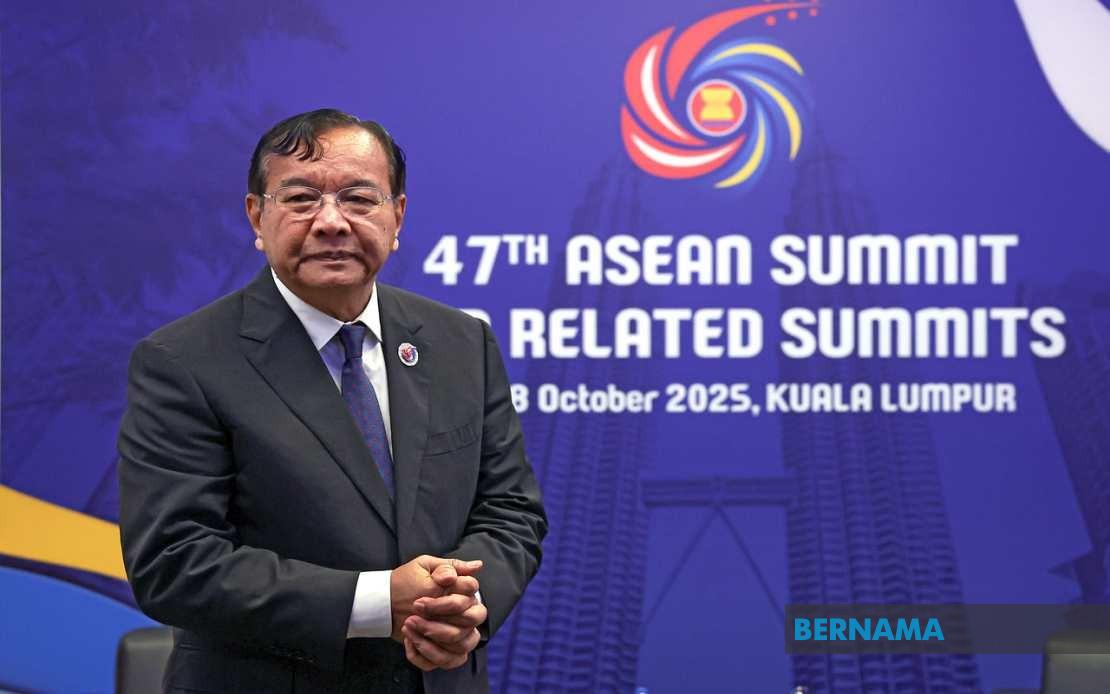
Cambodian Deputy Prime Minister and Foreign Minister Prak Sokhonn has arrived in Malaysia for a significant two-day official visit aimed at rekindling a dormant institutional framework that has lain inactive for two decades. The centrepiece of his visit is the third meeting of the Malaysia-Cambodia Joint Commission for Bilateral Cooperation, to be co-chaired with Malaysian Foreign Minister Datuk Seri Mohamad Hasan. The resumption of this bilateral mechanism represents a watershed moment in relations between the two Southeast Asian neighbours, signalling renewed political will to deepen institutional ties after a prolonged absence.
The last JCBC meeting took place in Siem Reap in 2006, meaning the commission has remained dormant through two decades marked by significant geopolitical shifts in the region. The timing of its revival carries symbolic weight, occurring as Malaysia and Cambodia approach the 70th anniversary of their diplomatic relations in 2027. By reactivating this high-level platform now, both governments are demonstrating their intent to reinvigorate bilateral cooperation ahead of what will be a milestone anniversary, according to a statement issued by Wisma Putra, Malaysia's Foreign Ministry.
During his stay, Prak Sokhonn will conduct a courtesy call on Prime Minister Datuk Seri Anwar Ibrahim, providing the two leaders with an opportunity to reaffirm longstanding ties and discuss matters of shared concern across the region. Such high-level interactions between heads of government serve as crucial forums for addressing strategic issues and setting the tone for institutional cooperation at lower levels. The bilateral agenda is expected to encompass economic partnership, security matters, and regional cooperation within ASEAN frameworks.
The economic relationship between Malaysia and Cambodia has demonstrated considerable vitality in recent years, reflecting underlying complementarities between the two economies. Bilateral trade surged 27.4 per cent year-on-year in 2025 to reach RM5 billion, equivalent to approximately US$1.17 billion. This robust expansion indicates growing commercial integration, with Malaysian exports to Cambodia climbing to RM4.13 billion while imports from the Kingdom totalled RM880 million. The imbalance in trade flows, with Malaysian exports substantially exceeding imports, suggests scope for deepening Cambodian market penetration into Malaysian sectors and developing more balanced commercial relationships.
Malaysia's investment footprint in Cambodia underscores the depth of economic ties extending beyond merchandise trade. As of 2024, Malaysian cumulative foreign direct investment in Cambodia had reached US$3.20 billion across 162 registered projects, positioning Malaysia as the third-largest foreign investor in the Kingdom. This substantial stock of capital reflects confidence among Malaysian enterprises in Cambodia's investment climate and growth prospects, spanning diverse sectors from manufacturing to services. The scale of Malaysian investment indicates that Malaysian businesses view Cambodia as an increasingly important market within their regional expansion strategies.
The revival of the JCBC framework provides both nations with a formal mechanism to coordinate policies, address trade barriers, facilitate investment flows, and align their approaches to regional challenges. Such commission meetings typically result in signed agreements outlining priority areas for cooperation and establishing timelines for joint initiatives. At the conclusion of this week's talks, the foreign ministers are expected to sign the Agreed Minutes of the third JCBC, documenting the outcomes of discussions and formalising commitments to strengthen bilateral collaboration across identified sectors.
For Malaysian readers and businesses, the reactivation of this commission carries practical implications. A functioning JCBC creates structured pathways for resolving trade disputes, facilitating regulatory alignment, and coordinating infrastructure projects that may benefit both economies. It also signals a more predictable and institutionalised framework for Malaysian investors operating in Cambodia, reducing uncertainty and potentially attracting additional Malaysian capital into the country. The commission can serve as a platform for identifying sectoral opportunities where Malaysian expertise, technology, and capital can contribute to Cambodia's development goals.
Regionally, Malaysia-Cambodia bilateral strengthening carries broader significance within ASEAN. As two member states of the bloc, enhancing their bilateral relationship contributes to overall regional cohesion and functional integration. A robust Malaysia-Cambodia partnership strengthens the association's collective capacity to address transnational challenges, from climate change to maritime security. The revival of the JCBC thus has ripple effects extending beyond bilateral concerns to encompass the wider Southeast Asian architecture that ASEAN sustains.
The 20-year hiatus in JCBC meetings raises questions about the institutional factors that contributed to the dormancy and what has changed to prompt its reactivation. Various factors—including shifts in government priorities, capacity constraints, or competing diplomatic agendas—may have played roles. The decision to reconvene now suggests that senior leadership in both capitals has determined that maintaining a comprehensive bilateral mechanism serves their national interests and aligns with their respective regional strategies. This renewal reflects confidence that regular high-level dialogue and institutionalised cooperation frameworks remain essential tools for managing bilateral relations in an increasingly complex regional environment.
Looking forward, the consistency with which the JCBC meets going forward will be a key indicator of the durability of this diplomatic revitalisation. Institutions require sustained engagement to remain effective; sporadic meetings risk diminishing returns. Both governments would be well-served by establishing regular meeting schedules and ensuring that JCBC deliberations translate into tangible outcomes affecting businesses, citizens, and policy implementation on both sides of the border. The momentum generated by Prak Sokhonn's visit should be channelled into establishing robust working groups capable of advancing cooperation between official visits.
As Malaysia and Cambodia move towards their 70th diplomatic anniversary, the restoration of the JCBC meeting framework represents an opportunity to reset expectations about the relationship and establish clearer strategic objectives for the next phase of bilateral engagement. The economic indicators are favourable, with trade and investment flows demonstrating mutual benefit. What remains is whether the institutional mechanisms being revived can keep pace with the commercial dynamism characterising the relationship and provide the coordination necessary for both governments to maximise mutual gains from their partnership in an increasingly multipolar regional order.

