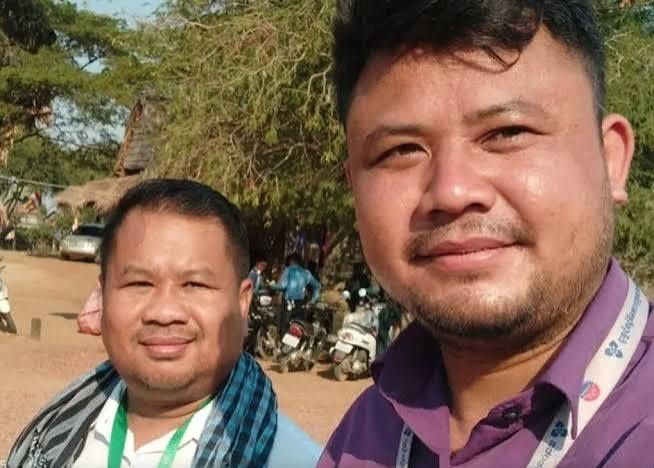
Cambodia's Supreme Court is set to deliver a ruling that will significantly impact both the two journalists at its centre and broader questions about the country's commitment to press freedom. The court was expected to decide on Thursday, June 25, whether to uphold or overturn the convictions and 14-year prison sentences handed to Phorn Sopheap of Battambang Post TV Online and Pheap Pheara of TSP 68 TV Online, who were found guilty of treason for their reporting activities along the Thai border.
The journalists' offence, according to Cambodian authorities, was capturing and sharing photographs from a restricted military zone during last year's border conflict with Thailand. Both men have consistently maintained their innocence, arguing they possessed proper authorisation to access the area where they conducted their photography work. Their legal team has submitted an appeal requesting that the Supreme Court overturn the guilty verdict and sentence them to freedom, challenging the lower court's determination that they had committed the crime of "supplying a foreign state with information prejudicial to national defense."
The backdrop to this case involves significant military tensions between Cambodia and Thailand. Border clashes erupted in July and December of the previous year, resulting in considerable loss of life and displacement of civilian populations across both nations. Approximately 100 soldiers and civilians were killed, while hundreds of thousands of people fled their homes. The fighting subsided following a ceasefire agreement in December, though the underlying tensions between the two countries remain unresolved and fragile.
At the heart of the controversy lies a single photograph showing land mines. The image gained widespread attention when Thai media outlets republished it extensively, using it to support Thailand's assertion that Cambodia had recently deployed new mines along their shared border, which Thailand claimed had wounded soldiers conducting routine patrols. This specific image became a flashpoint in the diplomatic row, with Cambodia forced into damage control over its military operations in the border region.
Cambodia's response was categorical denial. The government insisted it had not deployed mines and cited its adherence to international treaties prohibiting landmine use. Instead, Cambodian officials suggested that any mines discovered in the area were remnants from the decades of civil conflict that ravaged the nation until the late 1990s. This explanation, however, failed to quell the controversy, particularly given the timing of the photographs and their apparent corroboration of Thai claims about recent military action.
The conviction of Phorn Sopheap and Pheap Pheara was handed down by the Siem Reap Provincial Court in December, establishing a troubling precedent for press freedom in Cambodia. The case has attracted the concern of international media advocacy groups. More than a dozen national and international journalism associations issued a joint letter urging the Cambodian government to drop its case after an earlier court of appeal upheld the conviction in March, demonstrating a unified international stance against what many see as prosecutorial overreach.
The Supreme Court's decision arrives at a particularly sensitive moment for Cambodia's judicial reputation. Just days earlier, the same court upheld the incitement conviction of Rong Chhun, a 56-year-old opposition politician who had been found guilty of inciting social unrest. Chhun's alleged crime involved meeting with villagers displaced by government-backed development projects, a meeting many observers characterised as legitimate political engagement rather than criminal incitement. This back-to-back vindication of controversial convictions has intensified scrutiny of the court's independence and impartiality.
The human rights landscape under the current administration reflects a troubling continuity with the past. Prime Minister Hun Manet assumed office in August 2023, succeeding his father, Hun Sen, who ruled Cambodia for nearly four decades with an iron grip marked by systematic suppression of dissent and widespread human rights abuses. Despite Hun Manet's American education and the international community's initial hopes for reform, there has been minimal evidence of political liberalisation or retreat from the state's repressive posture toward critics and independent media.
International monitoring organisations have documented the concerning pattern. The Committee to Protect Journalists, based in New York, issued a statement this year accusing the Cambodian government of deliberately weaponising vague national security laws to suppress legitimate journalism. By framing ordinary reporting as treason or incitement, the government effectively criminalises the core functions of a free press. This tactic enables authorities to pursue journalists while maintaining a veneer of legality and procedural propriety.
Cambodia's standing in global press freedom rankings reflects this grim reality. The country ranked 161st out of 180 nations in the 2025 Reporters Without Borders World Press Freedom Index, placing it among countries where the media environment is considered "very serious" in terms of restrictions and dangers to journalists. This ranking underscores Cambodia's position near the bottom of international press freedom measurements, grouped with some of the world's most repressive regimes.
For Malaysian observers and Southeast Asian media practitioners, the Cambodia case carries direct implications. The region has experienced troubling trends in recent years whereby governments invoke security concerns or national defence provisions to suppress reporting and arrest journalists. Cambodia's legal framework serves as a cautionary example of how vague legislation can become an instrument of political control when judicial oversight is weak or compromised. The Supreme Court's forthcoming decision will signal whether Cambodia intends to continue down this path or reconsider its approach to press freedom.
The government has defended the legal proceedings, insisting that the Supreme Court operates with complete independence from political influence and that the convictions reflect genuine national security concerns rather than political persecution. However, the pattern of high-profile convictions affecting opposition figures, journalists, and civil society activists, combined with the lack of visible progress toward liberalisation since the leadership transition, has made such assurances increasingly unconvincing to both international observers and domestic critics who fear Cambodia's judicial independence remains substantially compromised.

