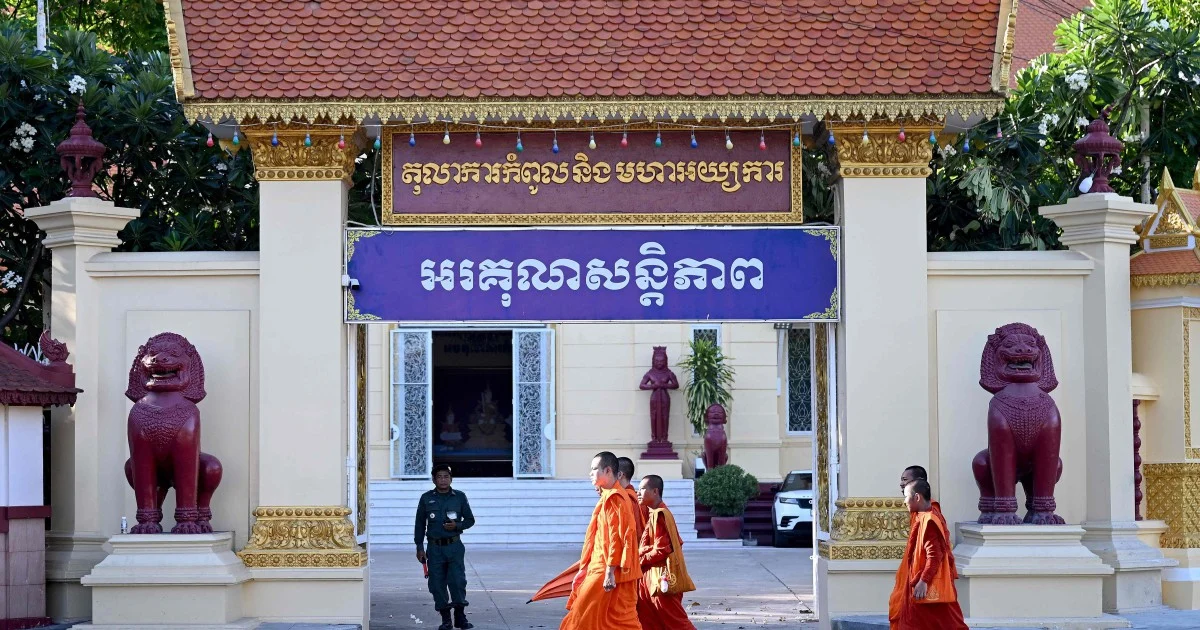
Cambodia's Supreme Court has rejected an appeal by two journalists previously convicted of treason, confirming their 14-year prison sentences. The decision, announced through a judge's statement to news agencies on Thursday, marks a significant development in a case that has drawn scrutiny from international press freedom advocates who view the prosecution as an attack on independent journalism in the Southeast Asian nation.
The two reporters faced prosecution after sharing a photograph captured within a military-restricted zone during the aftermath of border tensions between Cambodia and Thailand. The posting of this image, authorities argued, revealed sensitive military installations or deployments in a region already prone to periodic flare-ups. Prosecutors characterised the journalists' actions as breaching national security protocols and serving external interests—charges the defendants have disputed as a misuse of Cambodia's broad treason laws.
This case reflects a broader pattern of concern among media watchdogs monitoring Cambodia's treatment of the press. The country has repeatedly ranked poorly in global press freedom indices, with critics noting that vague national security statutes frequently become tools for silencing critical reporting and dissent. Treason charges, in particular, carry exceptionally severe penalties and can be deployed against journalists whose reporting displease those in power, creating a chilling effect across newsrooms seeking to cover sensitive topics.
The Supreme Court's confirmation of the sentences suggests that Cambodia's judicial system has found the lower court's reasoning sufficient to justify the harsh penalties. Defence teams would have argued that the journalists were engaged in legitimate reporting, that the material posed no genuine security threat, and that the prosecution represented an unjustifiable infringement on press freedom. The court's rejection of these arguments indicates the judiciary's acceptance of the government's framing of the case as a matter of national security rather than free expression.
Border security remains a sensitive topic across Cambodia's frontiers, particularly with Thailand. The two nations have endured periodic military confrontations, most notably during a 2011 conflict at the Preah Vihear temple complex. Even lower-level tensions can generate defensive posturing from military authorities, who argue that disclosure of troop positions or equipment details could compromise defensive capabilities. This geopolitical context has made journalists operating along border regions acutely vulnerable to prosecution under laws criminalising information they view as newsworthy.
For Southeast Asian media professionals, Cambodia's handling of this case carries troubling implications. Thailand itself has used strict lèse-majesté and national security laws to prosecute journalists and activists, while Myanmar has imprisoned reporters covering the military coup and its aftermath. Cambodia's Supreme Court decision signals that even final legal appeal offers no refuge for journalists convicted under such sweeping statutes, potentially emboldening authorities elsewhere to pursue similar prosecutions.
International press organisations have consistently urged Cambodia to decriminalise journalism and amend laws that enable governments to prosecute reporters for their professional activities. However, judicial independence in Cambodia remains constrained by political influences, making it unlikely that courts will reverse or meaningfully reinterpret security-based treason convictions without broader legislative reform. The Supreme Court's confirmation of these sentences suggests resignation to the status quo rather than willingness to carve out protections for journalistic practice.
The human toll on the journalists involved extends beyond imprisonment. Their careers face likely destruction; reintegration into the profession after release from multi-year sentences proves extraordinarily difficult in polarised media environments. Their families endure years of economic hardship and social stigma. Meanwhile, their colleagues face daily reminders that reporting on sensitive topics—particularly those touching military affairs or border issues—carries existential career risk.
For news editors across Malaysia and the broader region, this case underscores the importance of understanding each country's legal landscape and the genuine perils facing journalists in less free environments. It also highlights why regional press freedom advocacy remains essential. Malaysia itself has wrestled with balancing national security concerns against press liberty, and developments in neighbouring countries like Cambodia serve as cautionary tales about how security rhetoric can gradually erode journalistic space.
The Supreme Court's decision appears final, leaving the journalists with limited domestic options. Their only potential recourse involves international legal mechanisms such as United Nations human rights bodies, which have limited enforcement power. Unless Cambodia's government signals willingness to reconsider the case on grounds of clemency or presidential pardon, the two reporters face the prospect of serving their full sentences, becoming among the region's most prominent examples of journalism prosecuted under security laws.

