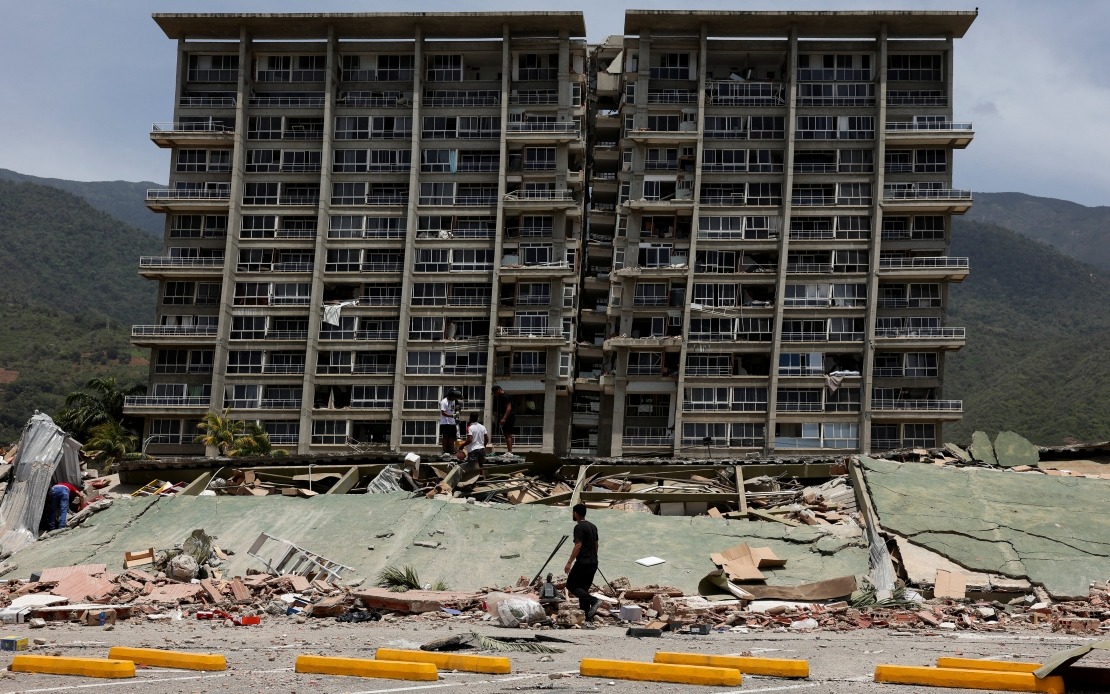
Canada has committed an initial US$5 million in humanitarian assistance to address the catastrophic aftermath of recent earthquakes that have devastated Venezuela, according to an announcement from the Canadian Foreign Ministry on Thursday. The contribution represents an immediate response to escalating humanitarian needs in the South American nation, where seismic activity has triggered widespread destruction and loss of life across multiple regions.
The scale of destruction from the earthquakes remains partially unclear, but preliminary assessments indicate that hundreds of thousands of individuals may require urgent assistance in the coming weeks and months. Venezuelan authorities and international observers have documented extensive damage to infrastructure, housing, and public facilities, compounding an already fragile humanitarian situation in a country facing economic and social challenges. The Canadian government emphasized that the full extent of the disaster continues to emerge as rescue and assessment operations unfold.
Canadian Foreign Minister Anita Anand characterised the situation as deeply troubling, noting that families have experienced devastating losses while entire communities have been fractured by the tremors. Her statement reflected Canada's solidarity with Venezuelan citizens enduring this catastrophe, signalling Ottawa's commitment to supporting relief efforts despite complex diplomatic relations between Canada and the Venezuelan government.
The newly announced funding will be channelled through experienced humanitarian organizations already operating in Venezuela. These partners will prioritize delivering emergency food supplies, clean drinking water, sanitation infrastructure, and medical care to affected populations. Additionally, the allocation includes resources for protection services—particularly safeguarding vulnerable groups such as children and women—alongside logistical support to ensure aid reaches remote and heavily impacted areas where access remains challenging.
This intervention builds upon Canada's existing humanitarian engagement with Venezuela. Earlier in 2024, the Canadian government had already distributed approximately US$4.5 million to address humanitarian needs in the country, reflecting a sustained commitment to alleviating suffering despite the political tensions characterizing Canada-Venezuela relations in recent years. The cumulative investment now exceeds US$9.5 million, demonstrating Ottawa's prioritization of humanitarian concerns over geopolitical considerations.
For Malaysian and Southeast Asian observers, Canada's response illustrates how major developed nations approach disaster relief in geopolitically sensitive contexts. Although Venezuela is geographically distant from our region, the principles governing international humanitarian assistance apply universally. Canada's willingness to provide aid despite diplomatic differences offers lessons for how ASEAN nations might balance political relationships with humanitarian obligations when natural disasters strike neighbouring or regional countries.
The Canadian Foreign Ministry indicated that senior officials remain in active dialogue with regional partners and international humanitarian agencies as the situation develops. This ongoing engagement reflects the fluid nature of post-disaster coordination, where initial needs assessments often evolve significantly as rescue operations progress and the true scale of displacement becomes apparent. Ottawa has committed to releasing further details regarding how the new funding will be allocated as planning proceeds.
Venezuela's vulnerability to seismic activity, combined with its existing economic and infrastructure challenges, means that earthquake response will prove exponentially more difficult than in countries with robust disaster management systems and adequate emergency reserves. The humanitarian organizations receiving Canadian support must navigate not only the immediate crisis but also a severely constrained operating environment where fuel shortages, currency instability, and supply chain disruptions complicate the delivery of assistance.
The timing of Canada's announcement reflects international pressure to respond swiftly to humanitarian emergencies. Delays in mobilizing assistance can prove catastrophic in post-disaster contexts, where disease outbreaks, malnutrition, and psychological trauma escalate rapidly among displaced populations. By committing funds within days of the earthquakes, Canada positions itself within the vanguard of donor nations while establishing a foundation for sustained engagement as recovery phases transition from emergency relief toward reconstruction.
For regional policymakers and humanitarian professionals in Southeast Asia, Canada's approach underscores the importance of maintaining rapid-response funding mechanisms independent of diplomatic cycles. Should major earthquakes or tsunamis strike ASEAN territories, the speed and scale of international humanitarian mobilization could significantly influence survival rates and long-term recovery prospects. Canada's model—combining initial rapid deployment with mechanisms for sustained funding based on evolving needs—merits consideration by regional disaster management authorities.
The Canadian government will continue monitoring developments in Venezuela closely, positioning itself to expand assistance if assessments reveal requirements beyond current allocations. This adaptive approach acknowledges the uncertainty inherent in immediate post-disaster periods while signalling to humanitarian partners that political stability in funding commitments exists. For Venezuelan citizens facing trauma and displacement, Canada's intervention provides critical resources that may determine whether vulnerable groups receive life-saving services during this critical phase of the humanitarian crisis.

