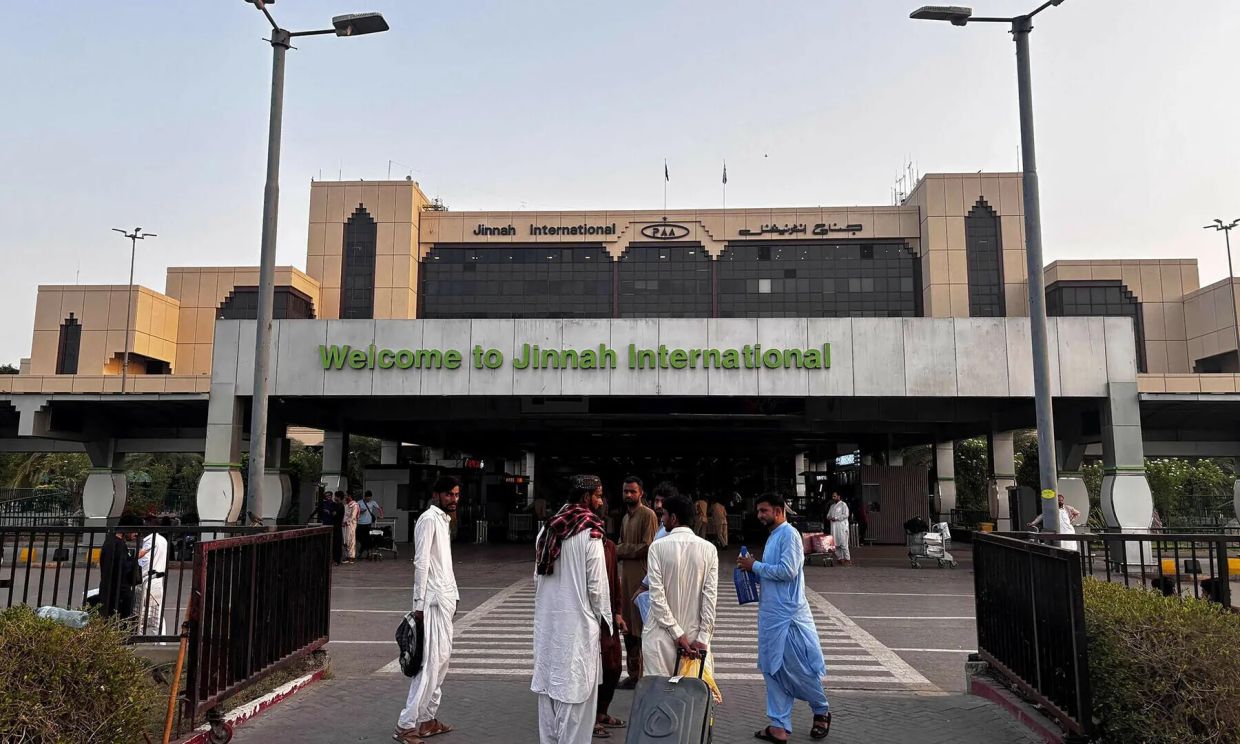
A special judge in Pakistan has handed down an eight-year prison sentence to Raheel Dhannani, a Canadian citizen, for attempting to unlawfully transport foreign currency out of the country. The conviction came following a case that highlights persistent challenges with currency smuggling at Pakistani borders and the difficulties authorities face in detecting and prosecuting such offences.
Dhannani received concurrent sentences of five years and three years on separate counts under the Customs Act, stemming from an incident at Karachi airport on January 24, 2023. The case began when customs officials questioned the Canadian traveller as he prepared to depart with his family on a flight bound for Vancouver via Bangkok. When asked directly whether he possessed any foreign currency, Dhannani denied carrying any such funds, according to state prosecutor Naimatullah Soomro's account.
A subsequent search of his luggage revealed the presence of substantial undeclared currency: approximately US$111,400 and C$31,425. The discovery contradicted his earlier declaration and triggered a customs investigation that ultimately led to formal charges. The amount significantly exceeded Pakistan's legal limits for transporting foreign currency without proper documentation and regulatory approval from the State Bank.
The defence mounted a vigorous challenge to the prosecution's case, raising procedural and evidentiary concerns about how authorities conducted the search and investigation. Legal representatives argued that Dhannani had not received a declaration form, that no CCTV footage was presented as corroborating evidence, and that no independent witness had been present during the luggage search. They further contended that no written record existed documenting either a formal declaration or Dhannani's refusal to declare the currency.
A crucial component of the defence strategy centred on the timing and location of the alleged offence. The legal team maintained that Dhannani had been stopped before completing the full departure formalities and crucially had not yet crossed the checkpoint beyond which authorities could legally compel currency declarations. This distinction, the defence argued, meant the accused had not committed a completed offence but rather remained in the preparatory stages.
Special Judge Dr Shaban Waheed rejected these arguments comprehensively, concluding that the evidence demonstrated a deliberate and conscious attempt to violate currency export regulations. The judge determined that once Dhannani entered the international departure process while carrying currency far exceeding permitted amounts without making a lawful declaration, the conduct transcended mere preparation and constituted an attempted offence under Pakistani law.
The court's reasoning emphasised Dhannani's status as an experienced international traveller familiar with customs procedures. The judgment noted that he possessed comprehensive knowledge of standard customs formalities, held foreign currency vastly surpassing regulatory limits, explicitly denied carrying such funds when directly questioned, and provided no satisfactory legitimate explanation for attempting to transport such large sums without complying with mandatory legal requirements. These cumulative factors, rather than individual isolated points, persuaded the judge that accidental oversight or honest mistake could be definitively excluded.
In its formal written judgment, the court observed that the circumstances collectively and unmistakably pointed toward a calculated and premeditated effort to breach the Customs Act, 1969. The judge rejected any suggestion of inadvertence, viewing the totality of conduct as evidence of intentional law violation rather than mere negligence or miscalculation on Dhannani's part.
The verdict carries significant implications for Canadians and other foreign nationals conducting business or travel through Pakistan. It demonstrates Pakistani courts' willingness to prosecute currency smuggling cases rigorously, particularly where deliberate false statements to customs officials form part of the pattern of conduct. For Malaysian travellers and business persons similarly transiting through Pakistani airports, the case underscores the importance of scrupulous compliance with currency declaration requirements and absolute honesty during customs questioning.
The case also reflects Pakistan's ongoing efforts to combat currency smuggling, a persistent concern affecting monetary stability and creating opportunities for money laundering and financing of illicit activities. The State Bank of Pakistan maintains strict controls on foreign currency exports, requiring formal declarations and regulatory approval for amounts exceeding specified thresholds. Smuggling such funds represents a serious breach threatening both national economic interests and international financial compliance obligations.
For regional observers, the Dhannani case illustrates how neighbouring countries enforce border controls and the penalties imposed for attempting to circumvent currency regulations. Southeast Asian countries including Malaysia operate similar frameworks restricting undeclared currency movement, making this case particularly instructive for understanding how courts in the region interpret smuggling statutes and assess evidence of intentional violation versus mere administrative oversight.

