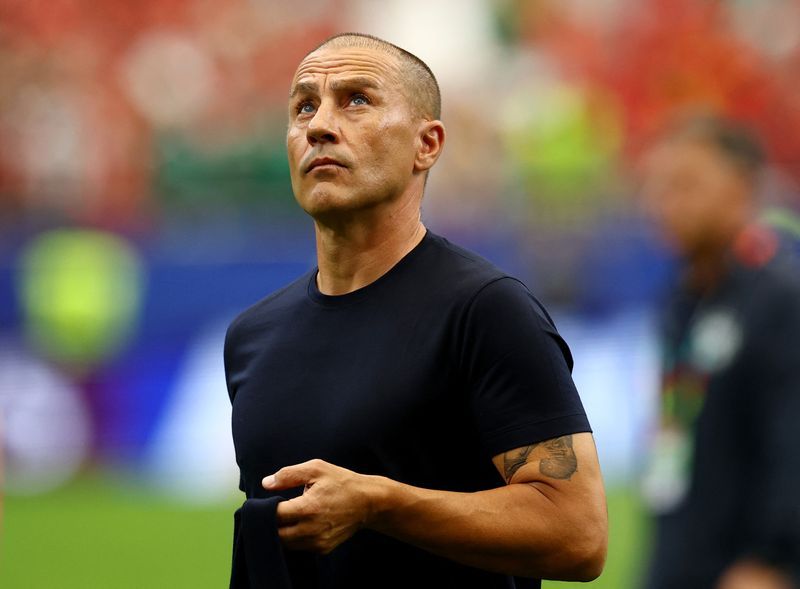
Uzbekistan's maiden World Cup campaign suffered a humbling setback in Houston on Tuesday when they collapsed to a 5-0 defeat at the hands of Portugal, leaving their chances of progressing from Group K hanging by a thread. Coach Fabio Cannavaro, the Italian defensive legend who lifted the World Cup trophy with his country in 2006, accepted full accountability for the embarrassing scoreline while attempting to instil belief in his young squad ahead of a must-win clash against the Democratic Republic of Congo this weekend.
The Central Asian nation now faces an uphill battle to avoid early elimination from the tournament. Back-to-back losses—their opening 3-1 reversal to Colombia followed by the Portugal debacle—have put them in a precarious position with only one match remaining in their group stage campaign. Cannavaro stressed that despite the mounting pressure, his team possessed the character and resilience necessary to maintain their World Cup dream, albeit one that has become significantly harder to achieve.
In taking on the burden of defeat, Cannavaro drew on his extensive experience as both a player and manager to demonstrate leadership at a critical juncture. He made clear that the responsibility for tactical decisions and game management rested squarely with him, not with individual players who had given their utmost effort against a far more accomplished Portuguese side. This approach reflects the former Juventus and Real Madrid stalwart's philosophy of protecting younger players' confidence during their developmental years on the international stage.
Cannavaro outlined his reasoning for shielding his players from blame, noting that Uzbekistan's World Cup participation represents a historic milestone for a nation that has rarely featured prominently in global football competitions. He granted his squad permission to make errors, viewing mistakes as inevitable stepping stones in their journey towards becoming a more competitive international force. By absorbing the criticism himself, he attempted to create an environment where players could continue to express themselves and take calculated risks rather than retreating into cautious, defensive football.
A pivotal moment arrived when Azizjon Ganiev appeared to have scored a crucial goal at 2-0, only to have it chalked off for a foul in the buildup. Cannavaro acknowledged that this disallowed strike had a profound psychological impact on his team's morale and subsequent performance. The deflating nature of having a goal scrubbed from the record books at a critical juncture seemed to drain the fight from Uzbekistan, who had begun the match with ambition and tactical discipline reminiscent of their opening match effort against Colombia.
The Uzbekistan boss attributed his team's early tactical approach to his explicit instructions to play with greater boldness and courage. Rather than adopting a purely defensive posture against superior opposition, Cannavaro had encouraged his players to maintain possession and seek opportunities when they arose. This aggressive blueprint had yielded some promising moments early on, suggesting the blueprint itself was sound even if execution ultimately fell short once the floodgates opened.
Cannavaro's perspective on the competition itself frames Uzbekistan's participation less as a quest for immediate success and more as an investment in long-term development. For a football programme that remains relatively young on the world stage, the experience gained from competing against established powers like Portugal and Colombia carries intrinsic value beyond immediate World Cup progression. This patient, developmental mindset echoes throughout elite coaching philosophy and reflects how established programmes often approach their earliest tournament appearances.
The mathematics of Uzbekistan's situation remain unforgiving. They must defeat the Democratic Republic of Congo and hope other results favour them to harbour genuine playoff hopes. Yet Cannavaro's insistence on maintaining belief until mathematical elimination arrives reflects the mentality required to compete at this level. Stranger turnarounds have occurred in World Cup group stages, though the Portuguese result suggests Uzbekistan may lack the quality to overcome such a substantial deficit in goals conceded and scored.
For Malaysian football observers and Southeast Asian audiences, Uzbekistan's struggles offer a cautionary tale about the vast gulf between World Cup debutants and established footballing nations. The comprehensive nature of the Portugal defeat underscores how quickly matches can spiral away from teams lacking experience at this elite level. However, Cannavaro's steadfast support for his players and transparent acknowledgment of his own tactical responsibilities demonstrates the kind of mature coaching that builds programmes for sustained improvement rather than chasing immediate results.

