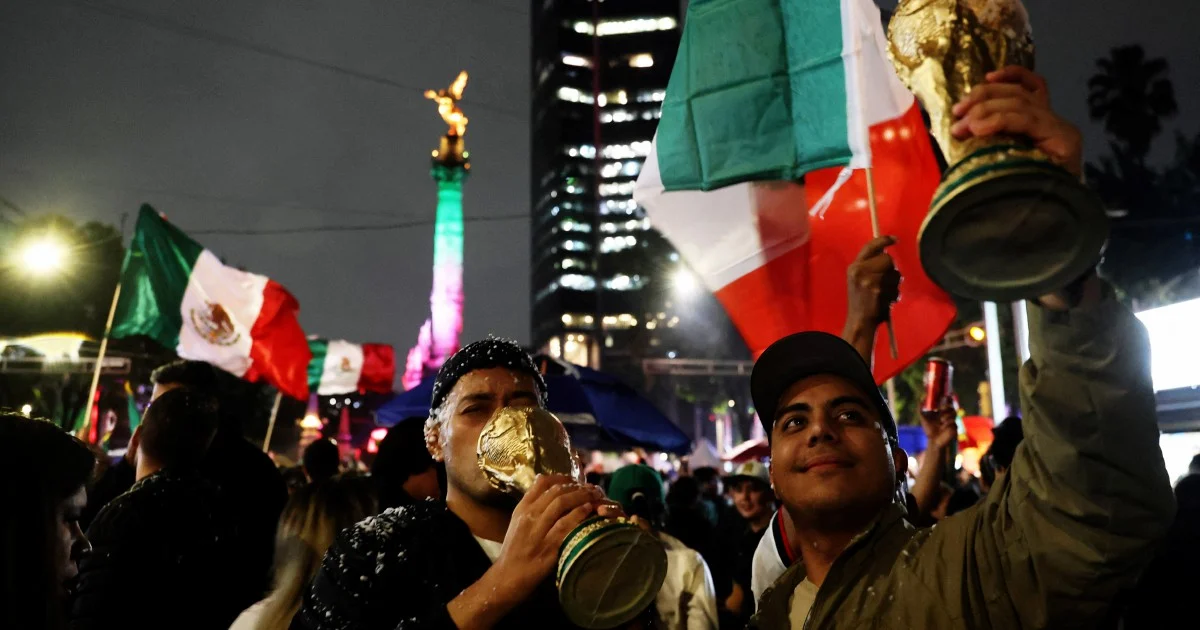
What began as a festive celebration of Mexico's World Cup triumph descended into chaos in the early hours of Wednesday when a dark-coloured automobile accelerated directly into a throng of football enthusiasts in Cabo San Lucas, one of Mexico's premier leisure destinations. The incident resulted in at least 17 people receiving emergency medical attention, according to municipal authorities in Los Cabos, though the circumstances leading to the collision remain unclear as authorities investigate the driver's motives.
Social media footage examined and verified by international news agencies captures the moments immediately preceding and following the collision. Video clips show the vehicle positioned amid spectators wearing the distinctive emerald and white colours of the Mexican national team, with onlookers surrounding the automobile in what appeared to be festive jubilation. Within seconds, the driver accelerated the motor vehicle through the assembled crowd with considerable force, projecting multiple bystanders upwards before the automobile struck protective bollards positioned along the thoroughfare.
The aftermath depicted in verified footage reveals the extent of the chaos that unfolded. Multiple individuals lay on the ground showing visible injuries whilst conscious bystanders engaged in what appeared to be an aggressive confrontation with an individual extracted from the vehicle. Medics and emergency responders were depicted tending to the wounded across the scene as dusk transitioned to evening. The violent nature of both the collision and the subsequent altercation underscores the intensity of the situation.
Cabo San Lucas, situated at the southern extremity of the Baja California Peninsula where the Pacific Ocean meets the Sea of Cortez, has long functioned as a magnet for international visitors and domestic tourists. The resort town's beaches, upscale accommodations, and vibrant nightlife make it a preferred destination during major sporting events when Mexicans congregate to support their national teams. World Cup matches, in particular, generate enormous public enthusiasm throughout the nation, with celebrations frequently extending into streets and public spaces.
The municipal administration confirmed that the individual operating the vehicle was taken into custody by law enforcement officers. The arrested driver was among the seventeen individuals who required medical evaluation, suggesting possible injuries sustained either during the collision itself or during the confrontation that followed. Authorities have not yet disclosed the driver's identity, age, or any preliminary charges that might have been filed in connection with the incident.
Investigators will need to determine whether the collision was deliberate, accidental, or the result of mechanical failure. The presence of the vehicle within a pedestrian gathering during an active celebration, combined with the documented acceleration into the crowd, suggests intentional action rather than random circumstance. However, authorities will examine whether intoxication, impaired driving, or loss of vehicle control contributed to the outcome. Security camera footage from nearby commercial establishments may provide additional perspective on the sequence of events.
The incident reflects broader concerns regarding public safety during major sporting events in Mexico. Celebrations surrounding international football tournaments frequently draw large congregations of citizens into public areas, creating both opportunities for community solidarity and potential vulnerabilities. Municipal governments and security agencies have long grappled with balancing the desire to permit unhindered celebration with the necessity of maintaining order and protecting public safety.
For Malaysian readers, the incident serves as a sobering reminder of how rapidly large public gatherings can become dangerous environments. Southeast Asia witnesses comparable scenes during major sporting occasions, particularly when regional or international football tournaments capture popular attention. The vulnerability of pedestrians gathered in celebration—distracted, densely packed, and often focused on the moment rather than surrounding risks—underscores the importance of adequate crowd management protocols and security presence during such events.
The implications extend beyond Mexico's borders and into the broader discourse surrounding public assembly and risk management. Authorities across the region will likely review their own protocols for managing crowds during sporting celebrations. Event organisers, municipal officials, and security personnel increasingly recognise that festive occasions, whilst generally joyous, require thoughtful planning regarding traffic control, barrier placement, and emergency response coordination to prevent incidents from escalating into tragedy.
Cabo San Lucas authorities have pledged to conduct a thorough investigation into the circumstances of the collision. Survivors and eyewitnesses will provide crucial testimony regarding the events leading to and following the vehicle's entry into the crowd. Medical personnel treating the seventeen injured individuals will document the nature and severity of injuries sustained, which may range from minor contusions and lacerations to more serious trauma requiring extended hospitalisation.
The incident represents yet another instance where celebration turned to injury and trauma within moments. As Mexico's football community processes both the joy of their World Cup performance and the tragedy that emerged from its commemoration in Cabo San Lucas, questions will undoubtedly persist about whether adequate safeguards existed to prevent such an outcome and whether future celebrations might benefit from enhanced protective measures that do not unnecessarily inhibit the expression of national pride and sporting enthusiasm.

