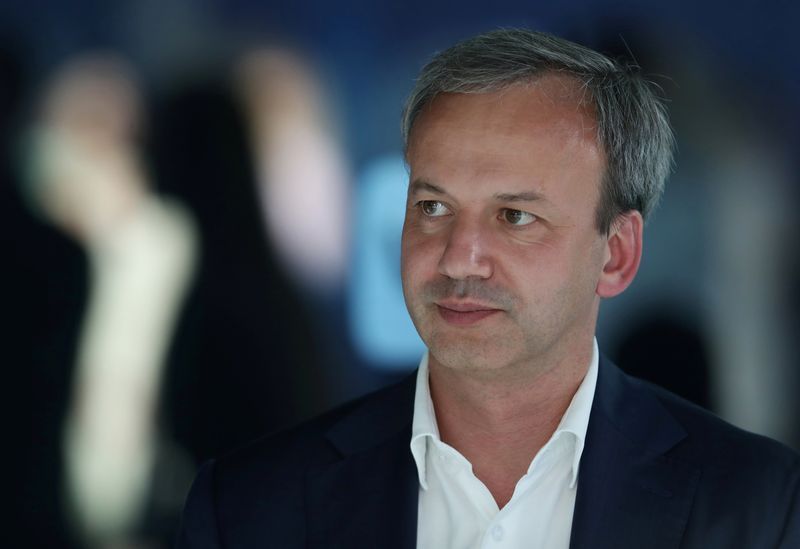
Arkady Dvorkovich, the Russian head of the International Chess Federation, has stepped back from his leadership role after the European Union added him to its latest sanctions list connected to Moscow's 2022 invasion of Ukraine. The move comes as the 21st EU sanctions package targeting Russia broadens its scope to encompass 170 entities and 48 individuals across various sectors, with consequences ranging from asset freezes to travel and transaction restrictions. Dvorkovich's suspension of his presidential duties takes immediate effect, creating a significant leadership transition at one of sport's most prominent international bodies.
In a statement published on the FIDE website on Friday, Dvorkovich characterised the EU's decision as fundamentally unjust and unlawful, declaring his intention to challenge it through every available legal channel. However, recognising the practical complications that sanctions would create for FIDE's operational capacity while he contests the designation, he concluded that voluntarily stepping aside was the most responsible course of action. His reasoning reflects a careful calculation: allowing the federation to function smoothly takes precedence over his personal political battle, at least temporarily.
Viswanathan Anand, the celebrated Indian grandmaster who has held the world chess championship title, will assume the role of interim president during Dvorkovich's suspension. Anand's appointment provides continuity and international credibility for the federation during a period of institutional uncertainty. The transition preserves FIDE's capacity to operate independently of the geopolitical tensions that have increasingly entangled international chess governance.
Dvorkovich, a former Russian deputy prime minister who has led FIDE since 2018, had previously signalled his intention to seek re-election to the presidency. The formal election process will take place at FIDE's general assembly during September's Chess Olympiad scheduled in Samarkand, Uzbekistan, adding another layer of complexity to the timing of his suspension. The interim arrangement essentially creates a window during which FIDE must navigate its institutional affairs without him, though his political standing within the federation may complicate successor dynamics.
The chess federation's troubles reflect broader tensions between international sports governance and geopolitical conflict. FIDE itself suspended Russia's membership in June following a Court of Arbitration for Sport ruling, marking a dramatic shift for an organisation historically positioned as apolitical. This decision had already strained relations between the federation and the Russian chess community, which has long dominated the sport globally.
Dvorkovich's suspension forms part of a wider pattern of EU sanctions targeting Russian officials across multiple sectors. Mikhail Degtyarev, Russia's Sports Minister and head of the Russian Olympic Committee, was simultaneously placed on the sanctions list. Degtyarev has been instrumental in Russia's efforts to overturn its suspension from the Olympic movement, a campaign that encountered significant obstacles following international investigations into doping and the Ukraine invasion.
The International Olympic Committee lifted Russia's suspension in July following the Russian Olympic Committee's removal of regional sports bodies from occupied Ukrainian territories from its official membership structure. This development suggests that international sports bodies are gradually finding paths toward reintegration while maintaining principled positions on territorial concerns. However, new EU sanctions on sports officials like Degtyarev indicate that political and diplomatic channels remain fractious.
For Malaysian and Southeast Asian observers, the chess federation crisis illustrates how global geopolitical conflict permeates supposedly apolitical international organisations. FIDE's experience raises questions about how regional sports bodies navigate sanctions regimes, particularly as relations between Western powers and Russia continue to deteriorate. The incident also highlights the vulnerability of individual sports leaders when caught between national governments and international institutional obligations.
The situation underscores broader challenges facing international sports governance during periods of major conflict. When officials face personal sanctions, their capacity to lead organisations effectively becomes compromised, forcing institutions to choose between political principle and operational stability. Anand's interim leadership represents a pragmatic solution, yet it cannot permanently resolve the underlying tensions that have fractured the chess world along geopolitical lines.
Moving forward, FIDE faces difficult questions about its fundamental purpose and organisational independence. The federation must determine whether it can genuinely serve as a truly international body while operating under geopolitical constraints that affect its leadership. The September election in Samarkand will occur against this backdrop of institutional strain, with delegates from around 180 countries potentially reassessing the federation's direction. The outcome will signal whether international sports bodies can maintain meaningful autonomy or whether they must inevitably reflect the broader conflicts dividing their member nations.

