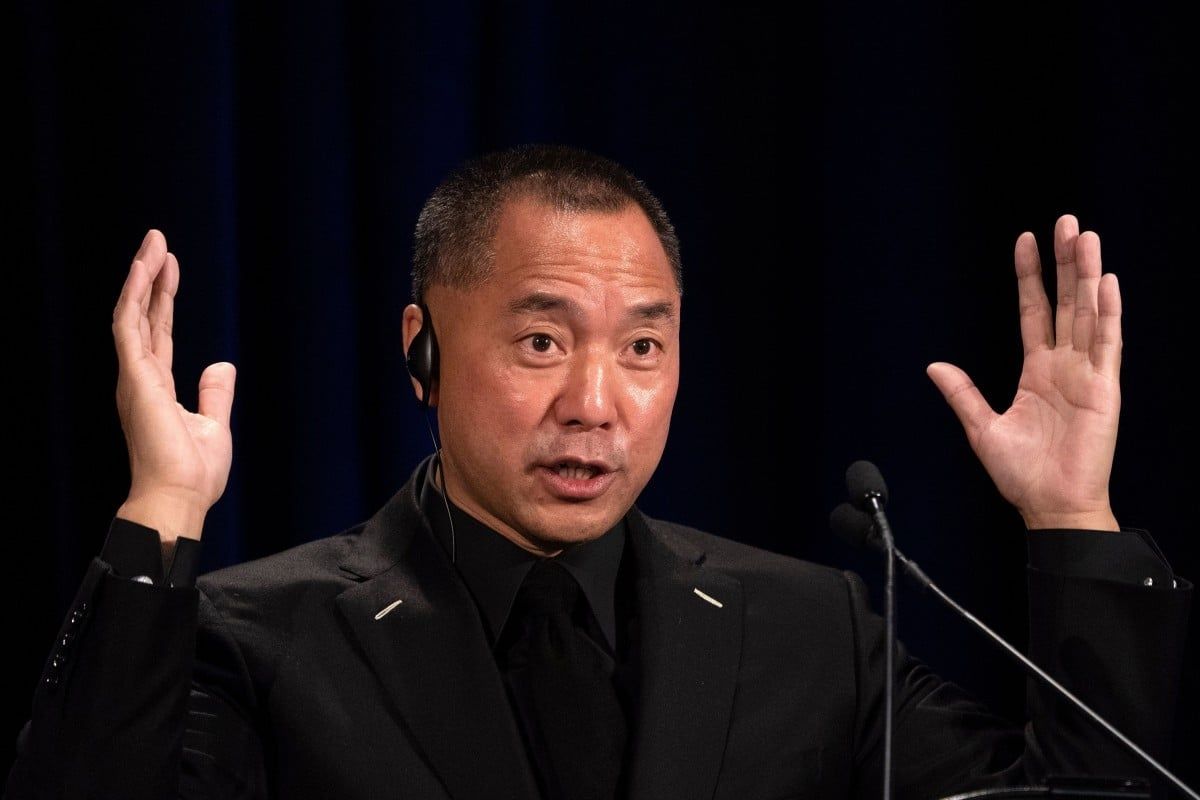
A prominent Chinese billionaire who fled mainland China a decade ago and reinvented himself as a critic of the Communist Party has been handed a 30-year prison sentence by a US federal judge for orchestrating one of the most extensive financial frauds involving international victims. Guo Wengui, who operated under the aliases Miles Guo and Ho Wan Kwok, was sentenced in Manhattan on June 30 by Judge Analisa Torres after being found guilty of defrauding over 1,000 people worldwide through elaborate schemes that generated more than US$1 billion in illicit investment funds.
Judge Torres delivered a scathing assessment of Guo's conduct during the sentencing, characterising him as someone who deliberately exploited vulnerable individuals seeking democratic change in China. She stated that he systematically preyed on these investors to fund an extravagant lifestyle marked by mansions, luxury yachts, high-end automobiles, and designer goods. The judge emphasised that Guo showed a complete absence of remorse for his actions, instead maintaining implausibly that his conduct caused neither financial loss nor harm to anyone. She further noted that he had actively orchestrated campaigns to harass and intimidate victims and witnesses who dared to challenge his narrative.
The fraud conspiracy, which operated between 2018 and 2023, primarily targeted investments through several entities under Guo's control, including the media company GTV Media Group Inc., and ventures operating under names such as the Himalaya Farm Alliance and the Himalaya Exchange. Prosecutors presented evidence that Guo convinced hundreds of thousands of individuals across multiple countries to pour their savings into these enterprises, which prosecutors characterised as entirely fraudulent operations designed solely to enrich Guo. Among the evidence presented during the seven-week trial were testimonies from victims describing how they lost life savings, experienced severe psychological distress, suffered family disintegration, and endured profound shame as a result of their investments in Guo's schemes.
One victim, Wei Chen, provided particularly poignant testimony before the court, telling Judge Torres that Guo's fraud had fundamentally destroyed her life and that of her entire family. The court also reviewed numerous letters from defrauded investors describing the devastating personal and financial consequences they experienced. Judge Torres ordered Guo to forfeit US$889 million in restitution, though prosecutors acknowledge the practical difficulty in recovering such sums. The sentencing reflected federal prosecutors' request for a minimum 30-year term, which they argued was necessary given the scale and brazenness of the fraud and the profound damage inflicted on victims.
Guo's legal defence presented an alternative narrative centring on his purported persecution by the Chinese Communist Party. His lawyers argued that he had become a target of Chinese government officials after exposing corruption within the regime's ranks, and that he subsequently relocated to Hong Kong, London, and finally New York in 2017 seeking refuge. They submitted court documents alleging that he bore physical scars and disfigurements from torture endured in China between 1993 and 2022, for which he underwent multiple corrective surgeries. The defence further contended that lengthy incarceration would validate China's purported campaign against him and potentially embolden the regime to intensify efforts against other Chinese dissidents abroad.
Prior to his arrest and detention without bail three years ago, Guo had cultivated a high-profile position within American conservative political circles. He developed a close association with political strategist Steve Bannon, with whom he announced a joint initiative in 2020 aimed at overthrowing the Chinese government. Guo's wealth allowed him to maintain residence in a luxury Manhattan apartment with views overlooking Central Park and to join the exclusive Mar-a-Lago golf club of then-President Donald Trump. This prominence in elite American circles underscores how extensively Guo had leveraged his fraudulently obtained wealth to embed himself within influential networks.
At his sentencing, Guo expressed protest regarding his treatment during incarceration, claiming he had fallen ill the morning of his court appearance and had repeatedly vomited while being returned to detention before the proceedings. Through an interpreter, he briefly addressed allegations by disputing what he characterised as prosecutors' portrayal of him as someone faking illness to evade responsibility. However, he offered minimal substantive response to the criminal charges themselves, instead offering only a cryptic reference to his stated mission of opposing the Communist Party as justification for his presence in the United States. As he departed the courtroom following sentencing, his supporters applauded and shouted encouragement toward him, reflecting the loyal following he has maintained despite his conviction.
China's Ministry of Foreign Affairs issued a statement acknowledging Guo's sentencing while emphasising that Chinese authorities continue to pursue him on multiple serious charges, including rape, kidnapping, bribery, and other criminal offences. An Interpol Red Notice has been issued for Guo, representing an international request to law enforcement agencies worldwide to arrest him pending potential extradition proceedings. Guo has consistently denied these allegations as fabricated charges by a government seeking to silence his criticisms. The existence of these competing legal jurisdictions and the differing narratives surrounding Guo's activities illustrate the complex geopolitical dimensions of his case.
For Malaysian and Southeast Asian readers, Guo's case carries particular significance given the region's growing engagement with Chinese dissidents and the increasing scrutiny of cross-border financial schemes. The case demonstrates how sophisticated fraudsters can exploit asylum frameworks and the sympathies extended to political refugees to establish credibility while conducting massive financial crimes. It also illustrates the challenges facing regional governments in balancing commitments to human rights and freedom of speech against the necessity of preventing financial exploitation of citizens. Several Southeast Asian countries have become targets for investment schemes similar to those Guo orchestrated, making awareness of such tactics crucial for protecting vulnerable populations from financial predation disguised as geopolitical activism.

