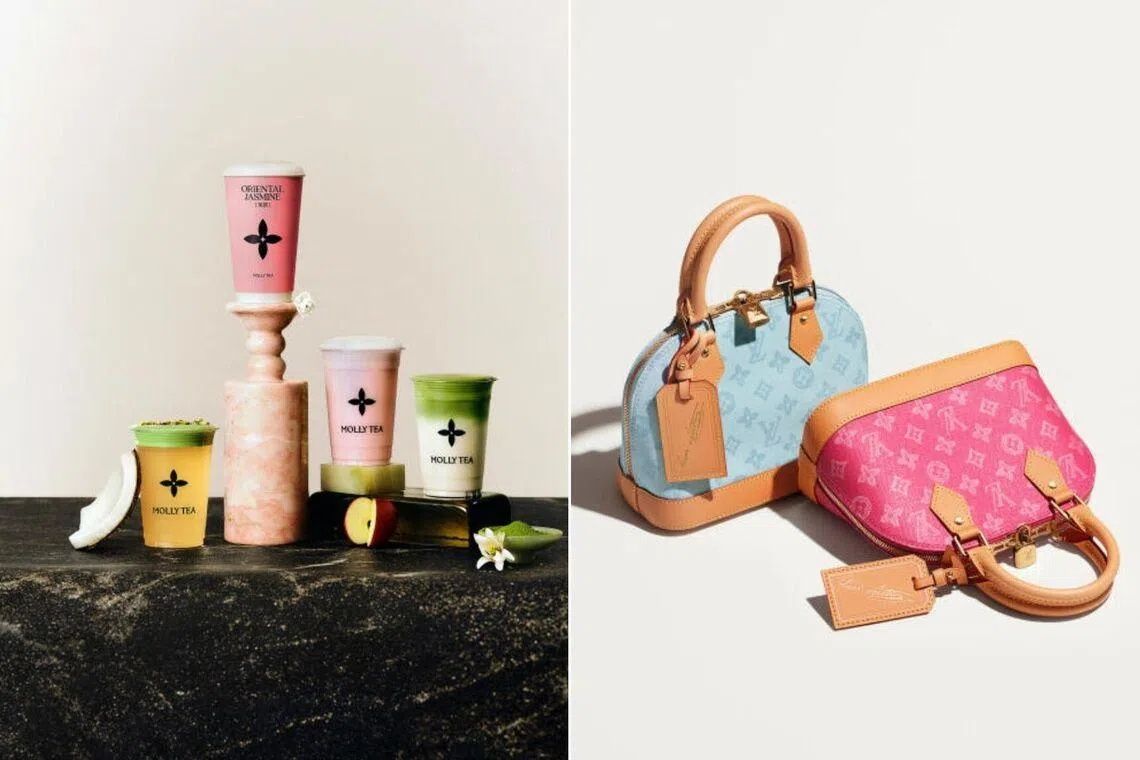
A Suzhou-based court in Jiangsu province has delivered a landmark intellectual property verdict, compelling Molly Tea to compensate Louis Vuitton with 10.3 million yuan—approximately US$1.5 million—following findings that the Chinese milk tea chain unlawfully copied the French fashion house's iconic four-petal flower graphic designs. The June 29 ruling has ignited substantial debate across Chinese society regarding trademark protection, cultural ownership, and the boundaries between traditional design elements and registered commercial marks, drawing approximately 360 million social media views in the process.
The Suzhou Intermediate People's Court determined that Molly Tea and one of its affiliated franchise operations in Wuzhong district had violated at least seven of Louis Vuitton's registered floral trademarks. Beyond the financial penalty, the tribunal mandated that the tea company cease the infringing practices immediately and issue a formal public apology to the luxury brand. The French company initiated legal proceedings in May 2025, marking an escalation in brand protection efforts within China's rapidly expanding beverage sector, where design differentiation has become increasingly crucial for market positioning.
Molly Tea's visual identity centres on a four-petal flower motif that the court found sufficiently similar to Louis Vuitton's established monogram patterns to constitute trademark infringement. The milk tea operator had pursued multiple trademark registrations through the China National Intellectual Property Administration beginning in March 2024, submitting applications featuring various floral designs intended to cover restaurant services, accommodation, advertising, and convenience food categories. However, most applications encountered rejection, with only the straightforward "Molly Tea" Chinese character trademark achieving successful registration, a pattern that should have signalled to the company the risks of proceeding with visually distinctive floral elements.
The verdict has crystallised a significant tension within China's intellectual property framework and broader cultural discourse. Internet discourse reveals deeply polarised opinions regarding whether Molly Tea's emblem genuinely replicates Louis Vuitton's design or whether the two logos maintain sufficient visual distinction to coexist in separate market categories. The hashtag discussing the damages has accumulated over 360 million views, whilst related commentary about trademark invalidation has generated more than 18.7 million engagements, underscoring how intellectual property disputes now resonate with mainstream Chinese audiences concerned about fairness and cultural sovereignty.
A particularly contentious dimension of the debate involves whether Louis Vuitton itself possesses legitimate claim to a four-petal flower motif, with some observers asserting that such geometric floral patterns constitute part of traditional Chinese cultural heritage and therefore should not attract exclusive commercial rights. This perspective reflects broader concerns across East Asia regarding Western corporations potentially monopolising design elements rooted in regional artistic traditions. The tension encapsulates fundamental questions about how nations should balance intellectual property protections that incentivise commercial innovation against preserving access to cultural symbols that predate modern trademark systems.
Kang Lixia, a trademark specialist from Beijing Standzer IP Firm, has clarified that Chinese trademark law operates under a "first to file" principle, meaning that whichever applicant first registers a mark secures exclusive rights, whilst subsequent identical or similar applications face rejection. This framework applies even across different product categories when the earlier-registered mark achieves substantial recognition and reputation. Louis Vuitton's status as an internationally renowned brand with deeply embedded consumer association entitled it to seek cross-category protection, effectively shielding its marks from usage in sectors far removed from luxury fashion, including the milk tea industry.
Liability under this legal structure does not require the infringing mark to be visually identical to the registered trademark. Rather, the determinative question focuses on whether typical consumers would experience confusion or perceive a misleading association between the registered mark and the disputed sign. This confusion-based standard grants registered trademark holders considerable protective scope, particularly when they possess exceptional brand recognition. The court apparently concluded that Molly Tea's four-petal flower design would generate sufficient consumer confusion in relation to Louis Vuitton's marks, notwithstanding the companies' involvement in completely different industries.
Liu Bin, an intellectual property attorney at Beijing Zhongwen Law Firm, has advocated for balanced consideration of such disputes, emphasising that trademark protection fundamentally safeguards the brand recognition and commercial goodwill that enterprises develop through years of consistent marketplace presence. Whilst traditional and cultural design elements should remain available for general creative use and artistic expression, commercial application of those elements must not create market confusion or parasitically leverage earlier-established brand associations. The distinction hinges on whether a company has independently developed recognisable brand equity versus whether it has deliberately adopted visual characteristics that exploit consumer familiarity with an established competitor.
Molly Tea has already signalled its intention to appeal the Suzhou court's decision to a higher tribunal, setting the stage for further legal proceedings that will likely refine how Chinese courts balance trademark protection against cultural access. The success of any appeal would substantially depend on whether Molly Tea can demonstrate that its floral design possesses genuine originality and sufficient visual distinction from Louis Vuitton's registered marks, perhaps through evidence that consumers naturally associate the particular flower geometry with tea culture rather than luxury fashion. The broader implications extend across the entire Chinese beverage and consumer goods sector, potentially affecting how thousands of companies approach visual branding strategies involving culturally resonant or traditional design motifs.
For Malaysian and Southeast Asian observers, this dispute carries particular significance given the region's own complex relationship with intellectual property enforcement and the prevalence of similar trademark conflicts involving multinational brands and regional enterprises. The case demonstrates how courts increasingly adopt rigorous standards for trademark protection even in contexts where different industries and consumer bases might logically coexist. Companies across the region relying on floral, geometric, or culturally rooted design elements should reassess whether their visual identities risk infringing upon internationally registered marks held by larger competitors, particularly luxury brands with aggressive intellectual property enforcement strategies. The Molly Tea verdict signals that courts will increasingly hold local businesses accountable for trademark choices that courts determine create plausible consumer confusion, regardless of claimed cultural significance or design inspiration sources.

