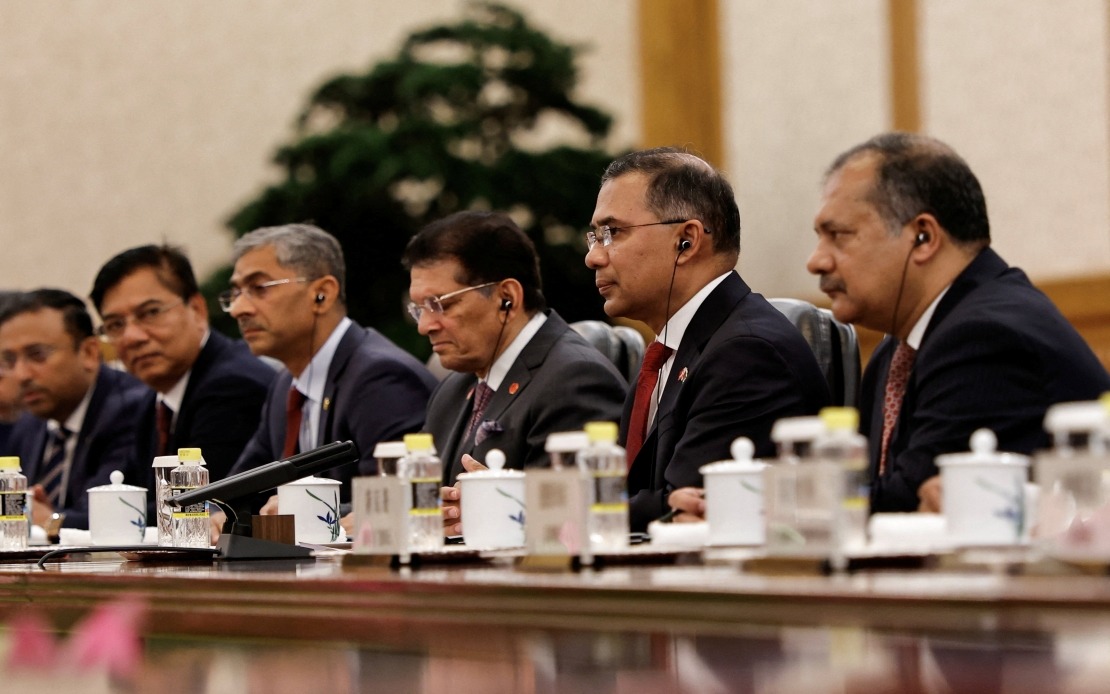
Bangladesh has secured substantial commitments from Chinese investors totalling US$9.2 billion, marking a significant deepening of economic ties between the two nations. The investment pledges emerged following Prime Minister Tarique Rahman's official visit to China from June 22 to 26, with representatives from twelve major Chinese firms announcing their expansion plans during the tour. The scale of these commitments underscores Beijing's strategic interest in Bangladesh as a gateway to South Asian markets and reflects Dhaka's broader efforts to diversify its foreign direct investment base.
The investment portfolio spans multiple critical sectors that align with Bangladesh's economic development priorities. Energy generation, port modernisation, highway infrastructure, manufacturing, and waste management have all attracted substantial Chinese capital commitments. This sectoral diversification is particularly noteworthy given Bangladesh's ongoing infrastructure challenges and its ambitions to transition toward greener energy systems. The proposed projects are anticipated to generate tens of thousands of employment opportunities across skilled and semi-skilled categories, offering potential relief to Bangladesh's labour market.
Port development emerges as a cornerstone of the bilateral investment partnership. China Civil Engineering Construction Corporation has earmarked US$650 million specifically for the Mongla Port Economic Zone, encompassing modern warehousing and logistics infrastructure capable of handling regional trade flows. Mongla Port, strategically positioned on Bangladesh's southwestern coast, has become a focal point for China-Bangladesh cooperation, with both nations committing to jointly modernise and expand port facilities. This emphasis on port infrastructure reflects broader Chinese strategic interests in maintaining efficient maritime trade routes and strengthening connectivity across the Indian Ocean region.
The transportation sector represents the largest single investment commitment within the package. Sichuan Road and Bridge Group has proposed a US$4.5 billion public-private partnership to develop and upgrade the critical Dhaka-Chattogram highway corridor. This crucial arterial route connects Bangladesh's capital to its primary port city and commercial hub, making it vital for both domestic commerce and international trade. Enhanced highway capacity would reduce transport bottlenecks that currently constrain Bangladesh's manufacturing competitiveness and supply chain efficiency.
Renewable energy initiatives demonstrate Chinese commitment to Bangladesh's sustainability agenda. Huaxin Textile Industry Company has proposed establishing a 200 megawatt captive solar power facility within the Payra economic zone, while simultaneously expanding operations in recycled textile production and lithium battery manufacturing with a total investment of US$190 million. These renewable energy commitments acquire particular significance given Bangladesh's electricity generation challenges and its stated climate change mitigation objectives.
Waste management and environmental remediation projects constitute another substantial component of Chinese investment plans. Shanghai SUS Environment Company intends to invest US$890 million in developing waste-to-energy plants, addressing Bangladesh's growing municipal solid waste crisis in environmentally responsible ways. Meanwhile, Zhongxin Environmental Protection Group has committed US$1.65 billion toward establishing an electronic waste processing facility in the Payra Port Industrial Zone, tapping into Bangladesh's growing e-waste streams and creating circular economy opportunities.
Manufacturing and technology sectors round out the investment commitment list. Shenzhen Kaifa Technology plans to invest US$250 million in producing electric smart metres, contributing to Bangladesh's ongoing energy sector modernisation. SF Express has proposed a US$180 million cold-chain logistics facility at Mongla, supporting Bangladesh's agricultural export capabilities and enabling participation in higher-value supply chains. China Future Energy Group Holding Limited has allocated US$250 million toward gas field exploration and development, bolstering Bangladesh's energy security.
A parallel initiative involves establishing a dedicated Chinese industrial park in Chattogram, Bangladesh's primary industrial city. This purpose-built park would consolidate Chinese manufacturing operations and facilitate technology transfer while creating clustered economic activity. Such dedicated industrial parks have proven effective in other South Asian contexts, providing infrastructure efficiencies and regulatory clarity that benefit Chinese investors while generating local employment and fiscal revenues.
The investment announcements accompanied a joint communiqué issued during Prime Minister Tarique Rahman's concluding meetings in Beijing. The diplomatic statement committed both nations to expanding cooperation across trade, e-commerce, industrial supply chains, and investment frameworks. Chinese officials explicitly endorsed Bangladesh's export capacity enhancement and supported Bangladesh's commitment to multilateral trading systems, language reflecting China's broader geopolitical positioning in the region.
Bangladesh's Commerce Minister Khandakar Abdul Muktadir subsequently highlighted the trade-balancing implications of these Chinese investments. Bangladesh currently operates a substantial bilateral trade deficit with China, importing significantly more Chinese goods and raw materials than it exports in return. Increased Chinese manufacturing operations within Bangladesh could eventually shift this dynamic by enabling local production of goods currently imported or by facilitating Bangladeshi exports to third markets. This export competitiveness angle represents a crucial motivation for Bangladesh's receptiveness to Chinese investment.
For Malaysia and the broader Southeast Asian region, Bangladesh's attraction of Chinese capital carries important implications. The scale and diversity of Chinese investments in Bangladesh suggest sustained regional expansion of Chinese economic influence across infrastructure, energy, and manufacturing domains. Malaysia's own competitive position in attracting foreign direct investment—particularly from China—warrants careful monitoring as Bangladesh emerges as an alternative investment destination. The sectoral preferences evident in Bangladesh's Chinese investments, particularly in ports and manufacturing, parallel investment patterns observed across Southeast Asia.
The timing of these investment announcements reflects broader geopolitical developments within South Asia. Bangladesh's transition following recent political developments has prompted recalibration of foreign policy orientations, with Prime Minister Tarique Rahman's China visit representing a strategic reaffirmation of ties with Beijing. These substantial investment commitments serve both economic development objectives and diplomatic signalling functions, reinforcing Bangladesh's positioning within Chinese regional economic architectures.
Realization of these investment proposals remains contingent on multiple factors including political stability, regulatory consistency, and macroeconomic conditions within Bangladesh. Implementation timelines and project sequencing will likely extend across multiple years, with completion probabilities varying across individual projects. Nevertheless, the commitment announcements represent significant forward momentum in Bangladesh-China economic integration and underscore the competitive dynamics shaping foreign direct investment patterns throughout South Asia and Southeast Asia.

