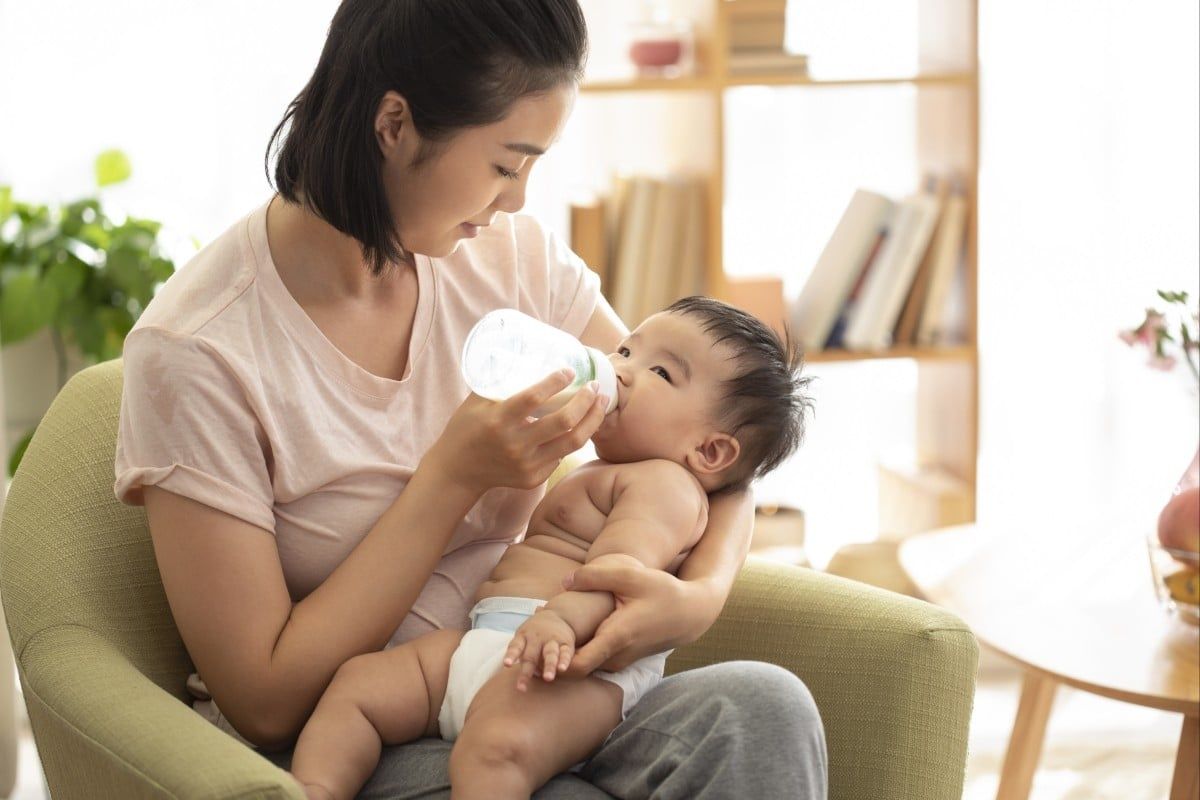
A three-month-old boy in southern China's Guangdong province spent two days in intensive care after experiencing severe poisoning from an unconventional feeding method that has alarmed paediatricians across the country. The infant was rushed to Zhongshan Women and Children's Hospital displaying alarming physical symptoms—his body had turned purple, his lips had taken on a purplish-blue hue, and he was struggling to breathe. His concerned parents had prepared his formula milk using boiled vegetable juice instead of plain water, operating under the mistaken belief that vegetables would provide superior nutritional value compared to ordinary water. The child was discharged after receiving treatment for two days in mid-June, but the incident has sparked broader discussions about infant feeding practices and parental misconceptions surrounding nutrition.
Medical analysis of the case revealed that the infant had developed nitrite poisoning, a condition far more dangerous in young infants than the general population. The mechanism behind this vulnerability lies in the physiological immaturity of very young babies. When vegetables are boiled for extended periods, the cooking process generates high concentrations of nitrites in the resulting liquid. These nitrites, when consumed by a three-month-old child, prove especially hazardous because the digestive system and kidneys at this developmental stage remain incompletely formed and lack the biological capacity to filter and process such toxic compounds effectively. The baby's underdeveloped organs simply cannot handle the elevated nitrate load that would be tolerable in older children or adults.
The chain of toxicity unfolds through a mechanism that affects oxygen transport throughout the body. Once nitrites enter the bloodstream, they chemically interfere with haemoglobin's fundamental capacity to carry oxygen to tissues. This interference explains the dramatic discolouration that parents observed—the purplish appearance of the baby's mouth, skin, and fingernails resulted directly from the impaired oxygen circulation. For infants so young, even brief periods of compromised oxygen supply can pose serious risks to developing organs, particularly the brain, making rapid medical intervention critical in such cases.
Doctors at the hospital have issued clear guidance to parents regarding safe formula preparation. The medical consensus is unequivocal: formula powder should be mixed exclusively with warm water. Any substitution—whether vegetable juice, rice water, fruit juice, or other broths—introduces unpredictable nutritional and chemical elements that can endanger infants whose biological systems operate within narrow safety parameters. This directive reflects decades of paediatric research demonstrating that infant formula, already carefully engineered with precise nutrient ratios, requires no supplementation or modification with other substances.
The incident has prompted medical professionals across China to publicly reinforce safety warnings. Cao Qi, a paediatrician at Nanning No 1 People's Hospital in Guangxi Zhuang autonomous region, used social media to remind parents of nitrite poisoning symptoms while emphasising the critical importance of rapid hospital visits. His stark warning—that delays of mere minutes can jeopardise an infant's life—reflects the genuine medical urgency surrounding such poisoning cases. Cao's broader message challenges parents to rely on evidence-based guidance rather than trending beliefs or personal intuition when making feeding decisions for vulnerable infants. He stressed that foods considered natural or nutritious for adult consumption may harbour hidden dangers for babies whose biological systems operate under entirely different constraints.
This case is not isolated within China's recent medical history, where social media has documented several troubling incidents involving experimental infant feeding practices. The previous year saw a 52-day-old baby admitted to a Henan hospital suffering from botulism after his grandmother added honey to his water. Honey, while generally recognised as a wholesome food, contains bacterial spores that can proliferate in an infant's intestinal tract and produce dangerous toxins. These recurring incidents suggest a pattern of well-intentioned but medically uninformed parenting decisions that reflects broader societal uncertainties about infant nutrition in the modern era.
The tendency for such stories to circulate widely on Chinese social media platforms reveals underlying anxieties among parents about proper nutrition and a cultural inclination toward seeking advantage through natural foods. The narrative that natural equals superior remains powerful in many communities, yet it conflates adult nutritional needs with infant requirements that operate under fundamentally different biological rules. For infants under six months, breast milk or properly formulated infant formula represents the only medically endorsed source of nutrition, with water as the only appropriate beverage for supplementation.
The case also illuminates the broader challenge facing public health communicators in regions with high social media engagement. Parents increasingly encounter conflicting information from friends, family members, online communities, and commercial interests, all competing for influence over feeding decisions. In this environment, official medical guidance must compete against anecdotal success stories and trending wellness narratives that emphasise natural ingredients and perceived nutritional optimisation. The challenge for paediatricians is not merely to provide correct information but to build sufficient trust and clarity that parents default to evidence-based practices even when facing social pressure or family tradition.
For Malaysian parents, this incident carries particular relevance given the region's shared cultural proximity and comparable social media ecosystems. Similar patterns of unconventional infant feeding have occasionally surfaced in Malaysia and other Southeast Asian countries, suggesting that the underlying drivers—cultural preferences for natural foods, desire to provide optimal nutrition, and exposure to unvetted online advice—operate across borders. The incident serves as a reminder that established infant feeding guidelines exist because they reflect hard-won medical knowledge accumulated through careful observation of harm and benefit. Any deviation from these guidelines, however well-intentioned, introduces genuine risk to babies whose biological vulnerability cannot be negotiated or overridden by parental preferences or beliefs.

