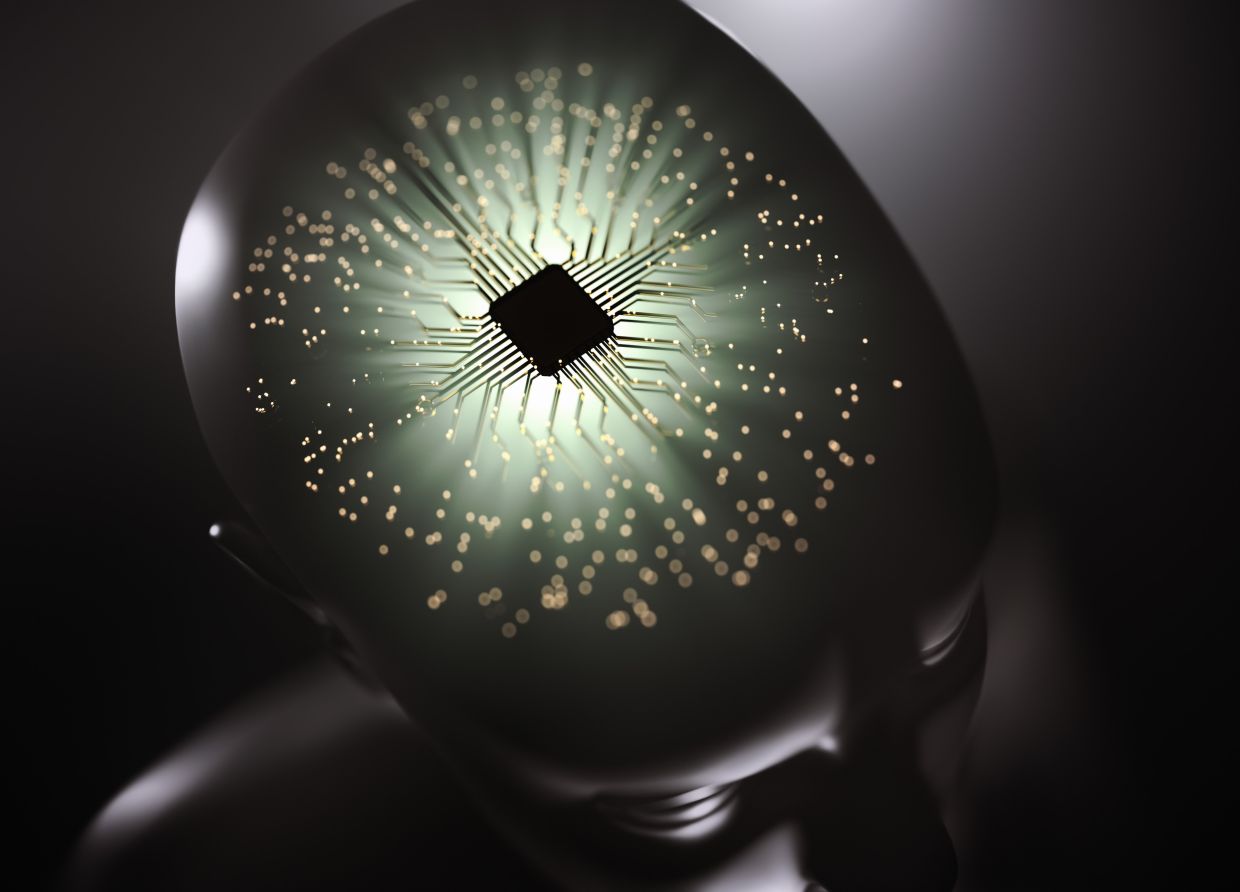
A research team led by Xu Xiaomin has achieved a significant breakthrough in neural implant technology, creating an electrode array so thin and flexible that it closely mimics the natural softness of brain tissue itself. The achievement addresses one of the most persistent obstacles preventing brain-computer interfaces from becoming truly practical medical tools: the fundamental incompatibility between rigid electrode materials and delicate neural tissue.
The challenge that researchers have grappled with for years stems from a basic materials mismatch. Current invasive brain implants, typically fashioned from platinum or platinum-iridium alloys, excel at conducting electrical signals but are considerably stiffer than the brain's biological tissue. When surgeons implant these hard materials directly against soft neural structures, the natural movements of the brain combined with the rigidity of the electrodes create microscopic friction. Over time, this mechanical incompatibility triggers chronic inflammation, eventually leading to scarring around the implant site, which progressively degrades signal quality and limits the lifespan of the device.
The Chinese team's solution employs a novel material called conductive hydrogel with interfacial percolation, or Chip, that fundamentally reimagines what neural electrodes can be made from. Rather than relying on traditional metals, the hydrogel achieves an unprecedented electrical conductivity of up to 2,512 S/cm—the highest ever recorded for this material class—while maintaining the soft, flexible properties that make it compatible with brain tissue. This represents a genuine convergence of seemingly contradictory requirements: achieving excellent signal transmission without sacrificing biocompatibility.
The manufacturing process itself required innovative problem-solving. Standard hydrogels tend to absorb bodily fluids and swell in response, which would distort the precise microelectrode patterns and compromise the implant's functionality. The researchers devised an ingenious workaround using a staged fabrication approach. They first anchored the hydrogel material to a rigid parylene substrate to prevent lateral expansion, then performed high-precision photolithography while the material remained in a dry state. This procedural safeguard ensured that the delicate microstructure remained intact throughout manufacturing.
The resulting electrode array demonstrates remarkable specifications that substantially exceed previous designs. The team successfully created a 128-channel electrocorticography array measuring just nine micrometers thick—thinner than a human hair—with a channel density of 853 channels per square centimeter. This density represents more than a tenfold improvement compared to earlier hydrogel-based systems, opening possibilities for capturing vastly richer neurological data from implanted electrodes.
Beyond raw specifications, the Chip electrode array exhibits exceptional mechanical resilience and biological safety. Laboratory testing showed that the material maintained stable electrical performance with less than four percent signal variation after enduring one thousand cycles of thirty percent tensile strain—representing the maximum deformation that brain tissue can naturally tolerate. When researchers adhered the electrode array to fresh porcine brain tissue samples and then removed it, the tissue remained undamaged, indicating gentle interfacial adhesion without trauma.
Animal trials conducted over an extended period provide compelling evidence of long-term functionality. The research team implanted Chip-based electrode arrays into five rabbits and monitored neural signal recording continuously over more than 550 days in freely moving animals. Remarkably, the signal-to-noise ratio remained consistently above 94 percent of its initial baseline value throughout the entire experimental period. Histological analysis after 16 weeks revealed minimal inflammatory response, confirming that the implant achieved superior biocompatibility compared to conventional electrode systems.
The significance of this breakthrough extends well beyond laboratory demonstrations. The eighteen-month stability achieved in animal models substantially exceeds the performance of existing brain implant technologies, which typically experience progressive signal degradation within months of implantation. This longevity represents a critical advance because it suggests that future brain-computer interface devices could function reliably for years rather than requiring repeated surgical replacement procedures.
For the broader field of neurotechnology, this development opens multiple pathways toward practical clinical applications. The research team's findings, published in the peer-reviewed journal PNAS in late April and subsequently reported by state-run media outlets, could establish a foundation for safer, more durable neural interfaces across diverse bioelectronic systems. The hydrogel platform could potentially extend beyond brain implants to peripheral nerve interfaces and other neurological monitoring applications that currently face similar biocompatibility constraints.
The implications for Malaysia and Southeast Asia warrant particular attention, as the region increasingly positions itself within Asia's technology ecosystem. While the research originated in mainland China, the fundamental advances in materials science and bioelectronics represent shared scientific progress that will eventually benefit regional healthcare systems and research institutions. As brain-computer interface technology matures, medical centers and research hospitals across Southeast Asia will likely gain access to more reliable neural implant systems for treating neurological conditions including Parkinson's disease, spinal cord injuries, and treatment-resistant epilepsy.
Looking forward, the researchers emphasize that their methodologies and materials science approaches could extend to other functional hydrogel applications beyond neurology. This versatility suggests that the underlying innovation—creating flexible, conductive biological interfaces—may find applications across diverse medical device categories. As more institutions worldwide adopt and build upon these findings, the trajectory toward seamless brain-machine integration continues accelerating, moving closer to practical therapeutic reality.

