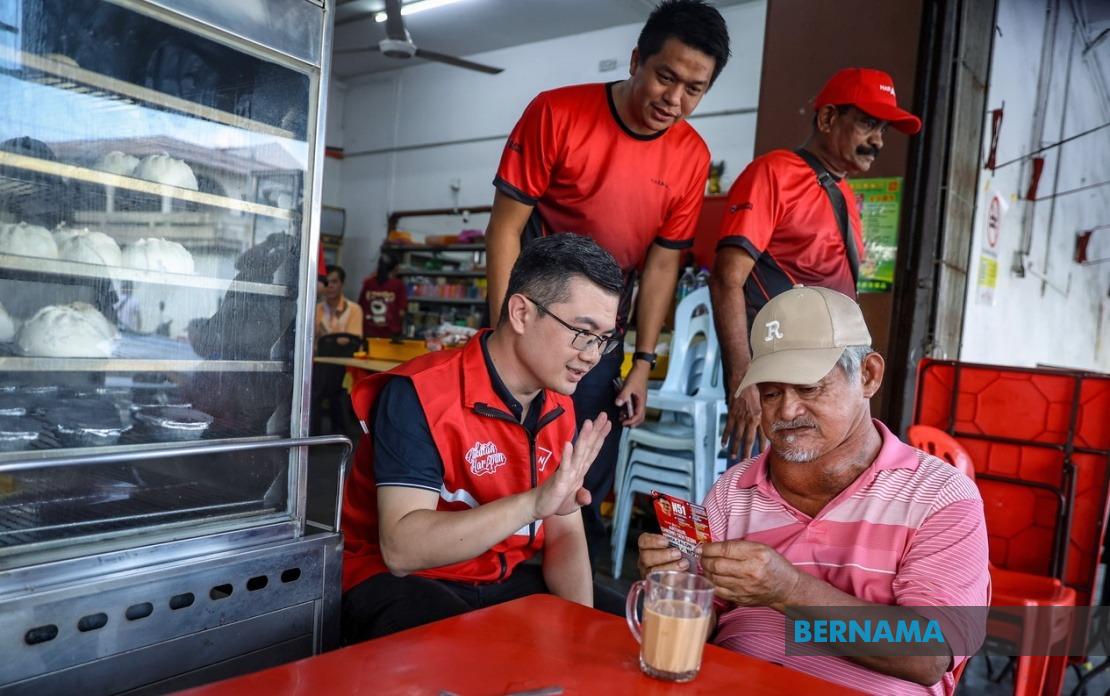
Arthur Chiong Sen Sern, the Pakatan Harapan representative for Bukit Batu, is pinning his re-election hopes on demonstrating tangible improvements across his constituency during nearly a full three-year term. The 36-year-old assemblyman faces a competitive four-cornered race in the 16th Johor State Election scheduled for July 11, but believes his track record of ground-level engagement gives him the edge to secure a decisive victory that surpasses his wafer-thin majority from 2022.
Chiong's previous election triumph was among the narrowest in the state—a margin of merely 137 votes from a total of 9,439 in a crowded contest. This hair-raising experience appears to have galvanised his approach to constituency work. He has consistently emphasised that the close outcome became a catalyst for intensifying his developmental agenda and deepening community relationships across the 49,963-voter seat, regardless of the backgrounds of those seeking assistance.
The foundation of Chiong's campaign narrative centres on accessibility and responsiveness. He has made a deliberate point of maintaining a visible presence in localities where residents face persistent hardship, particularly the Felda settlements that form a significant voting bloc. Beyond symbolic appearances, he has channelled funds into concrete improvements—including a RM20,000 contribution for futsal court lighting that continues to serve young people in the community. These projects, though individually modest, collectively demonstrate a willingness to translate constituent complaints into resource allocation.
Flood mitigation has emerged as a cornerstone issue in Bukit Batu, where seasonal inundation disrupts farming and residential areas. Kampung Rahmat and Kampung Seri Paya have historically suffered acute drainage failures during heavy rainfall. Chiong claims credit for collaborating closely with the Department of Irrigation and Drainage to implement remedial measures that have yielded visible improvements. His repeated assertion that he personally responds to emergencies by arriving at affected villages among the first responders is designed to reinforce the impression of a hands-on representative rather than one confined to an office.
The competitive landscape for Bukit Batu has intensified in the current election cycle. Challenging Chiong are R. Kumaran, the Barisan Nasional and PKR Kulai chief candidate; M. Premanand representing Ikatan Demokratik Malaysia-MUDA; G. Tamili fielded by Bersama; and independent contestant Kamaruzaman Ali. This field suggests that opposition to Pakatan Harapan remains fragmented, though individual candidacies from MUDA and Bersama indicate potential inroads among younger voters and those seeking alternatives beyond the traditional coalitional boundaries.
Chiong's political positioning benefits from explicit backing by Prime Minister Datuk Seri Anwar Ibrahim, who chairs the Pakatan Harapan coalition. This endorsement carries significance in a state where federal-level dynamics influence voter calculations, particularly regarding development allocations and ministerial attention to local concerns. The incumbent has highlighted Anwar's confidence in him as validation of his performance, a framing that attempts to connect local service delivery with the legitimacy of the ruling national administration.
The 2022 election result that brought Chiong to office saw him emerge from a four-way contest that included Datuk S. Suppayah from Barisan Nasional, Tan Heng Choon representing Perikatan Nasional, and Lee Ming Wen of Warisan. That fragmentation of opposition votes likely contributed to his victory despite a depressed vote share. Whether similar division persists or opposition consolidates around single candidates will substantially determine whether Chiong can achieve the more comfortable majority he seeks this time.
For Malaysian political observers, Bukit Batu exemplifies the challenges facing Pakatan Harapan in rural and semi-rural constituencies where traditional patronage networks remain potent and where narrow victories create vulnerabilities. Chiong's strategy—emphasising local problem-solving over grand ideological platforms—reflects lessons learned by ruling coalitions that must defend seats in competitive terrain. His approach resonates with research showing that constituency-level visibility and responsiveness matter considerably to voters in smaller electoral divisions where personal relationships with representatives retain significant weight.
The broader context within Johor politics adds complexity to Chiong's position. The state remains a crucial battleground for national political dynamics, and results here will be interpreted as barometers of Pakatan Harapan's electoral health. An expanded majority for Chiong would signal that the coalition's local groundwork is translating into voter confidence, whereas a repeat narrow win or defeat would suggest vulnerability in constituencies previously thought secure.
Early voting is scheduled for July 7, while main polling occurs on July 11. Bukit Batu's outcome will be determined by whether Chiong's consistent engagement with residents—particularly in Felda areas and flood-prone villages—has sufficiently rebuilt voter confidence to overcome the initial hesitancy that produced his 2022 margin. The extent to which external factors including national economic performance, federal policy decisions, and broader coalition positioning influence Johor voters remains an open question as the campaign intensifies.

