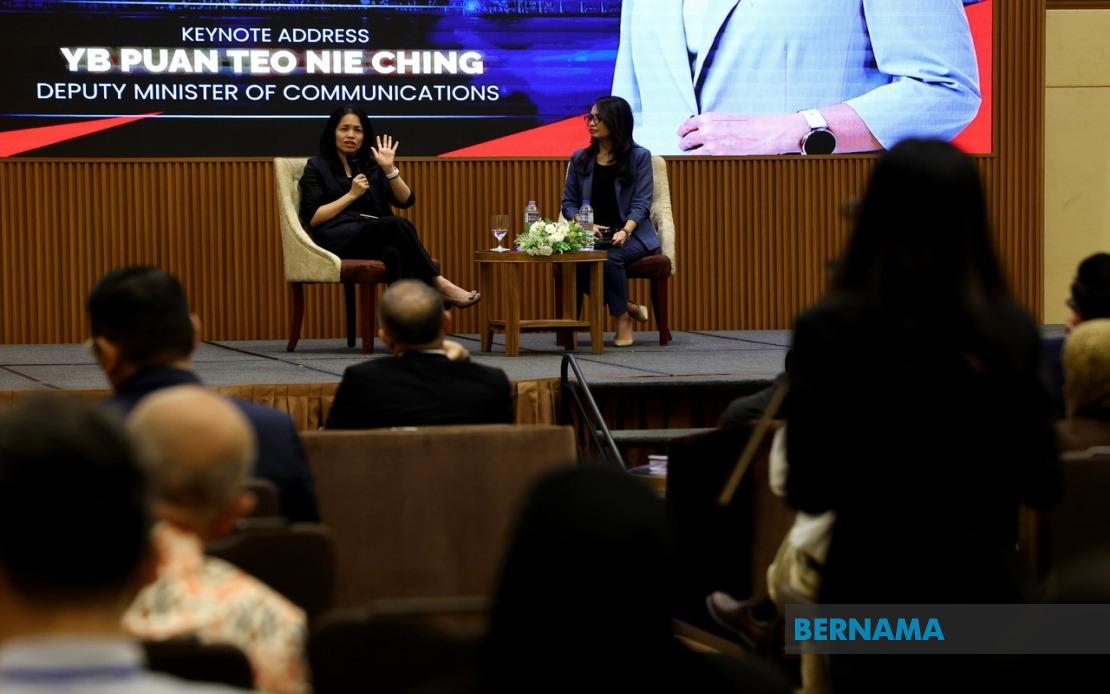
Deputy Communications Minister Teo Nie Ching has issued a firm appeal to the entire civil service to maintain standards of propriety and courtesy in their public communications, warning that government officials must be especially conscious of the language they employ when addressing matters of public concern. Speaking in Putrajaya on June 15, Teo stressed that all parties, but particularly those in government employment, have a responsibility to refrain from using inappropriate or discourteous expressions in their official statements and interactions with the media and public.
The minister's remarks underscore a growing concern within Malaysia's government machinery about the tone and content of official communications, particularly as the nation navigates an increasingly polarised media landscape where public statements can rapidly gain traction across social media platforms. Teo's warning extends beyond mere civility to encompass a specific caution about the 3R framework—matters touching on race, religion and royalty—areas that have historically proven sensitive in Malaysia's multicultural and constitutional context. Her message carries particular weight given that civil servants occupy positions of significant public trust and their words carry authority that can amplify social tensions if deployed carelessly.
Teo's comments were prompted by recent controversy surrounding Mohd Hisyamuddin Ghazali, who assumed the role of director-general at the Department of Community Communications (J-KOM) on June 9, replacing Datuk Ismail Yusop. Allegations have emerged that Mohd Hisyamuddin has utilised inappropriate language in public statements since taking office, raising questions about the standard of discourse expected from senior government communicators tasked with shaping national messaging. The appointment itself came at a significant moment, as J-KOM plays a crucial role in coordinating government communications strategy and projecting the administration's priorities to the citizenry.
The timing of these remarks reflects broader institutional concerns about maintaining public confidence in government institutions at a time when civil service credibility faces scrutiny from multiple quarters. When senior officials responsible for crafting and disseminating government communications engage in language that appears intemperate or disrespectful, it creates a cascading effect throughout the bureaucracy, potentially setting a permissive tone that lower-ranking officials might emulate. This is particularly problematic in a federal system like Malaysia's, where civil servants serve as intermediaries between citizens and government, and where public perception of institutional impartiality depends significantly on the manner in which officials conduct themselves.
Teo acknowledged that she had not yet met personally with Mohd Hisyamuddin to convey her advice directly, suggesting that the deputy minister intends to engage the J-KOM director-general in a substantive discussion about communication standards and professional conduct. This measured approach indicates an attempt to address the concerns through institutional channels rather than through public confrontation, though the very fact that Teo felt compelled to make her remarks public signals the significance of the underlying issue. The deputy minister's intervention demonstrates that senior government figures are monitoring the conduct of their colleagues and are prepared to intervene when standards appear to be slipping.
The broader context for Teo's intervention involves Malaysia's complex relationship with political speech and public discourse. The nation's constitutional framework, including Article 10 safeguarding free speech but with specific exceptions, and the existence of legislation addressing sedition, defamation and religious sensitivity, creates a particular environment in which government officials must operate. Civil servants are expected to model the kind of measured, inclusive communication that befits a multiethnic, multireligious democracy, particularly when addressing topics that touch on communal identity or constitutional arrangements. When government communicators fail to meet these standards, they risk undermining public trust not just in their individual institutions but in the legitimacy of government itself.
Teo's advice that officials should observe these standards "not only during election campaigns but at all times" carries significant implications for how the civil service conducts itself across the full cycle of governance. This suggests a recognition that there may be a tendency for officials to modulate their language depending on the political season, with heightened awareness of sensitivities during campaign periods but less caution during routine governance. The deputy minister's insistence on consistent standards reflects an understanding that public expectations of professional conduct should remain constant regardless of electoral cycles or political pressures.
The specific invocation of the 3R framework—race, religion and royalty—reflects Malaysia's particular constitutional and social realities. These three domains have been established through jurisprudence, legislation and political consensus as areas where particular care must be exercised in public discourse. Article 153 of the Federal Constitution addresses special provisions for Bumiputeras and the position of Islam, while the Sedition Act and other legislation provide legal frameworks protecting the monarchy and religious sensitivities. When civil servants venture carelessly into these territories, they not only risk personal professional consequences but potentially expose the government to legal liability or public backlash that can reverberate through diplomatic channels and affect Malaysia's international standing.
The incident involving J-KOM's leadership also speaks to the challenge of maintaining institutional culture across senior leadership transitions. New appointees to prominent positions inevitably bring their own communication styles and priorities, but when those styles diverge significantly from established professional norms, the friction can become public and damaging. The department responsible for coordinating government communications carries particular responsibility because its internal conduct sets the tone for how other agencies approach their communications obligations and demonstrates whether the government practices what it preaches regarding professional standards.
Teo's intervention represents an attempt to restore or reinforce professional standards at a critical point, before any breach of conduct calcifies into a new, lower baseline of acceptable behavior. By speaking publicly about the importance of maintaining standards, the deputy minister sends a signal not only to J-KOM but to the entire civil service that adherence to professional communication norms remains a priority for the political leadership. This approach acknowledges that institutional culture is maintained through consistent reinforcement of expectations and through senior figures visibly modeling and championing the standards they wish to see throughout their domains of responsibility.