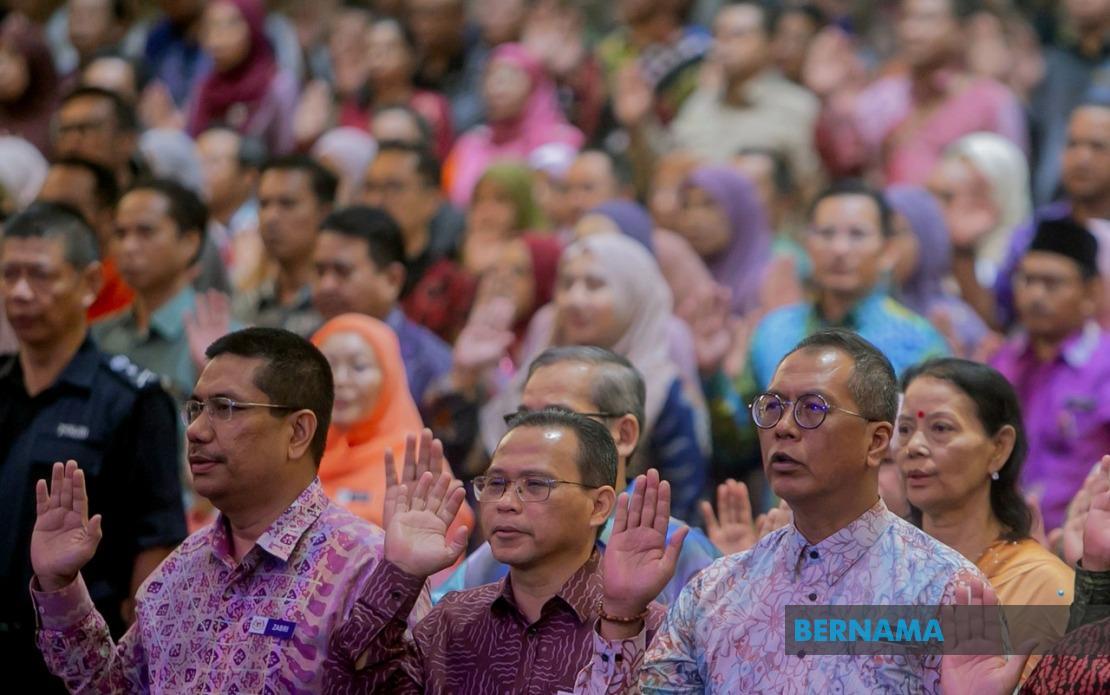
Prime Minister Datuk Seri Anwar Ibrahim has positioned Malaysia's civil service as the cornerstone of national stability and development, emphasizing that public servants must operate within a framework of integrity and commitment to deliver sustainable progress. Speaking at an engagement session in the Central Zone at Universiti Islam Selangor in Bangi on July 20, Anwar outlined his administration's vision for a modernized public sector capable of executing government policy across all administrative levels while maintaining public trust. The remarks come as his government continues efforts to reshape how federal and state agencies operate following political transitions in recent years.
Anwar's statements reflect a broader push to consolidate confidence in Malaysia's bureaucratic apparatus at a time when public sector performance and governance standards remain under scrutiny. The Prime Minister indicated that civil servants positioned at various tiers of government serve as the primary vehicle through which cabinet directives and national strategies reach communities. Without a capable and principled workforce, he suggested, even well-conceived policies risk implementation failures that undermine public confidence in state institutions. This framing places responsibility squarely on individual officials and their collective organizational culture to uphold standards that Malaysians expect from their government.
The emphasis on integrity-based governance reflects international best practices and responds to domestic demand for cleaner administration. Anwar noted that his confidence in the civil service's potential stems partly from recognizing that public servants occupy unique positions bridging government and citizens. When officials understand the administration's development philosophy and maintain genuine commitment to serving the public interest, they become multipliers of government effectiveness. Conversely, when civil servants lack this alignment or operate with conflicting priorities, the most ambitious policy initiatives become hollow.
Central to Anwar's argument is the concept of policy continuity, a concern that resonates across Southeast Asia where political instability has occasionally disrupted long-term development planning. Malaysia's bureaucracy has historically provided some institutional memory and operational steadiness across multiple administrations. However, senior appointments following recent political shifts have sometimes created questions about whether new leadership teams can maintain consistent direction in complex areas like economic policy, infrastructure planning, and public service reform. By publicly affirming the civil service's role, Anwar signals that continuity will be preserved through professional bureaucratic processes rather than starting entirely from scratch with each political transition.
The session brought together significant figures from both federal and state levels, including Selangor Menteri Besar Datuk Seri Amirudin Shari, Chief Secretary to the Government Tan Sri Shamsul Azri Abu Bakar, and Director-General of the Public Service Tan Sri Wan Ahmad Dahlan Abdul Aziz. This cross-level participation suggests a coordinated message aimed at aligning civil servants across different tiers under a shared understanding of their role in the government's agenda. The Central Zone event itself demonstrates an intentional strategy to engage officials regionally rather than only through central headquarters directives, potentially building stronger connections between leadership and field-level personnel.
For Malaysian readers, the implications extend beyond ceremonial statements. The quality of civil service delivery directly affects access to public services, from healthcare and education to business licensing and infrastructure maintenance. When administrative leadership focuses on strengthening institutional efficiency and commitment, citizens stand to benefit through faster processing times, more transparent procedures, and more responsive government offices. Conversely, periods of institutional drift or weak accountability can result in frustrating bureaucratic delays that disproportionately harm ordinary Malaysians seeking essential services.
The regional context also matters. Several Southeast Asian countries have struggled with public service capacity limitations that impede economic development and undermine governance legitimacy. Singapore has long been cited for its meritocratic civil service, while other regional economies have faced persistent challenges with transparency and performance standards. Malaysia's position as a middle-income country competing for regional investment and talent depends significantly on whether its government institutions function efficiently and fairly. A public service that is perceived as uncommitted, corrupt, or ineffective can deter foreign investment and drive local brain drain.
Anwar's framing also touches on the relationship between civil servants and communities, suggesting that proximity and shared values create conditions for better policymaking. This reflects recognition that top-down governance without genuine public sector understanding of local contexts produces policies that may sound good in theory but fail in practice. Civil servants who maintain close ties with the populations they serve gain insight into actual implementation challenges and community needs, allowing for more sophisticated policy refinement over time. This two-way relationship improves public administration's responsiveness and legitimacy.
The government's stated focus on strengthening leadership and efficiency at all bureaucratic levels indicates a multi-year institutional building effort. Short-term gains may prove elusive, but sustained investment in professional development, clearer performance standards, and transparent career advancement could gradually reshape organizational culture. Malaysia's experience shows that civil service transformation takes time but produces compounding benefits across all sectors of government activity.
For Malaysian policymakers and observers, Anwar's Central Zone engagement represents a deliberate effort to frame the upcoming period as one of institutional renewal rather than mere political continuity. Whether the civil service actually experiences the kind of transformation outlined will depend on concrete resource allocation, accountability mechanisms, and whether leadership consistently reinforces the integrity principles being publicly championed. The test will come not in rhetoric but in tangible improvements that ordinary Malaysians observe when interacting with government agencies, a reality that ultimately determines public confidence in civil service reform efforts.

