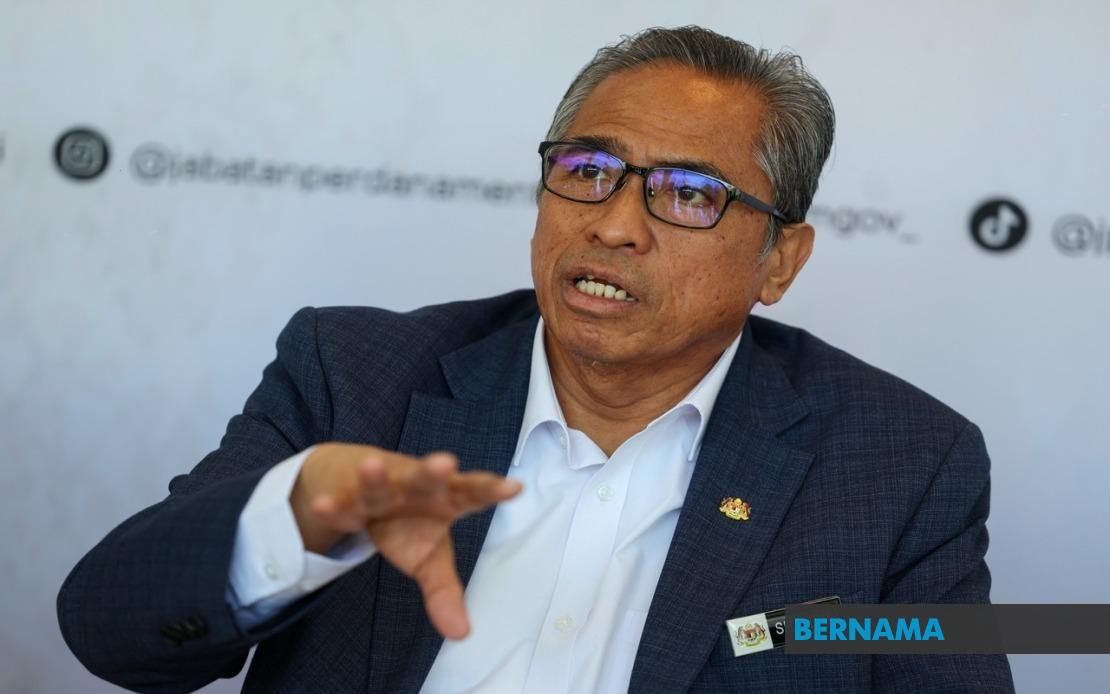
The machinery of government has been tasked with translating Prime Minister Datuk Seri Anwar Ibrahim's recent high-profile diplomatic missions into concrete economic benefits for Malaysians. Chief Secretary to the Government Tan Sri Shamsul Azri Abu Bakar emphasised that while the country's leadership has successfully positioned Malaysia within the global geopolitical framework through working visits to Russia and Turkmenistan, the true measure of success depends on how efficiently the public sector implements the agreements and opportunities secured through these engagements.
Shamsul Azri articulated a clear vision of the civil service as the nation's operational backbone, responsible for converting strategic diplomatic wins into actionable outcomes. He stressed that the working visits represent more than foreign policy accomplishments—they constitute a mandate for immediate domestic action. The Chief Secretary's comments highlight a growing recognition within government that Malaysia's international positioning means little without corresponding institutional capacity to execute and deliver on the promises made at diplomatic tables.
The emphasis on economic ministries and trade regulators gaining heightened preparedness reflects concerns that Malaysia risks losing competitive advantage if bureaucratic processes remain sluggish. Shamsul Azri underscored the necessity for government officials to operate with agility and foresight, moving beyond traditional administrative frameworks to anticipate shifts in the global economic order. This approach acknowledges that the international landscape is rapidly evolving, and Malaysia cannot afford to be reactive—it must instead position itself as a proactive participant in emerging trade networks and investment corridors.
Central to the Chief Secretary's message is the concept of MADANI Diplomacy, which frames Malaysia's international engagement as values-based and whole-of-government in nature. Rather than foreign policy being the exclusive domain of the Foreign Ministry, MADANI Diplomacy requires all government agencies to embody and advance Malaysia's strategic interests. This represents a significant shift in how the Malaysian bureaucracy should conceptualise its role, moving from compartmentalised departmental silos to integrated, coordinated action aligned with broader national objectives.
The importance of the Ease of Doing Business initiative cannot be overstated in this context. Shamsul Azri linked this practical programme directly to Malaysia's ability to capitalise on international opportunities. When foreign investors consider Malaysia as a destination, their decision often hinges not on grand diplomatic declarations but on whether they can navigate licensing, regulations, and administrative processes smoothly. By improving the business environment, the government removes friction that might cause potential partners to choose competing nations instead.
Shamsul Azri's call for public servants to develop a global mindset and operate as "international-class strategic partners" suggests a recognition that Malaysia's civil service, while competent in many areas, must upgrade its sophistication to match the complexity of contemporary global commerce. This is particularly acute for officials handling investment facilitation, who must understand not just Malaysian regulations but also international investment norms, alternative dispute resolution mechanisms, and the preferences of multinational corporations considering regional headquarters placements.
The connection to the Public Service Reform Agenda (ARPA) provides institutional scaffolding for these aspirations. The "internationalisation" enabler under ARPA explicitly aims to build capacity within the civil service to support Malaysia's development agenda on the global stage. This represents a deliberate, structured effort to transform how government agencies operate, moving them from domestic-oriented institutions to entities capable of competing on an international stage and attracting foreign capital.
Job creation emerges as a crucial metric for success in Shamsul Azri's framework. The premise is that international agreements and investment flows must ultimately translate into high-income employment opportunities for Malaysians. This reflects political imperatives—citizens measure government success not through diplomatic triumphs but through improved living standards and career prospects. If Malaysia attracts investment but those investments predominantly employ foreign workers, the political benefits of MADANI Diplomacy would be severely diminished.
Supply chain security also features prominently in the Chief Secretary's vision. Malaysia, as a trading nation dependent on global commerce, faces vulnerabilities in commodity sourcing. By diversifying trading relationships through diplomatic initiatives like those with Russia and Turkmenistan, Malaysia can reduce reliance on any single source and strengthen its resilience against geopolitical disruptions. The civil service's role is to operationalise these diversification strategies through procurement policies, strategic partnerships with state enterprises, and long-term supply agreements.
The fundamental challenge articulated is one of implementation capacity. Many nations produce sophisticated strategic visions and secure impressive international agreements, yet fail to realise their potential due to weak institutional execution. Malaysia's Chief Secretary is essentially warning that diplomatic success without bureaucratic follow-through yields diminishing returns. This reality has particular relevance for Southeast Asian nations competing for limited international investment and market access, where administrative efficiency often becomes a differentiating factor.
For Malaysian readers and businesses, Shamsul Azri's message carries practical implications. Improved regulatory environments and clearer investment frameworks should materialise as the civil service refocuses on supporting economic objectives. Entrepreneurs seeking to engage with government or attract international partners may encounter more streamlined processes and officials with greater understanding of global business practices. Simultaneously, the emphasis on high-income job creation suggests government commitment to ensuring that economic growth benefits domestic workers rather than simply enriching foreign investors.
The broader strategic implication extends to Malaysia's positioning within Southeast Asia. As regional rivals like Singapore, Indonesia, and Vietnam compete for foreign direct investment and high-value business activities, Malaysia's ability to convert diplomatic engagement into economic substance becomes a key competitiveness factor. Shamsul Azri's call for civil service transformation is essentially a recognition that Malaysia cannot rely on diplomatic charm alone—it must back that charm with institutional delivery that foreign investors and international partners can trust.
Ultimately, the Chief Secretary's remarks represent both a challenge and an opportunity for Malaysia's public sector. The challenge lies in fundamentally transforming institutional culture and capabilities. The opportunity exists because successful execution of this vision could meaningfully elevate Malaysia's economic prospects, strengthen its regional standing, and deliver tangible benefits to citizens through improved employment and prosperity.

