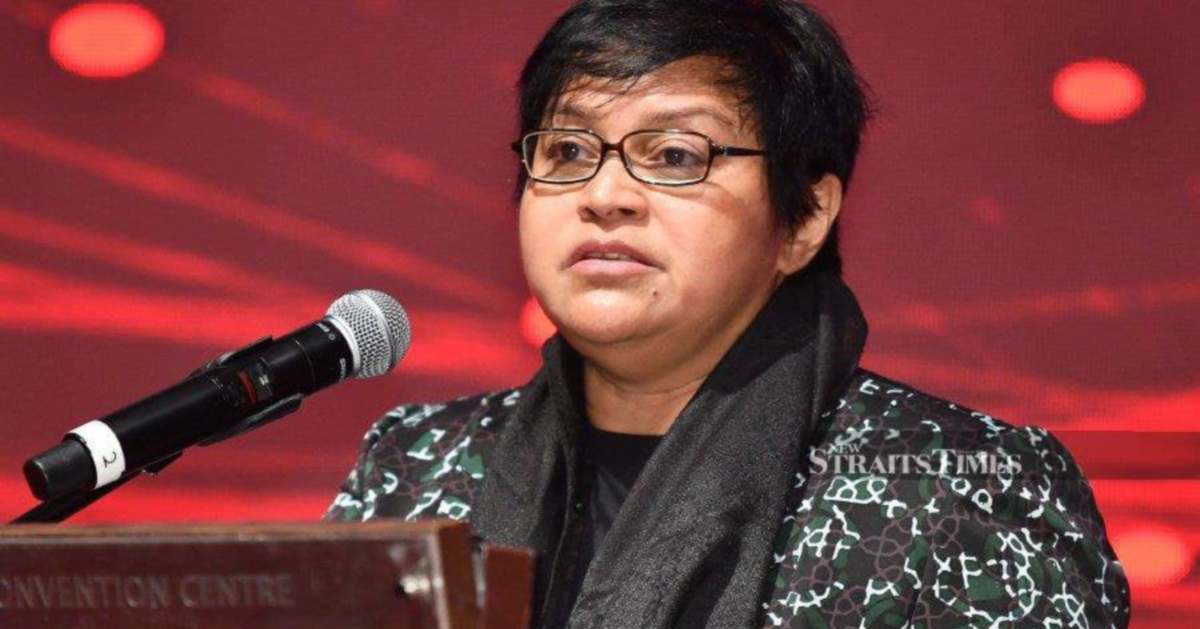
Umno information chief Datuk Seri Azalina Othman Said has urged political players to refrain from discussing potential coalition arrangements in Johor until after the state election results have been officially declared. Speaking from Putrajaya, she emphasised the importance of allowing the electoral process to run its course before parties begin negotiations on government formation.
Her remarks come amid heightened political maneuvering in the southern state, where multiple factions have been positioning themselves ahead of what many anticipate will be a closely contested state election. The call for restraint reflects growing concerns among Umno's leadership that premature coalition talk could undermine the integrity of the electoral campaign and distract voters from substantive policy debates.
The timing of Azalina's statement carries particular significance given Johor's status as a crucial political battleground in Malaysia. As one of the nation's most populous states and a traditional Umno stronghold, electoral outcomes there have long influenced the broader political landscape at the federal level. Any coalition arrangements in the state government could therefore ripple across national politics, making the sequencing of negotiations especially consequential.
Umno's position reflects the party's strategic calculations as it prepares for electoral competition. By insisting on a wait-and-see approach, the party aims to maximize its bargaining position with potential allies. Premature coalition announcements could inadvertently signal weakness or desperation, potentially emboldening rival parties and complicating future negotiations. Azalina's intervention thus represents an attempt to impose discipline on party messaging during the crucial pre-election period.
The emphasis on respecting electoral processes also speaks to Umno's broader efforts to rebuild its image following recent electoral setbacks. By framing coalition discussions as something to be addressed responsibly and transparently after results are known, rather than through backroom dealings beforehand, the party seeks to demonstrate commitment to democratic norms and public accountability. This positioning becomes increasingly important as Umno competes against rival coalitions that may characterize pre-election pacts as evidence of predetermined outcomes and diminished democratic choice.
Johor's political landscape has become considerably more complex in recent years, with multiple coalitions now capable of securing significant representation. Unlike previous decades when electoral outcomes were more predictable, current configurations mean that various combinations of parties could potentially form viable governments. This unpredictability has intensified speculation about which alliances might emerge victorious and how coalition partners might subsequently be selected or sidelined.
The statement from Azalina also implicitly addresses concerns among ordinary Johoreans about transparent governance. Voters increasingly expect parties to campaign on clear policy platforms rather than on vague promises of cooperation to be determined later through negotiations. By suggesting that coalition discussions belong in the post-election phase rather than the campaign period, Umno positions itself as respecting voters' right to make informed choices about which parties and leaders they wish to govern them.
For Malaysian and Southeast Asian observers tracking regional democratic practices, Azalina's intervention offers insights into how ruling parties navigate the delicate balance between electoral competition and coalition formation. The region has witnessed instances where pre-election alliances have been perceived as distorting electoral competition or establishing government arrangements before voters have had their say. Malaysia's experience offers lessons about the procedural questions surrounding coalition governance in electoral democracies.
The broader context includes questions about whether Johor's election will significantly alter the state's political complexion or represent a status quo outcome. If multiple parties remain competitive, coalition building becomes more complex and the sequencing of negotiations more strategically important. Conversely, if one coalition emerges with a commanding majority, such discussions may become largely academic. Azalina's timing thus reflects genuine uncertainty about electoral outcomes.
Umno's insistence on postponing coalition discussions until after voting has concluded also reflects lessons learned from previous Malaysian elections where pre-determined alliances sometimes failed to survive initial election results. When component parties of coalitions experience unexpectedly weak performances, previously negotiated power-sharing arrangements can become unstable or fall apart entirely. By avoiding firm commitments before voters have spoken, Umno preserves flexibility to adapt to whatever coalition arithmetic emerges from the polls.
The positioning also matters for opposition coalitions monitoring Umno's strategies. If the ruling party appears vulnerable to coalition fragmentation or facing difficulty assembling a functional government, opposition parties may be encouraged to maintain competitive pressure. Conversely, if Umno emerges from elections with a clear path to government formation, opposition energies would shift toward longer-term opposition building. Azalina's comments thus carry significance well beyond Johor's borders.
As campaign season intensifies across Malaysian politics, the distinction between pre-election coalition talks and post-election government formation will likely remain contested. Azalina's intervention represents Umno's attempt to establish the parameters for this debate, positioning itself as the party committed to allowing electoral processes to precede coalition negotiations. Whether other political actors accept this framework will shape how Malaysian democracy functions during this critical period.

