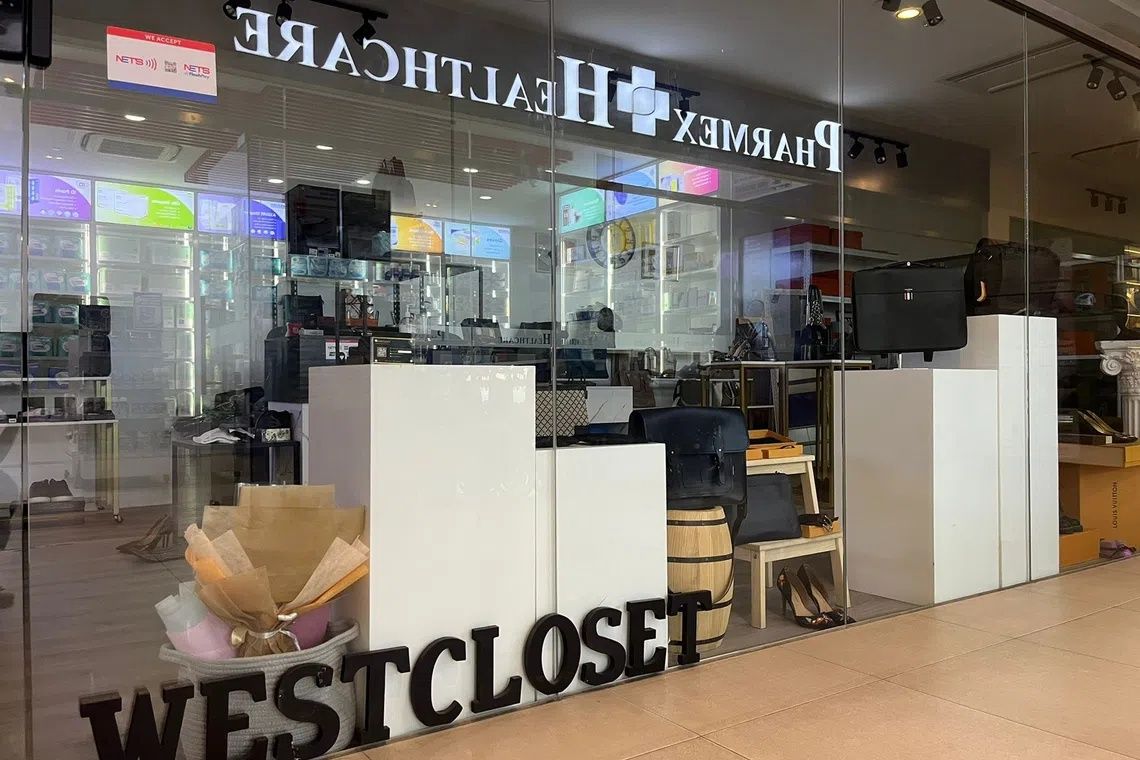
An Indonesian business operator has received an eight-month prison sentence after pleading guilty to systematically stealing from customers of her luxury handbag consignment store in Singapore's Shenton Way district. Ringga Dwi Rizky Irianto, 36, who ran West Closet at the OUE Downtown Gallery shopping mall, misappropriated nearly S$140,000 from five separate victims who had placed Hermès, Chanel, and other high-end designer bags with her for sale. The sentencing, handed down on Thursday, August 13, marks the culmination of an investigation that began after her arrest in September 2022, with formal charges filed only in 2024.
The case reveals the vulnerabilities inherent in online-facilitated consignment arrangements, particularly when dealing with valuable goods. West Closet operated as an intermediary business model, advertising its services through popular platforms including Carousell, Instagram, and other social media channels. Customers would deposit their luxury items at the physical store location, with a standard requirement that unsold merchandise remain there for 60 days or face a S$60 penalty fee. The business model itself appeared straightforward: once items sold, West Closet would retain a commission ranging from S$200 to S$900 before forwarding the remainder to the original owner. This structure, while common in the resale industry, created opportunities for financial manipulation that Irianto exploited systematically.
The first documented victim illustrates the calculated nature of the fraud. On July 2, 2022, this customer consigned three bags—two Hermès and one Chanel—to West Closet with a guaranteed valuation of S$51,000 upon sale. The store issued an express written guarantee that once sold, the customer would receive payment within seven days, transferred directly to their bank account. Irianto did indeed sell all three bags and collected approximately S$51,000 in proceeds. Rather than honouring the agreement, she diverted the entire amount to settle a transaction for a different customer, effectively using one victim's money to cover obligations to another client. This approach—redirecting legitimate sale proceeds to alternative purposes rather than returning them to the rightful owner—became her modus operandi.
Two additional victims fell prey to identical schemes involving Hermès bags. A second customer who placed an Hermès bag for consignment at West Closet lost S$33,500 when Irianto misappropriated the sale proceeds. A third victim suffered a similar loss of S$23,500 from another Hermès sale. Across these three documented cases alone, the financial harm totalled S$108,000. Deputy Public Prosecutor Darren Sim's account of events demonstrates that Irianto understood the expectations placed upon her, deliberately breached customer trust, and consciously retained funds that belonged to vulnerable sellers who believed their valuable items were in safe hands.
The sentencing judgment reflects these aggravating factors. While Irianto has already made partial restitution of S$41,000, the court ordered her to pay an additional S$91,950 in compensation to victims through an investigation officer. Failure to meet this payment obligation will trigger an additional 24 days of imprisonment, adding to her original eight-month sentence. For Malaysian readers familiar with consignment and resale marketplaces, this case underscores the importance of clear contractual documentation and verified payment channels when entrusting valuable personal assets to third parties.
The legal framework governing such offences in Singapore provides substantial deterrence. Criminal breach of trust—the charge to which Irianto pleaded guilty on three counts—carries potential sentences of up to seven years imprisonment, substantial fines, or both. The court's decision to impose eight months imprisonment appears measured relative to the statutory maximum but sends a clear message that breach of fiduciary duty in financial transactions will result in custodial sentences. Irianto's bail was set at S$15,000, with her jail term expected to commence in October 2024.
For the regional consignment and luxury resale industry, this case raises critical operational questions. While online platforms have democratized access to high-end fashion resale, the concentration of customer assets under a single business operator without robust financial controls creates systemic risk. Many similar operations across Southeast Asia operate with minimal regulatory oversight, and customers often lack clear documentation or third-party verification of payment channels. The case against Irianto succeeded partly because documentation existed—written guarantees, deposit records, and communication trails—but many consignment customers across the region operate without such protective measures.
The timing between Irianto's arrest in September 2022 and formal charges in 2024 suggests that investigating financial crimes involving consignment fraud requires careful documentation and victim coordination. Malaysian authorities managing similar cases would recognize the investigative complexity: tracing fund flows across multiple customer transactions, establishing intent to misappropriate, and corroborating victim accounts across separate incidents. The investigation officer's role in future collections of compensation also highlights how criminal sentencing in financial crime cases increasingly incorporates structured restitution mechanisms rather than relying solely on victim-initiated civil recovery.
For consumers in Malaysia and across the region who use platforms like Carousell, Depop, and Instagram-based resellers, this case provides practical lessons. High-value consignment arrangements should include written contracts specifying payment timelines, bank transfer details confirmed independently of the seller, and clear contingency procedures if items remain unsold. Many consignment operators lack formal business registration or insurance, meaning customers have limited recourse if fraud occurs. While West Closet operated from a physical mall location—theoretically more legitimate than purely online operators—Irianto still managed to misappropriate nearly S$140,000 despite this apparent legitimacy marker.
The implications extend beyond individual consumer caution to broader industry standards. As luxury resale becomes an increasingly significant component of the fashion economy across Southeast Asia, regulatory frameworks need updating to address financial controls, escrow arrangements, and third-party verification requirements for high-value transactions. Singapore's consignment market, while more developed than many regional counterparts, clearly lacks preventive mechanisms to stop determined fraudsters from exploiting the business model. Future reforms might require mandatory escrow arrangements for consignment sales above certain thresholds, regular audit requirements for consignment operators, or licensing systems that create accountability mechanisms currently absent from the informal resale sector that dominates much of Southeast Asia.

