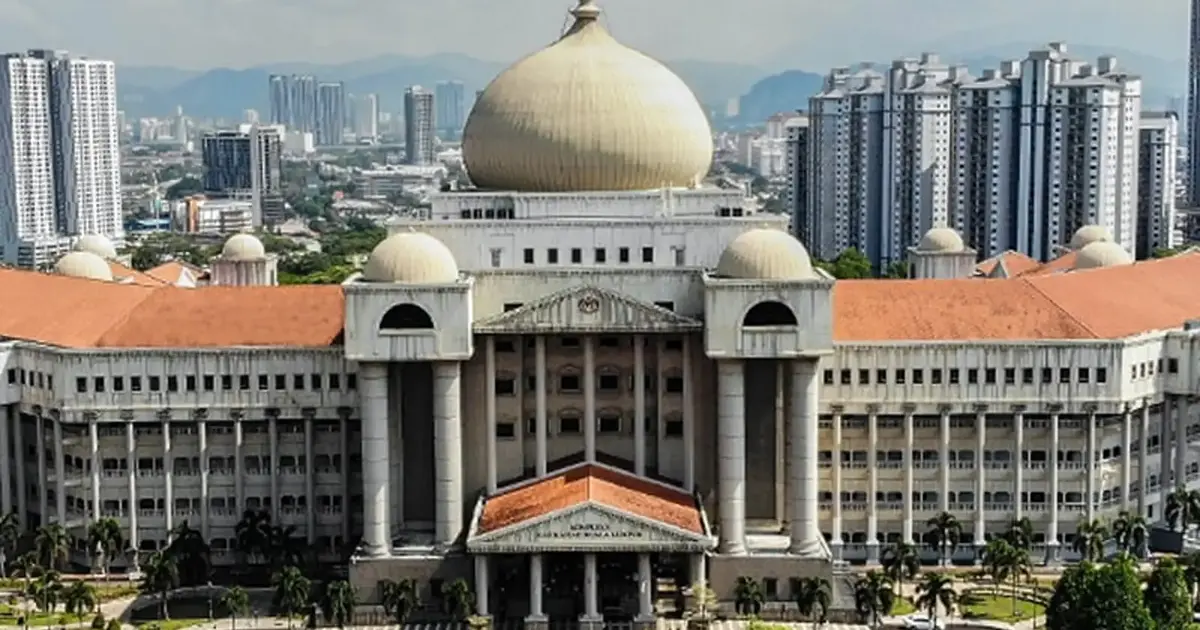
The High Court of Malaysia has ruled that a subpoena demanding the Prime Minister's testimony in a RM30 million lawsuit should be set aside, determining that the sitting head of government does not qualify as a material witness whose evidence would be essential to resolving the case. The judicial decision represents a significant procedural outcome in the civil dispute, with implications for how courts balance the compulsion of high office-holders against the fundamental requirements of litigation.
The court's reasoning hinged on the legal principle that material witnesses possess direct knowledge of facts central to the dispute. In this instance, the judge found insufficient basis to conclude that the Prime Minister's personal testimony would bear meaningfully on the core issues in contention. The subpoena, which had sought to compel the official's appearance in the witness box, was therefore deemed an improper and unnecessary exercise of court authority that lacked adequate justification.
This ruling reflects established judicial practice in Commonwealth legal systems, from which Malaysia derives much of its common law framework. Courts typically protect high-ranking public officials from the burden of court attendance unless their evidence addresses matters they uniquely witnessed or their testimony is demonstrably crucial to justice. The threshold for compelling such appearances remains deliberately high, recognising both the constitutional demands on executive figures and the principle that courts should operate efficiently without avoidable disruption to government function.
The RM30 million value of the underlying dispute indicates a substantial commercial or financial matter requiring resolution through the courts. While the specific nature of the suit remains focused on the factual contentions between the parties themselves, the attempt to involve the Prime Minister suggested at least one litigant believed the official possessed relevant knowledge. The court's contrary assessment indicates this theory of relevance did not survive judicial scrutiny, suggesting the disputed claims and defences rest on evidence and circumstances beyond the Prime Minister's direct involvement.
For Malaysian legal practitioners and litigants, the decision provides guidance on the practical limits of witness compulsion in high-profile cases. Attempting to subpoena government ministers or senior officials requires demonstrating that their specific knowledge pertains directly to material facts in dispute, not merely that they occupy positions of influence or authority. Courts will examine whether alternative evidence could address the issues, and whether the inconvenience and constitutional implications of compelling senior officials justify the marginal evidentiary benefit.
The ruling also touches on questions of executive privilege and the scope of judicial authority to demand attendance from officers of state. While Malaysia's courts retain power to compel testimony, they exercise this power with awareness of separation of powers principles and the practical realities of governance. A Prime Minister managing national affairs cannot easily attend court proceedings without significant coordination with state machinery and organisational disruption, factors judges consider when evaluating proportionality.
This decision may influence how similar disputes are framed when they involve government connections or decisions. Litigants seeking to draw political figures into their cases will need to articulate precisely why those individuals' testimony is essential rather than merely helpful, and why documentary evidence, expert analysis, or testimony from other witnesses cannot adequately address the disputed questions. The court has essentially signalled that vague notions of relevance or relevance based on official position will not suffice.
The case also resonates within the broader Southeast Asian context, where questions about judicial independence and the appropriate relationship between courts and the executive branch remain live constitutional issues. Malaysia's decision to scrutinise subpoenas against sitting Prime Ministers shows courts exercising what they regard as proper restraint—neither refusing all subpoenas to high office nor issuing them promiscuously. The middle path reflects confidence in adversarial proceedings to function without requiring testimony from those at the apex of government.
For the litigants involved in the RM30 million suit, the decision necessitates proceeding without the Prime Minister's personal evidence and presumably relying on whatever other witnesses, documents, and arguments they can marshal. This may require reframing their case around alternative factual foundations or accepting that certain aspects they wished to establish through the official's testimony will instead depend on circumstantial or derivative evidence. The outcome underscores how procedural rulings, though technically about process, materially shape the substantive capacity of parties to prove their cases.
The judicial determination also reflects an implicit assessment of institutional stability and rule of law principles in Malaysia. By treating this matter as a straightforward application of witness evidence law rather than a constitutional confrontation, the court demonstrates that well-established procedural frameworks can accommodate disputes involving government figures without rupturing relationships between the judiciary and executive. Courts in less stable jurisdictions might feel compelled either to grant all requests from influential parties or to refuse them, whereas Malaysia's approach reflects institutional confidence in neutral application of evidentiary principles.
Looking forward, this precedent will likely shape how future civil litigants approach the question of whether to attempt subpoenaing senior government officials. The High Court's clear signal that mere connection to disputed matters, without direct witness knowledge of material facts, will not support compulsion should discourage frivolous attempts to entangle ministers in private disputes. The ruling thus serves gatekeeping functions beyond this individual case, protecting executive time and judicial resources from dilution by strategic litigation tactics.

