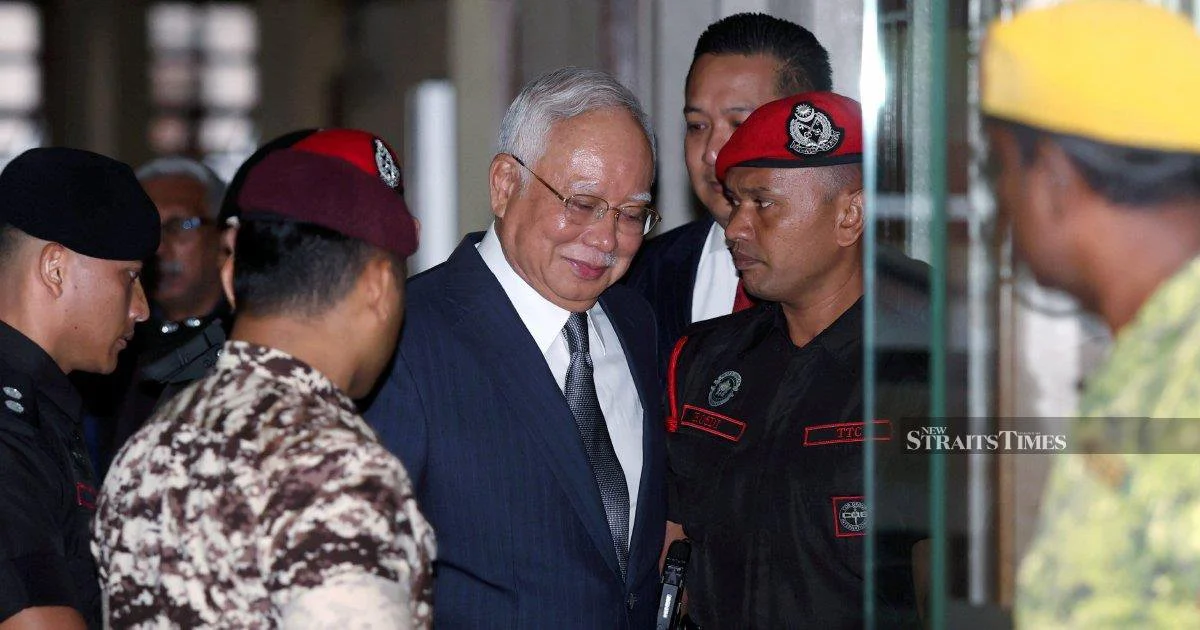
A Malaysian court has determined that former Prime Minister Datuk Seri Najib Razak and fugitive businessman Low Taek Jho orchestrated a coordinated operation to systematically misappropriate billions of ringgit from 1Malaysia Development Bhd (1MDB), the state-owned development vehicle Najib established in 2009. The judicial finding represents a critical development in Malaysia's most significant financial scandal, establishing a direct link between the country's former leader and the mysterious businessman who disappeared in 2015 as investigators closed in on potential criminal activity related to the fund.
The court's conclusion that the two men worked in tandem rather than operating independently underscores the deliberate nature of the scheme. This determination carries substantial legal implications, as it demonstrates that the misappropriation was not merely the result of isolated misconduct by low-level officials, but rather a structured conspiracy involving Malaysia's highest political authority. The finding suggests that critical decisions regarding fund flows, investment strategies, and financial manipulations were coordinated at the apex of both political and financial structures connected to 1MDB.
The 1MDB saga emerged as one of the developing world's most audacious frauds, with investigators eventually uncovering that approximately USD 4.5 billion (roughly RM 19 billion) had been siphoned from the fund into private bank accounts, shell companies, and illicit investments. The money was funneled across multiple jurisdictions, including Singapore, the United States, and the Middle East, through sophisticated financial networks designed to obscure the true beneficial owners and ultimate destinations of the capital.
Low Taek Jho, a politically connected entrepreneur with deep ties to Malaysia's financial elite, served as a critical intermediary in the scheme. Operating from a position of seemingly informal influence rather than explicit government authority, he leveraged his relationships with key figures in Malaysia's political and business circles to facilitate the transfer of funds. His ability to move undetected through this web of connections allowed the conspiracy to operate for years without triggering immediate official action, despite the extraordinary sums involved.
The judicial confirmation that the two operated in coordinated fashion addresses a crucial question that had animated public debate throughout the scandal: whether Najib was a knowing participant or an unwitting victim of schemes devised by subordinates. The court's findings definitively resolve this ambiguity, establishing that Malaysia's chief executive was an active architect rather than a passive figurehead in decisions regarding the diversion and deployment of public capital. This distinction carries profound implications for accountability and national governance.
Najib's role in establishing 1MDB in the first place grants additional significance to the court's assessment. The fund was created as a flagship development initiative intended to enhance Malaysia's global competitiveness and generate economic returns for the nation. The transformation of this vehicle into a mechanism for personal enrichment represents not merely financial fraud, but a fundamental betrayal of public trust and a perversion of the institutional purposes for which the organization was created.
The international dimensions of the case have drawn sustained attention from financial regulators and law enforcement authorities beyond Malaysia. Investigations in the United States, Singapore, Switzerland, and the United Arab Emirates have revealed the intricate pathways through which stolen funds were moved, laundered, and converted into luxury assets including real estate, artwork, jewelry, and entertainment industry investments. Several foreign financial institutions have faced substantial penalties for failing to implement adequate controls that might have detected the illicit flows.
Low's continued absence from Malaysia, now spanning over a decade, complicates enforcement of any sanctions that emerge from judicial proceedings. His flight to jurisdictions without extradition treaties with Malaysia has effectively insulated him from domestic criminal prosecution, though international law enforcement continues to pursue leads regarding his current whereabouts. The inability to bring him before Malaysian courts represents a significant shortcoming in the pursuit of comprehensive accountability for all parties involved in the conspiracy.
For Malaysia's broader institutional landscape, the judgment carries implications extending beyond the immediate parties involved. The scandal exposed critical vulnerabilities in financial oversight, regulatory coordination, and governmental checks on executive authority. Reforms introduced subsequently have aimed to strengthen internal controls and transparency mechanisms across state-controlled enterprises and the financial sector more broadly. The court's explicit findings regarding coordinated wrongdoing at the highest levels provide crucial evidentiary support for the necessity and proportionality of these institutional changes.
The case has reverberated through Malaysian politics in the years since Najib's removal from office in 2018. While his subsequent legal battles have produced mixed results across different courts and jurisdictions, this judgment represents one of the clearest judicial assertions of his personal culpability in the underlying conduct. The finding may influence ongoing proceedings in other forums and potentially reshape public and political assessment of his conduct during his nine years as Prime Minister.
Regionally, the 1MDB affair has prompted greater scrutiny of governance standards and financial controls across Southeast Asia. Other nations have examined their own frameworks for monitoring state-owned enterprises and preventing large-scale capital flight through illicit channels. The case has become a cautionary example cited by development organizations and governance analysts examining how sophisticated financial schemes can exploit institutional weaknesses and political concentration to achieve massive misappropriation of public resources.