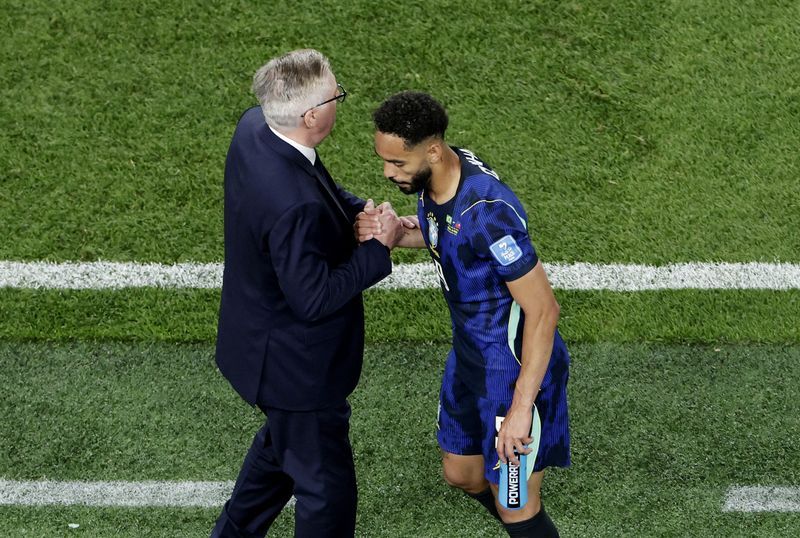
Carlo Ancelotti's tenure as Brazil coach has begun to bear fruit, though the task of restoring the Seleção to their former heights remains formidable. Following their opening Copa América stumble—a 1-1 draw against Morocco—the Italian tactician made two critical adjustments that transformed his side's performance during their 3-0 demolition of Haiti in Philadelphia. The changes went beyond simple personnel swaps; they signaled a clearer strategic direction that suggested Ancelotti had identified the fundamental imbalance plaguing Brazil's attack and found a remedy worth exploring further.
The cornerstone of this tactical recalibration was the introduction of Matheus Cunha in place of Igor Thiago. This substitution proved far more consequential than a routine position change. Cunha brought a distinctive quality to Brazil's frontline—a constant state of motion that animated the entire attacking apparatus. Rather than remaining static on the wing or occupying a fixed role, Cunha drifted fluidly between positions, creating passing lanes and defensive cover simultaneously. His restlessness forced Haiti's backline into uncomfortable moments of indecision, yet more importantly, it allowed Lucas Paquetá and Vinicius Jr to operate with greater freedom and purpose. The trio formed a cohesive unit that had been conspicuously absent from Brazil's toolkit, particularly since Neymar suffered the serious injury that removed one of world football's most creative forces from the national team's regular availability.
Paquetá's resurrection on the left flank of Ancelotti's diamond formation represented another significant element of the tactical equation. Having endured considerable criticism for his laboured performance against Morocco, the midfielder looked revitalized against Haiti. Operating with sharper positioning and greater engagement with the ball, Paquetá linked deftly with both Cunha and Vinicius along that left corridor. For a player whose form has been questioned at both club and international level, this resurgence demonstrated that positioning and partnership matter enormously. When deployed in a system that maximizes his natural instincts rather than constraining them, Paquetá can contribute meaningfully to Brazil's attack. The chemistry between these three players—built through intelligent movement off the ball and crisp combination play—produced Brazil's most fluent passages of possession and yielded the clinical finishing that converted chances into goals.
Vinicius Jr, too, discovered a liberation he had been lacking in recent national team appearances. Long acknowledged as one of football's most dangerous attacking talents, the Real Madrid winger frequently found himself isolated and overloaded in Brazil's previous setup. Against Haiti, with Paquetá offering genuine support from deeper positions and Cunha constantly providing passing options and movement, Vinicius operated with the kind of numerical superiority and space that suits his explosive running style. The left flank became Brazil's creative heartland, which represents both promise and vulnerability as the tournament progresses against sterner opposition.
Yet Ancelotti's emerging system exposes concerning deficiencies on the opposite wing. Raphinha's contribution against Haiti continued a troubling trend established during the Morocco match. The Barcelona winger struggled to impose himself, and his early substitution stemmed partly from physical discomfort—he had missed training earlier in the week due to blistering on his feet. Beyond injury concerns, Raphinha appeared uncomfortable in his assigned role. At club level, he typically operates with greater freedom to move infield and drift into more central attacking positions, similarly to how Cunha functioned against Haiti. Pinned rigidly to the right touchline, Raphinha mislaid simple passes and failed to control routine possessions, suggesting either the positioning itself or his current physical readiness rendered him ineffective. This imbalance—a thriving left flank paired with a dormant right side—could prove fatal against opponents willing to attack Brazil's vulnerable full-back areas.
Candidates to replace or reinforce the right flank remain uncertain. Rayan, who entered the match as Raphinha's replacement, failed to establish himself sufficiently to warrant confidence moving forward. Luiz Henrique appears the more compelling alternative should Raphinha miss the upcoming Scotland fixture and subsequent group matches. His ability to operate with greater positional fluidity might better complement Bruno Guimarães, whose performance as the right-sided midfielder showed sufficient quality that dropping him into a deeper defensive role could address another emerging concern.
That concern centres on Casemiro's capacity to shield Brazil's defence against more demanding midfield opposition. The 34-year-old Manchester United midfielder performed adequately against Haiti's limited attacking threat, yet tactically sophisticated teams—particularly those with pressing intensity—may expose his reduced mobility. Ancelotti faces a genuine decision about whether to introduce more defensive rigidity by repositioning Bruno Guimarães from his floating right-midfield position into a deeper supporting role alongside Casemiro. This would tighten Brazil's midfield security but might sacrifice some of the attacking dynamism that currently flows from Guimarães's involvement in possession chains. The balance between defensive solidity and creative fluency remains unresolved.
Brazil's performance against Haiti delivered incremental progress rather than the transformative breakthrough that would suggest Ancelotti has fully solved the endemic problems that plagued the World Cup campaign. Haiti's defensive negligence—they pushed forward with minimal regard for the spaces and passing lanes they surrendered—made Brazil's task substantially easier than a genuinely competitive opponent would. The Seleção's passing combinations remained loose in stretches, their final-third execution inconsistent, and their structural vulnerabilities evident to any observer. Yet the introduction of Cunha and the consequent reshaping of the attacking structure provided tangible evidence that Ancelotti understands Brazil's deficiencies and possesses ideas about addressing them.
For Malaysian and Southeast Asian football enthusiasts, Brazil's search for a sustainable tactical identity holds wider significance. The region's emerging football nations often attempt to emulate the attacking football that has defined Brazil's best traditions, yet the modern game's complexity—demanding simultaneous defensive responsibility and creative freedom from attacking players—requires sophistication that many teams lack. Cunha's role demonstrates how a single personnel decision can unlock tactical potential, a lesson relevant to developing Asian football. Moreover, Brazil's vulnerabilities remind viewers that even elite programmes require time for adjustment and tactical bedding-in, particularly when introducing new coaching philosophies. Ancelotti's diamond formation remains a work in progress, but the foundational elements have begun taking shape.

