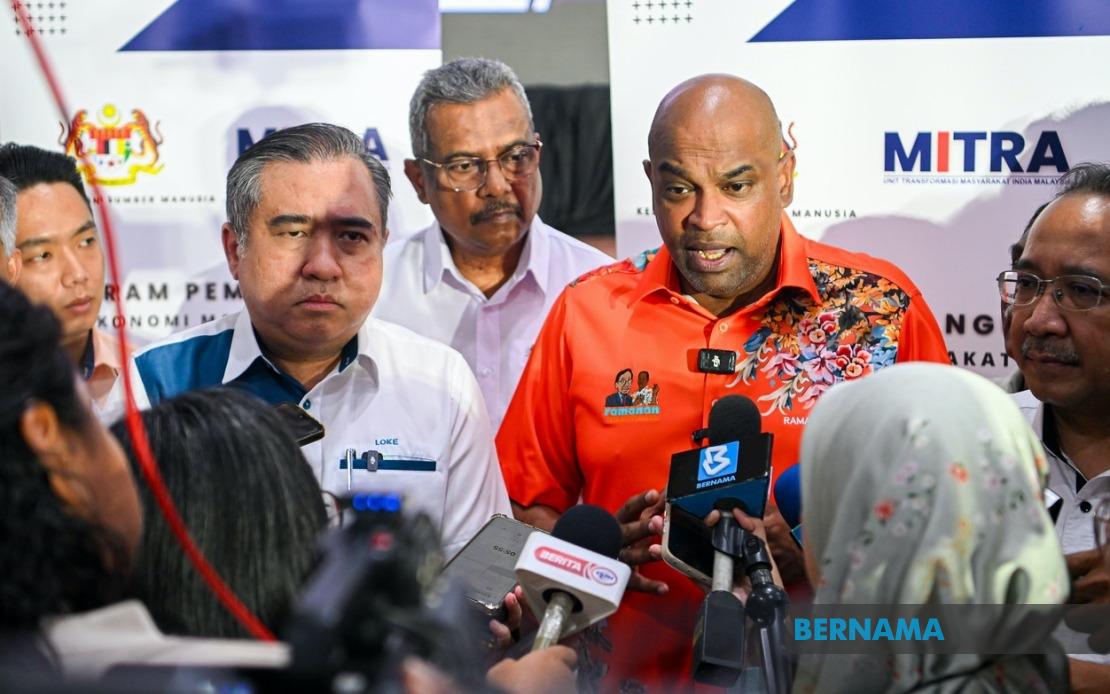
DAP secretary-general Anthony Loke has flatly rejected suggestions that the Democratic Action Party dominates government decision-making at the federal and state levels, characterising such claims as a recurring political tactic designed to undermine Pakatan Harapan's credibility and legitimacy.
Speaking in Seremban on July 7, Loke emphasised that the administration's policy framework operates on the basis of collaborative deliberation among all coalition members rather than unilateral direction from any single party. This collaborative model, he suggested, applies equally to the federal government and to Negeri Sembilan's state administration, where decisions are systematically vetted across party lines before implementation.
The Transport Minister outlined the established decision-making process, noting that UMNO, PKR, and DAP each have genuine opportunities to voice concerns and perspectives on significant matters affecting their portfolios and constituencies. However, he clarified that while all coalition partners contribute meaningfully to discussions, Prime Minister Datuk Seri Anwar Ibrahim retains final authority over government decisions, ensuring that no individual party can unilaterally impose its will on the broader administration.
Loke's comments represent a direct response to persistent allegations circulating in Malaysian political discourse that DAP, as the largest non-Malay-majority party in the coalition, wields disproportionate influence over the government's strategic direction and policy priorities. These criticisms have become a staple of opposition rhetoric since Pakatan Harapan's return to federal power in 2022, often deployed to suggest that the coalition's governance structure is fundamentally imbalanced or that non-Malay interests are being privileged at the expense of Malay-Muslim concerns.
By characterising these accusations as a "tired narrative," Loke signals frustration with what he views as a rhetorical pattern that lacks substantive foundation. The phrase suggests that rather than engaging with specific policy disagreements or documented instances of overreach, political opponents have defaulted to a blanket allegation that serves primarily to mobilise certain voter constituencies without requiring detailed evidence or analysis.
The state-level example Loke provided offers additional context for understanding the coalition's operational principles. Menteri Besar Datuk Seri Aminuddin Harun's practice of consulting all component parties before finalising decisions mirrors the federal approach, suggesting that the collaborative model represents a deliberate governance strategy rather than an ad hoc arrangement. This consistency between federal and state practice underscores Loke's argument that coalition governance is systematic and transparent, not hidden or dominated by backdoor negotiations.
Loke also addressed related concerns about Malay representation and safeguards, noting that Negeri Sembilan continues to be governed by a Malay Menteri Besar and that state policies consistently protect the interests of all communities, including the Malay majority. This point is significant because it challenges the implicit assumption underlying many criticisms: that DAP's participation in government inherently threatens Malay or Islamic interests. By pointing to concrete examples of ongoing state leadership and protective policies, Loke offers a counternarrative grounded in observable governance outcomes rather than abstract ideological concerns.
The broader political context here involves ongoing tensions within Malaysia's coalition politics regarding ethnic and religious representation. Since the 2022 elections, opposition voices have repeatedly suggested that Pakatan Harapan's multiracial composition undermines Malay-Muslim political interests compared to previous administrations. These concerns tap into deeper historical anxieties about demographic change and political power distribution in Malaysia. Loke's framing suggests that such anxieties are legitimate topics for discussion but should be evaluated against evidence of actual policy outcomes rather than assumed based on party composition.
For Malaysian readers, this exchange illustrates a fundamental challenge facing multiethnic democracies: how to accommodate competing communal interests while maintaining inclusive governance structures. The tension between DAP's relatively progressive policy positions on issues including religious freedom, secular governance, and minority rights, and the coalition's need to reassure Malay-Muslim voters that their constitutional position remains protected, creates ongoing political friction. Loke's comments suggest that the administration believes it has successfully balanced these concerns through its operational practices, even if perceptions of imbalance persist in political discourse.
The insistence that final decision-making authority rests with Prime Minister Anwar Ibrahim is also strategically important. By emphasising the Prime Minister's prerogative, Loke implicitly positions Anwar as the arbiter of coalition interests and guarantor of balance, rather than suggesting that power is distributed equally among parties. This framing may be designed to reassure those concerned about DAP's influence by placing ultimate responsibility for ensuring balanced governance with Malaysia's chief executive.
Looking forward, Loke's comments suggest that the DAP and broader Pakatan Harapan coalition anticipate continued pressure around these governance and representation questions. The repetition of accusations, despite coalition explanations, indicates that political opponents have found this line of criticism effective in mobilising support regardless of factual accuracy. This dynamic will likely persist throughout the current parliamentary term, shaping how the coalition frames its policy decisions and how it communicates its approach to coalition governance to different segments of the electorate.

