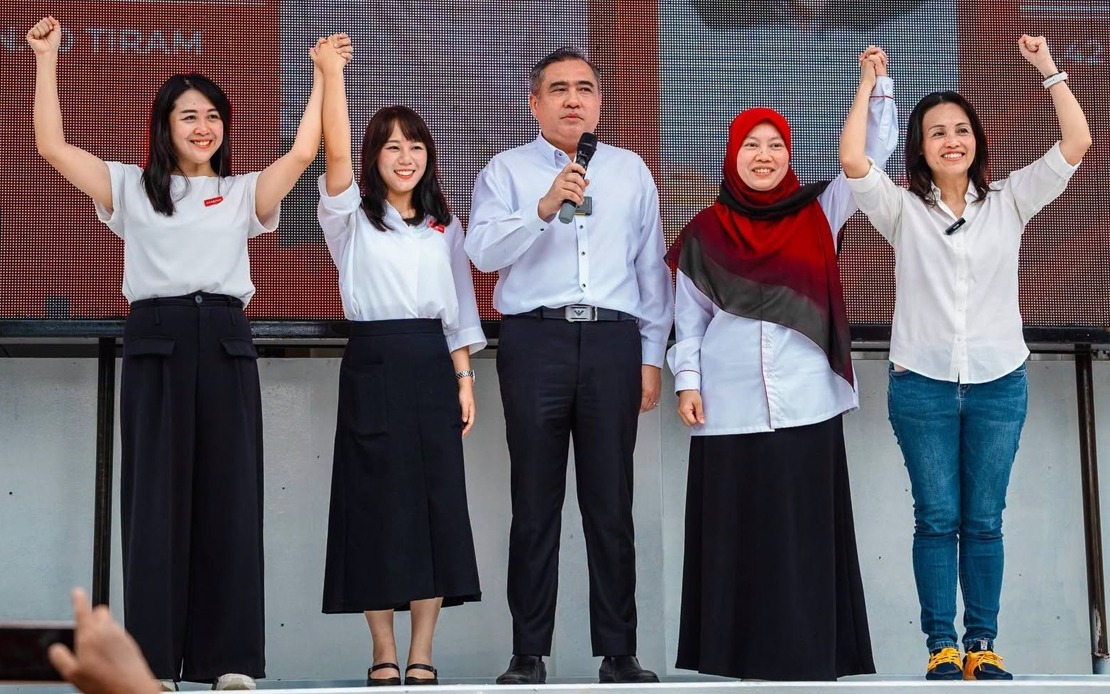
The Democratic Action Party has announced its slate of four candidates contesting the Johor state election on July 11, a move that underscores the opposition coalition's strategic repositioning in the southern state. The announcement, made by DAP secretary-general Anthony Loke Siew Fook at a ceremony here on June 20, signals the party's intention to expand its footprint beyond traditional strongholds into new electoral terrain, particularly in constituencies with different demographic compositions.
Notably, the party is fielding Nor Zulaila Abd Ghani, a 38-year-old private secretary to the Deputy Finance Minister, in the Tiram state seat—marking the first occasion DAP has contested this Malay-majority mixed constituency. Tiram represents uncharted territory for the party and reflects a calculated gamble to broaden its appeal beyond its traditional Chinese voter base. Loke expressed confidence that Zulaila would gain traction among voters, a statement that carries significance given Tiram's demographic profile and the party's historically limited presence in such seats.
The party also nominated Lee Wern Yiing, the 30-year-old chief of Johor DAP Socialist Youth (DAPSY), to contest Johor Jaya. Lee's candidacy represents a generational transition within the party's leadership structures and signals DAP's effort to energize younger voters through familiar faces within youth-oriented party wings. This appointment reflects broader organisational trends within the party to elevate promising younger cadres to visible electoral contests.
In Bukit Permai, DAP will field Mohamad Shafwan Ani, a 33-year-old special assistant to the Kulai Member of Parliament. Shafwan brings nine years of ground-level experience in the constituency, a factor Loke highlighted as crucial to the party's competitive positioning. His extensive local engagement provides the party with a candidate who possesses institutional knowledge of voter concerns and community networks, assets that typically prove valuable in state-level contests. The Bukit Permai seat represents part of DAP's broader campaign to consolidate control within the Kulai parliamentary zone.
Wong Bor Yang, the incumbent Senai assemblyman, will defend his seat for a further term. At 40 years old, Wong's re-nomination affirms the party's confidence in his performance during the previous state assembly term. His retention as a candidate also demonstrates DAP's strategy of fielding proven performers in seats where the party already holds representation, thereby reducing electoral risk in constituencies where the party enjoys established support networks.
The candidate announcements must be understood within the context of Pakatan Harapan's broader electoral strategy in Johor. The Kulai parliamentary constituency comprises three state assembly seats—Senai, Bukit Permai, and Tiram—and Loke explicitly articulated the coalition's objective to secure all three seats. With Senai and Bukit Permai already held by Pakatan-aligned parties (Senai by DAP and Bukit Batu, the third seat in Kulai, by PKR), the coalition's candidacy in Tiram represents the final piece in a consolidation strategy aimed at achieving complete parliamentary-level dominance in the Kulai zone.
This territorial consolidation approach reflects lessons learned from previous electoral contests in Johor, where dispersed opposition strength across multiple parties has occasionally fragmented voting patterns. By presenting a unified, coordinated slate across all three seats within a single parliamentary constituency, Pakatan Harapan seeks to present voters with a clear, integrated alternative to the incumbent Barisan Nasional-dominated state government. The strategy assumes that voters increasingly value coherent, multi-seat platforms rather than isolated candidacies.
The presence of Johor DAP chairman Teo Nie Ching and deputy Wong Shu Qi at the announcement ceremony underscored the significance the party places on these candidacies. Their attendance, alongside Loke—who holds the Transport Ministry portfolio—demonstrated that these nominations carry endorsement from party leadership at both state and national levels. Such high-level participation in candidate announcements typically signals that the party views these contests as competitive and strategically important.
The electoral calendar for Johor has been established by the Election Commission, with June 27 designated as nomination day and July 7 reserved for early voting, with polling day itself on July 11. This compressed timeline between announcement and nomination creates limited campaigning windows for all parties and candidates, potentially favoring those with pre-existing ground organizations and voter recognition. DAP's decision to announce candidates relatively early in this window suggests the party intends to maximize whatever campaign time remains to establish candidate visibility and consolidate voter support.
For Malaysian political observers, these nominations reflect ongoing reconfiguration within Johor's electoral landscape. Johor has historically served as a contested battleground between Pakatan Harapan and Barisan Nasional, with state-level control shifting between coalitions across successive election cycles. DAP's expansion into Malay-majority seats through Tiram represents a deliberate attempt to transcend its traditional voter demographics, a challenge that has constrained opposition party growth in previous contests. Success in such constituencies would represent a significant breakthrough for the party and demonstrate evolving voter receptiveness to cross-communal political campaigns.
The broader implications extend beyond Johor itself. As Malaysia's opposition coalition continues to rebuild organizational capacity following previous electoral setbacks, state elections in major states like Johor serve as barometers of whether Pakatan Harapan can reconstitute credible challenges to established incumbents. These four DAP candidacies, particularly the debut in Tiram, will offer voters and analysts data points about whether opposition coalition strategies are gaining traction or whether entrenched advantages of the ruling coalition persist.

