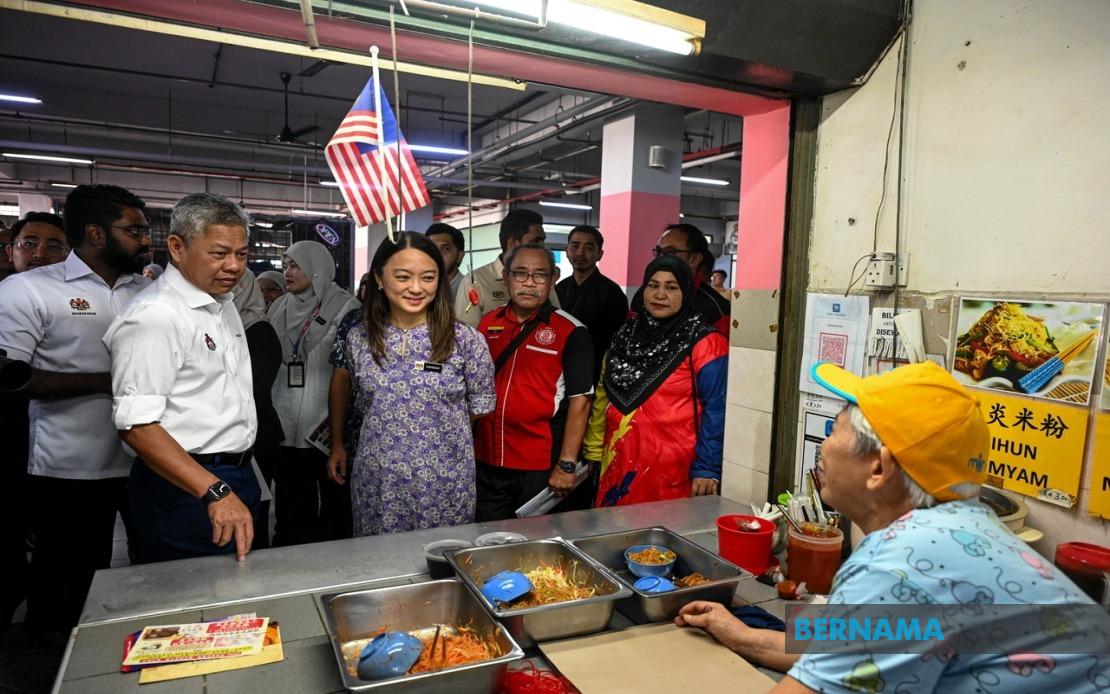
The Kuala Lumpur City Hall (DBKL) has committed RM200 million to a sweeping overhaul of its hawker sector through the Lestari Niaga @ Kuala Lumpur 2026 initiative, targeting 287 sites across the capital and affecting the livelihoods of more than 11,000 small traders and food vendors. The ambitious programme represents one of the most comprehensive efforts by the local authority to modernise the informal food economy, a sector that remains vital to Kuala Lumpur's identity and the day-to-day sustenance needs of its residents.
Minister in the Prime Minister's Department (Federal Territories) Hannah Yeoh unveiled the initiative, emphasising that the modernisation drive aims to create safer, better-organised trading environments while maintaining fairness across multiple stakeholder groups. The announcement comes as DBKL expands its rollout across multiple locations throughout the year, signalling a strategic shift towards comprehensive rather than piecemeal improvements to the city's informal food retail landscape.
The challenge of urban hawker modernisation has long tested governance in Southeast Asian cities. Unlike wholesale relocation schemes that often provoke trader resistance and community backlash, DBKL's approach explicitly acknowledges competing interests: residents seeking smoother traffic and commerce, traders demanding viable locations and adequate compensation, and building tenants operating formal businesses. Hannah Yeoh's emphasis on stakeholder consultation reflects growing recognition that top-down decisions rarely succeed without addressing these competing demands. This methodology may offer lessons for other Malaysian municipalities grappling with similar informal sector integration challenges.
A recent case study illuminating the initiative's practical mechanics is the UTC Sentul hawker upgrade project, which garnered significant public attention on social media. This RM1.6 million sub-project will replace existing structures with 20 modern modular kiosks, expected to be operational within three months by October. Rather than relocating traders elsewhere, DBKL consulted stakeholders before finalising redevelopment plans, demonstrating that the authority has recalibrated its approach based on documented community feedback.
To mitigate financial hardship during construction, DBKL has introduced unprecedented monthly assistance of RM1,500 for each of the 20 affected traders at UTC Sentul. Kuala Lumpur Mayor Datuk Seri Fadlun Mak Ujud justified this direct subsidy approach over temporary trading sites, noting that makeshift locations are often expensive to operate, poorly positioned geographically, and ultimately depress customer traffic. This financial innovation addresses a persistent problem in urban renewal: informal sector workers lose income during transition periods, creating genuine hardship that undermines programme support.
The UTC Sentul model is now being replicated at additional locations, with similar financial incentives and simultaneous modernisation projects planned for Jalan Dato Senu, Pudu Ulu, and Bandar Tun Razak. This expansion suggests DBKL has confidence in the formula and intends to scale it systematically rather than experimenting at isolated sites. The geographic spread indicates a city-wide coordination effort rather than neighbourhood-by-neighbourhood ad hoc improvements.
The Lestari Niaga programme's structure reveals the complexity of Kuala Lumpur's informal food economy. Of the 287 sites targeted, DBKL will initially focus intensive efforts on 224 locations in the first phase. The trader composition reveals three distinct categories: over 4,000 street-based hawkers operating mobile or makeshift stalls; approximately 5,000 traders working from municipal assets such as established hawker centres or designated zones; and roughly 1,000 traders in a reapplication category, presumably those previously delisted or seeking formalisation. This segmentation is important because each category faces different constraints and opportunities during modernisation.
Street hawkers, comprising the largest single group, present particular challenges for urban management. They lack fixed infrastructure yet often occupy high-foot-traffic locations and maintain customer loyalty. Modernisation risks displacing them from profitable spots to designated zones where foot traffic may be thinner. The RM200 million allocation suggests DBKL intends to create sufficient modern infrastructure to accommodate this displacement without catastrophic income loss, though the actual adequacy of this funding across 287 sites remains to be demonstrated.
The financial support structure for affected traders during transitions represents a significant policy innovation in Malaysian municipal governance. By providing direct monthly assistance rather than requiring traders to secure alternative temporary locations, DBKL reduces administrative burden and protects income stability. This approach also acknowledges a reality often overlooked in development schemes: informal sector workers lack financial buffers to absorb transition costs, making direct support more humane and pragmatically effective than infrastructure-based solutions that shift rather than solve the problem.
For Malaysian readers and policymakers elsewhere, the Lestari Niaga initiative offers important insights into managing informal economy modernisation without destroying the livelihoods of vulnerable traders. The emphasis on genuine stakeholder engagement, financial protection during transitions, and phased implementation across diverse trader categories contrasts with historical top-down approaches that frequently sparked conflict and displacement. Whether the RM200 million proves adequate, whether traders genuinely participate in planning decisions, and whether improved conditions actually materialise will determine whether this programme becomes a replicable model or another well-intentioned initiative that falls short in implementation.
The initiative also carries implications for Kuala Lumpur's economic future. Hawker culture remains central to the city's food tourism and daily commerce, attracting both locals and visitors. Modernisation that improves hygiene, safety, and operational standards while preserving authentic character could enhance the sector's competitiveness and sustainability. Conversely, if modernisation alienates existing traders through poor implementation, the city risks losing the authentic informal food economy that distinguishes it from more sterile commercial alternatives. DBKL's success in balancing formalisation with cultural preservation will significantly influence how Southeast Asian cities approach similar challenges in coming years.

